(Professor Jung Do-jin, Contributed Article in Maeil Business Newspaper, 2023) [Contributed Article] The Truly Unproductive Misunderstanding and Controversy Over the 'Accrued Pension Liability' (Posted October 4, 2026)

(Below is a contributed article taking a position on the accrued pension liability
entirely different from the Pension Future Forum's,
by Professor Jung Do-jin of the Department of Business Administration at Chung-Ang University.)
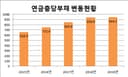
According to the fiscal year 2022 national closing of accounts released on the 4th, Korea's total assets stand at 2,836 trillion won and its liabilities reach 2,326 trillion won. In particular, the accrued pension liability, as a single item among the liabilities, amounts to 1,181 trillion won, more than half of all liabilities. Meanwhile, national debt exceeded 1,000 trillion won for the first time ever, reaching 1,068 trillion won, on a par with the accrued pension liability. Yet the accrued pension liability and national debt are entirely different in nature.
National debt, like government bonds and borrowings, is debt the state must repay, and ultimately it must be repaid at some point with the people's taxes. The accrued pension liability, by contrast, is not debt but an estimate of what will be paid in the future as pensions to civil servants and military personnel. Yet every year, whenever the national closing of accounts is released, the enormous accrued pension liability gives rise to a recurring distortion of information in which the items that truly deserve attention from the standpoint of fiscal soundness go unnoticed. What must be kept in mind when interpreting the accrued pension liability is that the state does not bear this entire amount. In practice, the pensions of retired civil servants are paid from resources collected from serving civil servants, and government subsidies are used only for the shortfall. In 2022, for example, the government subsidies used in this way amounted to about 0.52% of the accrued pension liability. Pensions expected to be paid in the future are recorded as liabilities, while the revenue to be used to fund them is not recorded as an asset, because a stricter accounting standard is applied to assets, under which corresponding funding assets are not recognized.
Another point to keep in mind when interpreting the accrued pension liability is that, because money to be paid in the distant future is estimated now, assumptions such as a discount rate for conversion to present value and rates of inflation and wage growth are needed, and even minute changes in these assumptions cause large swings in the size of the accrued pension liability. In other words, changes in the assumptions used to calculate accounting estimates have a larger effect than changes in size driven by real economic burdens, such as an increase in the number of civil servants. In 2022, for example, a change of just 0.5% in the discount rate affects the accrued pension liability by 143 trillion won. Nevertheless, every year when the national closing of accounts is released, the accrued pension liability tends to be misunderstood as a fixed debt of more than 1,000 trillion won that the people must bear to pay the pensions of civil servants and military personnel. Because of such needless misunderstanding and controversy, even OECD countries that have introduced accrual-basis national accounting do not apply consistent accounting treatment or disclosure to the accrued pension liability, and even the IMF, which compares countries' financial positions, does not use the accrued pension liability as an official indicator.
In conclusion, the accrued pension liability is certainly useful information for improving the transparency and soundness of the national finances, but there is no need to be alarmed simply by the word 'liability' and the figure of 1,000 trillion. To resolve the needless misunderstanding and wasteful controversy over the accrued pension liability that recur every year whenever the national closing of accounts is released, I propose changing the term 'accrued pension liability' to 'expected pension expenditure' or disclosing it in the notes together with the amounts expected to flow in. The most essential qualitative characteristic that ensures the usefulness of accounting information is understandability. 'Expected pension expenditure' would head off the misunderstanding that it is the nation's debt to be repaid immediately, and a change to note disclosure that includes revenue would improve understandability for the public. I look forward to a renaming of the accrued pension liability and a change in its disclosure that will increase the government's fiscal transparency and that the public can understand.
[Jung Do-jin, Professor, School of Business Administration, Chung-Ang University]