(Government Clarification of Press Reports, April 2020) [Clarification of Press Reports] Accrued Pension Liability Calculation Was a Lawful Procedure Based on Accounting Rules, Not a Trick (Posted October 4, 2026)
[What the Reports Said]
□ On Tuesday, April 7, 2020, some media outlets (Money Today, Asia Economy, Chosun Ilbo, Herald Economy, and others) reported the slowdown in the increase of the accrued pension liability as statistical sleight of hand and a trick
[Position of the Ministry of Economy and Finance]
□ The use of the 2020 Long-Term Fiscal Projection basis in calculating the accrued pension liability was not sleight of hand or a trick; rather,
○ the liability was calculated using the projection basis finalized in February this year, through lawful procedures and in accordance with the accounting rules requiring that the best assumptions be used in the calculation
※ When distributing the press release (April 5), the ministry presented the accrued pension liability calculated on the 2015 Long-Term Fiscal Projection basis side by side with the 2020 basis in a comparison table, thereby explaining it fully so that there would be no misunderstanding
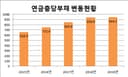
□ The increase in the accrued pension liability in the fiscal year 2019 settlement was 4.3 trillion won, smaller than in previous years (around 90 trillion won)

□ This is because the wage and inflation projections applied in calculating the accrued pension liability were changed from the 2015 Long-Term Fiscal Projection basis to the 2020 basis.
○ The wage and inflation projections of the 2015 Long-Term Fiscal Projection diverged widely* from recent economic realities, such as the trend of low growth and low inflation, distorting the amount of the accrued pension liability
* 2015 Long-Term Fiscal Projection: (inflation) 2.4–2.7% for 2021–2030; (wage increases) 5.0–5.2% for 2021–2030, projected
○ Such problems had been raised over the years by the ministries and agencies in charge of calculating the accrued pension liability (the Ministry of Personnel Management, the Ministry of National Defense, and the Government Employees Pension Service) and by experts on a continual basis
(The Pension Future Forum publicly asks who the experts who made this claim were.
Or does this refer to the experts who have long claimed there is no need to worry about the accrued liability!)
□ The application of the 2020 Long-Term Fiscal Projection basis to the fiscal year 2019 settlement is grounded in the Pension Accounting Guidelines* under the national accounting laws and regulations, and
* These require that the financial assumptions used in calculating the accrued pension liability be the best assumptions (taking into account the most recent annual price indices, based on expectations formed in the market, etc.)
○ applying the 2015 Long-Term Fiscal Projection basis would violate the provisions of the national accounting laws and regulations, so applying the 2020 Long-Term Fiscal Projection is appropriate
○ Accounting experts have also expressed the opinion that applying the 2020 Long-Term Fiscal Projection in calculating the accrued pension liability is sound from an accounting standpoint
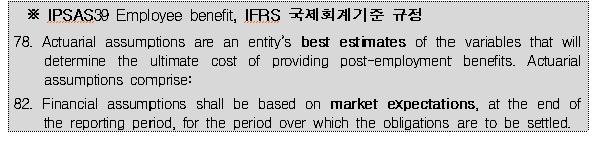
○ This is also consistent with global standards such as the International Public Sector Accounting Standards (IPSAS)* and the International Financial Reporting Standards (IFRS)**, which require the use of the best estimates
* IPSAS: International Public Sector Accounting Standards
** IFRS: International Financial Reporting Standards
View original Inquiries: Accounting and Settlement Division, Ministry of Economy and Finance (044-215-5436)