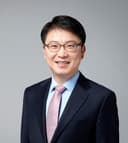
(Committee Member Yun Suk-myung, Seoul Sinmun Interview, 2022) The Government Employees, Military, and Private School Teachers Pensions Are Terminally Ill — They Need Surgery Even Before the National Pension [Choi Kwang-suk's Inside] (Posted October 4, 2026)
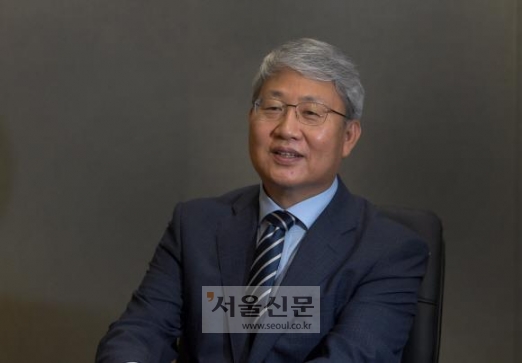
Interview with Yun Suk-myung, Research Fellow at the Korea Institute for Health and Social Affairs
(Yun Suk-myung, Research Fellow at the Korea Institute for Health and Social Affairs, on the 19 th stressed in an interview with Seoul Sinmun that "if pension reform is not carried out properly, Korean society will perish together.")
In his policy address to the National Assembly on the 16th, President Yoon Suk-yeol presented pension reform, along with labor and education reform, as an urgent national task. With the burden on national finances from pension deficits and the problem of intergenerational equity, pension reform can no longer be ignored. But because pension reform is a painful and unpopular policy, all eyes are on whether it can actually be pursued properly. On the 19th, Seoul Sinmun met Yun Suk-myung, Research Fellow at the Korea Institute for Health and Social Affairs, who took part in pension reform work from the Kim Young-sam administration through the Park Geun-hye administration, and heard his views on the direction of pension reform and related matters.
"Although it was included among the 110 national tasks, it lacked specifics, so there were also suspicions that the commitment to pension reform had retreated. But President Yoon stressed that pension reform is unavoidable in order to build a tight social safety net. Since the government has a sense of crisis, it seems it will pursue pension reform in one way or another."
—The government says it will set up a Public Pension Reform Committee directly under the President.
"The most important thing is that neutral experts make an objective diagnosis of the situation on pension issues, and that the discussion proceed mainly on the basis of the reform proposals drawn up through that diagnosis. The President must put his weight behind it so that the dark, hidden face of our society that we would rather conceal can be properly made known."
—You said an accurate diagnosis of the current situation is important for pension reform, but the government is not disclosing the relevant data.
"It is a problem that information that was routinely disclosed even 20 years ago has, at some point, stopped being disclosed. It makes no sense for the public not to know the current state of a system run on the public's taxes. Simply disclosing these figures would easily build consensus on the urgency of pension reform. They are not disclosing them so as not to be held responsible for having neglected the deficits all this time. That is why people speak of 'passing the bomb around.'"
● National Pension cumulative deficit of 17,000 trillion won by 2088
—What is the most serious problem in how pensions are run?
"The problem of unfunded pension liabilities is very serious. According to the government's 2018 financial projection, the National Pension's cumulative deficit over the next 70 years reaches 17,000 trillion won. In particular, the accrued pension liability of the Government Employees and Military Pensions is 1,138 trillion won, and the National Pension's unfunded liability, which the government does not publish, is estimated at more than 1,500 trillion won."
—Some people criticize our pensions as a kind of "Ponzi scheme."
"A Ponzi scheme refers to a multilevel financial fraud in which existing investors are paid interest or dividends with money from new investors. We should reflect on why not a few people call our pensions a Ponzi scheme. In the 24 years since the National Pension was launched, we have not managed to raise the contribution rate by even 1 percentage point. Yet to maintain the current pension system, contribution rates would have to be more than doubled from current levels: to 18% or more for the National Pension and to 40% for the Government Employees Pension as well."
—There are also criticisms that past pension reforms were "reforms in name only."
"The 1998 and 2007 National Pension reforms were real reforms that endured the pain. There has been no real reform since. Although National Pension reform is urgent, the Basic Pension was raised by 100,000 won at every presidential election, increasing the overall pension burden. The Government Employees Pension and the other special occupational pension schemes were introduced before the National Pension, so reforming them is even more urgent, yet their overhaul keeps being delayed. Even after some overhauls, excessive vested interests were guaranteed, which is why people called them reforms in name only. The public was told that the pain had been shared, but in many cases it was not applied in the actual legislative process. The vested interests of the decision-makers of the time were thoroughly protected."
—If you were to grade successive administrations on pension reform?
"I would like to rate the Kim Young-sam administration's pension reform efforts highly. It acted preemptively, before the rapidly changing social and economic conditions surrounding pensions became reality. In terms of the process and content of reform, the Roh Moo-hyun administration did best. The Roh Moo-hyun administration, criticized by its own supporters and reversing its own campaign pledge 100%, nevertheless chose the lonely path of reform for the country's future. The social mood around pension reform then was far worse than it is now, but the President personally stepped forward to appeal to the public about the urgency of pension reform. The Park Geun-hye administration introduced the Basic Pension, which has become a fuse for populism at every election. But setting Government Employees Pension reform as a national task in its second half and pursuing it deserves a good evaluation. The Moon Jae-in administration, by contrast, can be called the worst of all administrations as far as pension reform is concerned. The Moon Jae-in administration even tried to reverse the reforms its predecessors had achieved with great difficulty."
● Germany and Japan, which introduced automatic adjustment mechanisms, are worth studying
—How do advanced countries keep their pension finances sound?
"Germany and Japan introduced automatic adjustment mechanisms in 2004. They are systems that automatically cut pensions when indices that adversely affect the pension system deteriorate, such as the economic growth rate, the birth rate, and longer life expectancy, which means a longer period of receiving pensions. They have great implications in that they broke the vicious circle of irresponsibly shifting the burden onto the next generation on the grounds of an intergenerational duty of support and the like."
—Pension reform also has priorities. The National Pension was raised first, so why are the Government Employees and Military Pensions, into which taxes are poured to cover their deficits, pushed down the list?
"It seems to be because, unlike the National Pension, which covers an unspecified general public, the civil-servant and military communities are homogeneous and organized. The backlash against reform is far greater, so there is an aspect of people not easily daring to attempt it.
Some pension experts argue that the National Pension must be reformed first. Their point is that since the National Pension was reformed in 2007 and the Government Employees Pension in 2015, the National Pension should be fixed first.
That is a wrong diagnosis. The Government Employees, Military, and Private School Teachers Pensions have practically entered the terminal stage. The Government Employees Pension was reformed twice, in 2010 and 2015, but that much does not bring it even to the level of the 2007 National Pension reform. If, despite this, people are told to reform the National Pension first, the public will not accept it."
● The populist Basic Pension must also be fixed quickly
—The Basic Pension is also being discussed in connection with pension reform.
"The main issue with the Basic Pension is raising the benefit amount. That has little to do with pension reform. It can be seen as a populist policy rather than a reform. In Japan, one can receive the basic pension only after paying contributions. But in Korea, because pensions are paid free of charge to older people aged 65 and over, it has degenerated into a means of winning votes at every election. The Yoon Suk-yeol administration also says it will raise it by 100,000 won to pay 400,000 won a month. That makes a clash with the National Pension inevitable."
—What about the Private School Teachers Pension?
"The pension in the most catastrophic situation is the Private School Teachers Pension. Some people receive a pension in their 30s, and there has even been moral hazard in which employees of the Private School Teachers Pension Service who were National Pension members switched over to become Private School Teachers Pension members.
Going forward, the Private School Teachers Pension will take a direct hit from low fertility. With the number of people who will pay contributions shrinking rapidly, can that system be sustained?"
—Many say the four public pension schemes should be integrated.
"Integrated operation is the global trend. The special occupational pensions, which have a terminal disease, and the National Pension, which is entering an intractable one, only blame each other. Integrated operation of public pensions is inevitable. Japan, which introduced its civil-servant pension in the same way at about the same time as we did, achieved integrated operation of its public pensions in 2015. Korea, by contrast, has been running the system in a way that widens the gap even further."
—What is the most important task?
"Pension reform is not a choice but a necessity. If it is put off for political considerations, the very means of reform will be lost. If pension reform is not done properly, we will have no choice but to head down the road to ruin together. Invisible latent liabilities and national liabilities are snowballing every year. Telling the public properly about the desperate situation, without distorting it, can be the shortcut to raising the sustainability of a pension system that is degenerating into a vote-buying tool."
■ A tough-minded man devoted solely to pension research for 25 years: Yun Suk-myung's nickname is "Yeon-mi-nam"
Since receiving his doctorate from Texas A&M University in the United States in 1997 for research on the U.S. Social Security system, he has devoted himself solely to pension research for 25 years, earning the nickname "Yeon-mi-nam" (a man crazy about pensions). Although he is a researcher at a government-funded research institute, he is a tough-minded type who speaks many hard truths to the government, the political world, and academia without regard to how they will be received. He is a leading advocate of pension fiscal stability, internationally recognized to the point of having taken part in drafting the Organisation for Economic Co-operation and Development (OECD) pension recommendations for Korea.
Senior Journalist Choi Kwang-suk