(KBS TV Report on the Government Employees Pension, December 18, 2019) [Economic Inside] The Government Employees Pension With Trillions of Won in Annual Deficits — What Is the Direction for Reform? / KBS News (Posted September 17, 2026)
(It deals with controversial issues
such as the state payment
guarantee provision.)
The scale of deficits for the Government Employees Pension and the Military Pension is reported to reach 4 trillion won.
It is expected that the scale of the deficit will exceed 7 trillion won in less than 10 years.
The problem is that all of this money is being paid out using the public's taxes.
This is why demands for reform are increasing for the Government Employees Pension and Military Pension, where contributors pay less and receive more.
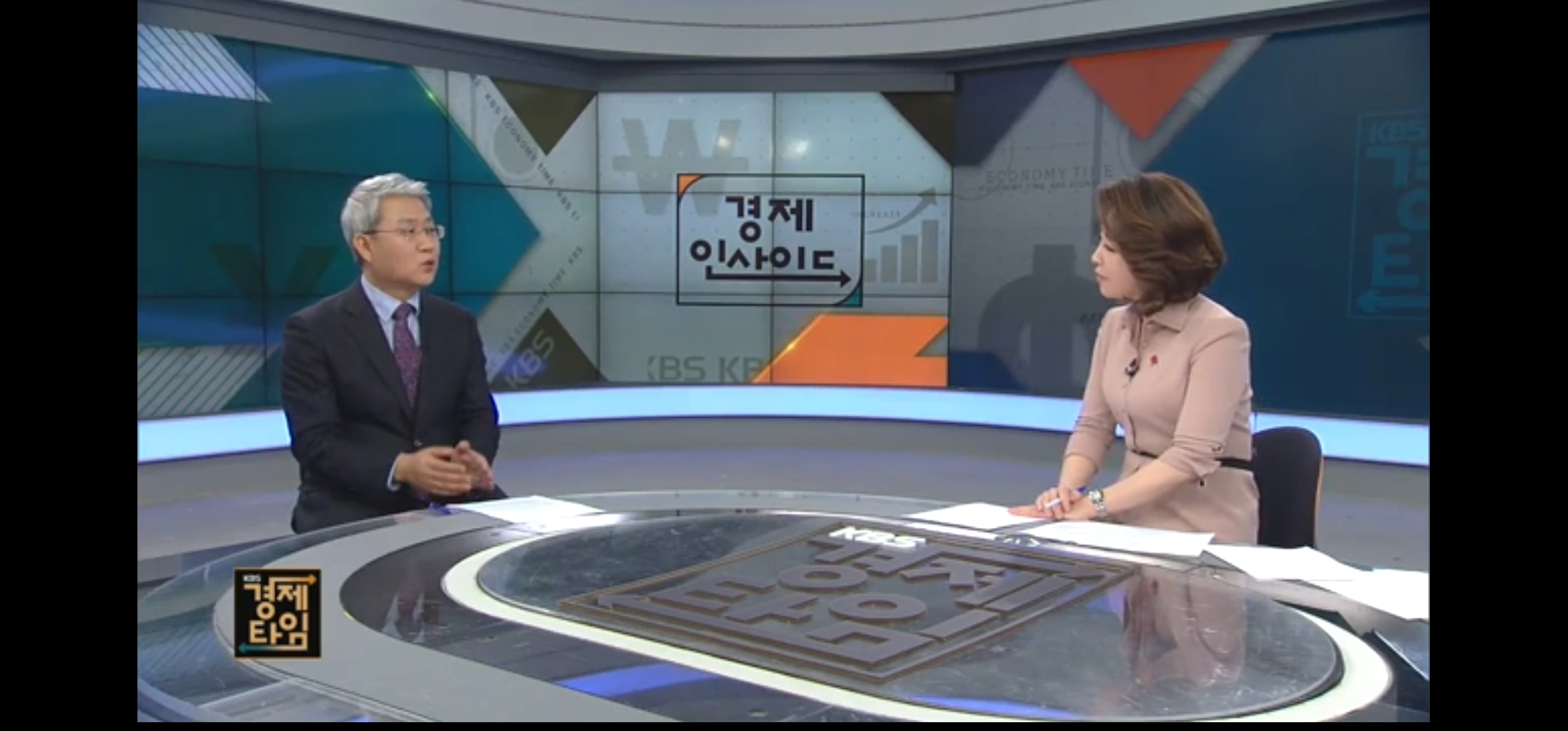
Yun Suk-myung, Research Fellow at the Korea Institute for Health and Social Affairs (KIHASA), is here with us.
The deficit of the Government Employees Pension is enormous; is it the same for the Military Pension?
[Answer]
The deficit for the Military Pension is projected to grow from 1.6 trillion won this year to 2.4 trillion won by 2028.
Despite the 2015 overhaul, the Government Employees Pension, which had a deficit of 2.2 trillion won in 2019, is expected to more than double to 5.1 trillion won by 2028.
The dependency ratio of the Government Employees Pension system is also 51.0, meaning that 100 people must support 51 others.
This is a significantly deteriorated figure compared to the National Pension's dependency ratio of 38.0.
But why is all of this being paid for with the public's taxes?
[Answer]
In the process of overhauling the Government Employees Pension system in the early 2000s, a provision was included stating that the state guarantees payment if the resources necessary for pension payments are insufficient.
This is an uncommon case globally.
Due to this provision, there is significant criticism that it acts as a barrier to overhauling the Government Employees Pension system in a sustainable direction.
Does the National Pension have such a provision?
[Answer]
In the fourth financial projection of the National Pension in 2018, the payment guarantee of the National Pension also emerged as one of the important points of contention.
This seems to be because arguments are gaining traction that, since the Government Employees Pension has a payment guarantee provision and the state will pay the pension anyway, it would be beneficial in various respects to include a payment guarantee provision to reassure the public.
However, the problem is that we must also consider the side effects that may arise from the payment guarantee provision.
This is because if the pension system is operated as a "pay less and receive more" system to the point of being no longer sustainable, it is highly likely that claims will emerge demanding that the state take responsibility regardless, since the state provided the payment guarantee.
This means that the payment guarantee
provision could potentially become an obstacle to proper pension reform at the right time.
From this perspective,
the payment guarantee provision of the Government Employees Pension itself is a very concerning point.
It is said that the Government Employees Pension is structured such that one receives more money than one contributes. Is it truly a case of "paying less and receiving more"?
[Answer]
Since contributions for the Government Employees Pension have risen significantly recently, most civil servants likely feel, "Aren't we paying as much as we should now?"
This is because since the 2015 overhaul of the Government Employees Pension system, contributions have been increasing from 14% to 18% (as of 2020), a rise of 4 percentage points.
However, it remains a fact that the contributions paid are still low compared to the pension amount received.
For example, the contribution rate for the Finnish Government Employees Pension, which provides smaller pensions than our own, is around 28%.
To provide further explanation, while it is true that the contributions currently paid by civil servants are high, in order to operate as a sustainable system based on the amount received, they would need to contribute around 30%; because they contribute around 18%, it is called a pension where one "pays less and receives more" to that extent.
Civil servants also say that while people working at private companies receive the National Pension and retirement pensions, they themselves have no severance pay, and that is why they receive more in pensions. What about that?
[Answer]
While there are some valid aspects to that, there are many problematic points when viewed as a whole.
Civil servants are also paid severance pay under the name of "retirement allowance."
However, because it is paid at a maximum of 39% compared to the private sector rather than at the same payment rate as the private sector, controversies are arising in the process of converting this difference.
The severance pay, which is paid 61 percentage points less than in the private sector, must be converted into the Government Employees Pension amount, and criticisms are being raised that the conversion rate is typically applied in a way that favors the Government Employees Pension during this process.
In cases where severance pay in the private sector is converted into a retirement pension for enrollment, or when a retirement lump sum is received and deposited in a bank,
(The broadcaster omitted the subsequent content.)