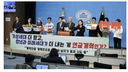
(Korea Economic Daily) [Editorial] The “Empty-Handed” Special Committee on Pension Reform — The State of Politics That Has Turned Its Back on Basic and National Pension Reform (November 12, 2026)
(Pension Future Forum comment:
When the time is judged to be right, the Pension Future Forum will announce its official position on how the Advisory Committee to the 22nd National Assembly Special Committee on Pension Reform has been run.)
The National Assembly’s Special Committee on Pension Reform is set to end its activities at the end of the year.
Since its launch in March last year, it has spent more than 20 months repeating nothing but empty talk, and it is wrapping up its work without producing any meaningful results.
It set out under the grand banner of redesigning the nation’s entire old-age income security system, including the National Pension, the Basic Pension, retirement pensions, and personal pensions, but it is effectively exiting “empty-handed.”
The Special Committee began from the recognition that the National Pension’s “parametric reform,” agreed by the ruling and opposition parties last year, was no more than a stopgap.
This was because, although the reform raised the contribution rate, the “money paid in,” from 9% to 13% and adjusted the income replacement rate, the “money received,” from 40% to 43%, a makeshift fix of this level only delays the fund’s depletion by about eight years.
Politicians in both the ruling and opposition parties agreed in principle that, without further reforms such as adjusting the pension eligibility age and linking the scheme with the Basic Pension, the National Pension cannot be sustained.
Yet no one was willing to take the lead in handing the public the unwelcome bill that says, “You must pay more and receive less.”
Throughout the committee’s work, the differences between the ruling and opposition parties never narrowed on core issues such as overhauling the eligibility criteria for Basic Pension beneficiaries and structural reform of the National Pension.
They could not even settle the principle of whether to put fiscal stability first or to prioritize income security.
Rather than taking the initiative to solve the problems, the committee, too, appeared to pass the buck on the troublesome issues, hoping the government would come up with a structural pension reform plan.
Structural pension reform, put off for decades, can no longer be postponed.
Population decline and aging are advancing rapidly, and there is no guarantee that the finances can be sustained.
It was precisely because of this grave situation that a considerable amount of taxpayers’ money was spent to set up the Special Committee.
Yet at a time when even staying up all night and putting heads together to deliver a sustainable pension system would hardly be enough, the Special Committee is folding after producing nothing but a “face-saving” report. (!)
How long will politicians neglect reforms on which the nation’s fate hangs and devote themselves only to partisan fighting?
Copyright ⓒ Korea Economic Daily. All rights reserved. Unauthorized reproduction and redistribution prohibited.