(AI Real Estate Economic News, Report on the Pension Future Forum Statement) Pension Future Forum and Future Generations Network Raise Concerns About “Citizen Deliberation” on the Basic Pension (November 12, 2026)
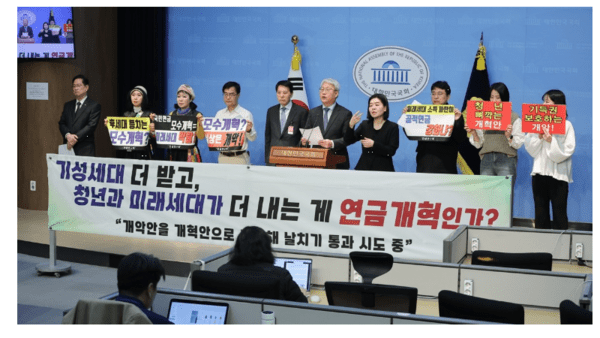
“The Voices of Future Generations Must Also Be Put on the Same Table” — Questions Raised on the Representativeness of the Deliberation, the Balance of Its Materials, and Long-Term Fiscal Burdens
AI Real Estate Economic News | Opinion
The dispute over overhauling the Basic Pension is spreading beyond benefit levels to the question of “who represents citizens, and with what materials public deliberation should be built.”
The Pension Future Forum and its affiliated Future Generations Network have raised one objection after another to the debate “Thinking It Through with Citizens: The Right Way to Overhaul the Basic Pension,” held recently by the Public Pension Strengthening People’s Action, the Social Welfare Committee of People’s Solidarity for Participatory Democracy, and others, arguing that anyone who invokes the name of citizens must bring differing positions, and the voices of future generations, into the arena of public deliberation as well.
On the 6th, the Public Pension Strengthening People’s Action, the Social Welfare Committee of People’s Solidarity for Participatory Democracy, and the Committee for Grand Social Reform under the Prime Minister held a citizens’ testimony forum and debate at the Changseong Annex of the Government Complex Seoul, attended by Basic Pension beneficiaries, figures from labor and civil society, social welfare experts, and others.
At the event, an analysis was presented that the government’s Basic Pension overhaul plan could, over the long term, weaken the Basic Pension’s effect in alleviating elderly poverty, along with the argument that a public deliberation process involving stakeholders and citizens is needed.
Pension Future Forum: “To Put Citizens Out Front, First Meet the Conditions for Public Deliberation”
In a statement released the same day, the Pension Future Forum took issue with the event’s title, the makeup of its participants, and the very method of deliberation.
The Forum pointed out that the organizers had described the event as “thinking it through with citizens” while having already set out a policy direction for the Basic Pension before the event, and it assessed that the witnesses and discussants, too, were mainly figures who had long advocated a particular policy direction in the labor and welfare fields.
It also argued that anyone using the label “the will of the citizens” must have at least the minimum conditions for public deliberation in place, such as random sampling, equal footing for opposing views, and balanced learning materials.
In particular, it pointed out that while the event included many voices stressing the need to strengthen the Basic Pension’s benefit adequacy, the participation of experts or stakeholders whose main focus is fiscal sustainability, intergenerational equity, or structural reform of the current “70% of older people” eligibility criterion could not be sufficiently confirmed.
The Pension Future Forum’s position is that, with Basic Pension beneficiaries reaching about 8 million and the required budget 25.7 trillion won in 2027, anyone arguing for expanded benefits or a new benefit structure must also present the long-term fiscal burden through 2040, 2050, and beyond, and have it verified.
In its statement, it also declared, “We do not call our arguments the will of the citizens.”
The point is that a particular organization’s policy claims should be put forward in that organization’s own name, and that it should take responsibility itself for their grounds and consequences.
Future Generations Network: “The Voices of Those Who Bear the Cost Matter as Much as the Voices of Beneficiaries”
The affiliated Future Generations Network, in a separate position statement, raised the same issue from the perspective of young people and future generations.
The Future Generations Network stated, “Listening to the demands of beneficiaries matters. But a public deliberation that leaves out the voices of those who will bear the cost for decades to come is only half a deliberation.”
Its point is that the Basic Pension is not a program that decides only how much to pay current beneficiaries; it is also a matter for the young people and future generations who will have to fund it through taxes over the coming decades, as the elderly population surges.
It therefore stressed that voices calling for fiscal sustainability, intergenerational equity, and an overhaul of the eligibility criteria must be given the same weight as the need to strengthen benefit adequacy.
The Future Generations Network also recalled the controversy over the balance of the learning materials and information provided to the citizen representatives during the public deliberation on pension reform in the 21st National Assembly.
At the time, the Pension Future Forum had demanded that sufficient information on fiscal stabilization and the burden between generations be provided, warning that the outcome of the deliberation could be swayed by what materials and explanations the citizen representatives received.
Accordingly, the Future Generations Network’s position is that, in any future pension-related deliberation conducted in the name of citizens, it will keep checking who takes part, what materials are provided, and whether the fiscal burden of expanding the Basic Pension is explained with the same weight as its benefits.
“We Keep a Record to Make Responsibility for Pension Reform Clear”
The objections raised by the two organizations differ in kind from a simple dispute over whether to pay more or less in Basic Pension benefits.
The heart of the matter lies in two questions about a pension policy that commits tens of trillions of won in public funds and even determines the long-term burden on future generations: through what procedures and materials “the will of the citizens” is to be ascertained, and how the interests of current beneficiaries and of those who will bear the cost in the future are to be reflected in a balanced way.
The event’s organizers criticized the government’s overhaul plan as having been pushed ahead without sufficient citizen participation and deliberation, and stressed the need for further public deliberation.
The Pension Future Forum and the Future Generations Network, by contrast, counter that those who demand public deliberation must likewise submit the makeup of their participants, the balance of their materials, and their long-term fiscal projections to verification by the very standards they have set out.
The Future Generations Network said, “The name of citizens is not an ornament for justifying policy.
Genuine public deliberation begins when not only the voices we want to hear but also the voices that are uncomfortable to hear are put on the same table.”
As the debate over overhauling the Basic Pension continues, a key issue is expected to remain in the deliberation processes ahead: how to address the alleviation of elderly poverty together with fiscal sustainability, and the demands of the current generation together with the burden on future generations.
Pension Future Forum Future Generations Network
Chair Kim Dae-young, Certified Tax Accountant (Advisory Committee Member, 22nd National Assembly Special Committee on Pension Reform)
Copyright © 2026 AI Real Estate Economic News. All Rights Reserved.