What Kind of Preparations Are You Making?
[Seoul Sinmun · Open World · January 9, 2014]
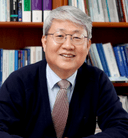
Yun Suk-myung, Director of the Pension Research Center at the Korea Institute for Health and Social Affairs (KIHASA)
Yun Suk-myung, Director of the Pension Research Center at the Korea Institute for Health and Social Affairs (KIHASA)
The year of Gabo has dawned. Remembering the year of Gabo from 120 years ago, worries are flooding in. I, too, am apprehensive. I am troubled by the Basic Pension, for which no consensus was formed despite a year of discussion; the Government Employees Pension and Private School Teachers Pension, for which there is no particular movement toward reform; and the "increase in National Pension contributions," which ended in failure.
While many might react by saying, "You worry too much," my concerns grow as I observe domestic and international trends. Let us listen to Director Kaneko of the National Institute of Population and Social Security Research in Japan. Unlike Korea, where the elderly poverty rate is high, life satisfaction among older people in Japan is said to be high. This is reportedly due to generous pensions in addition to assets accumulated during the period of high growth. On the other hand, life satisfaction among the younger generation is low. This is because it is not as easy to find employment as before, employment is not guaranteed, and monthly salaries are lower than the pensions received by older people. Consequently, an increasing number of young people avoid marriage and eventually give up their jobs to live on their parents' pensions.
It is said that there are cases where children in their 50s who are not employed live with parents in their 80s. This is because the parents' pensions are sufficient to make living together feasible. However, since the pensions will cease upon the parents' death, there is concern about how children without pensions will survive. It seems to be a sequela of an aged society experienced by Japan, a long-lived nation.
Even such a Japan is ahead of us in pensions. This is because ten years ago, they reformed the system so that pension amounts are automatically linked to economic and demographic changes. They introduced what is called an automatic adjustment mechanism. Germany, Sweden, and Norway also introduced automatic adjustment mechanisms. Starting next year, Japan will overhaul the Government Employees Pension into the same system as the National Pension. The unification of pensions seems to be spreading rapidly. Austria has also introduced an automatic adjustment mechanism for the Government Employees Pension.
Finland, which paid the full Basic Pension to 93% of older people aged 65 and over in the early 1990s, reduced the eligible recipients by half within ten years. Currently, half of older people receive the Basic Pension, but those receiving the full amount account for only 8%. They took swift action as economic conditions worsened and population aging progressed rapidly. Even in this situation, based on the judgment that the current pension system is no longer sustainable, the political parties reportedly agreed on a pension reform to take effect in 2017. This is a truly enviable point.
An elderly scholar I met in Helsinki two years ago said that thorough civic consciousness is necessary to properly operate pensions, which take a long time for problems to surface. He noted that while Northern Europe has strong civic consciousness, Southern Europe does not seem to be the same. He mentioned that in Northern European countries, people demand from the state after fulfilling their own responsibilities, whereas Southern European countries do not seem to be like that. It seems to be a warning that if one is not armed with thorough civic consciousness, pensions can become the source of a national disaster.
The words of Ismo, a manager at the Finnish Centre for Pensions with whom I am frequently in touch, also weigh on my mind. He asked, "Considering the trends in demographic structure and social change, the Korean pension system seems no longer sustainable; what kind of discussions are taking place in Korea?"
The words of an Australian official, heard after a heated debate in Canberra a year and a half ago, also linger in my ears. This is because he confessed that the Australian Basic Pension, which was said to be well-operated, is no longer sustainable. He said there is no system that is sustainable while providing an appropriate level of pension to everyone.
The population aged 65 and over, which is 6.38 million in 2014, will surge to 16.5 million in 2040 and 17.99 million in 2050. You might say 2040 and 2050 are too far away. There are 26 years left until 2040 and 36 years until 2050. 2060 is the year the National Pension Fund will be depleted. As for the Government Employees Pension, 54 years after its introduction, only the necessity for reform is being raised, but it has not been properly reformed.
Time flows faster than one might think. Is it the correct approach to address the issue of old-age income security primarily from the perspective of our current generation? Who represents the voices of future generations who will be responsible for the system? If they are not properly represented, intergenerational conflict is inevitable. Such signs are already appearing in Japan. How well are we preparing for these issues that will determine the rise and fall of the Republic of Korea? I want to ask all of us this question in the new year of Gabo.
Source: Seoul Sinmun (original article)