(Yun Suk-myung's Basic Pension Column, Seoul Sinmun) [Open World] At Least the Basic Pension Should Reduce the Burden on Young People (Posted September 23, 2026)
(We need cross-party wisdom for future generations
regarding the Basic Pension, which is paid uniformly
to older people from the poor to the middle class)
When reform was pursued in 2003, the National Pension was only fifteen years old.
Unlike the National Health Insurance, where one can receive benefits immediately upon gaining eligibility, the National Pension has conditions that must be met.
This is because one can only receive the pension at age 63, even after paying contributions for at least 10 years.
Because the history of the system's introduction is short, those aged 65 and older, who had already become older people, had no opportunity to join, or had short contribution periods even if they did.
This is why the majority of older people were those with no pension or those on a low pension. Politics squeezed into this gap.
Although the system could barely even take its first steps, the argument squeezed in—asking why it could not run fast—that pensions should be paid to all older people out of taxes.
Many people liked the idea of distributing money through taxes.
In a situation where passage of the reform plan was desperately needed, an awkward compromise was reached.
The government proposal to pay only the most vulnerable 45% of all older people snowballed until it passed through the National Assembly in 2007 as a plan to pay up to 70% of older people. After much controversy, its name was changed in May 2014 to the current Basic Pension.
Although their names are similar, there is a big difference between the Basic Old-Age Pension of the Roh Moo-hyun administration introduced in 2007 and the Basic Pension of the Park Geun-hye administration in 2014.
This is because, unlike the Basic Old-Age Pension, where the number of recipients could be reduced depending on government financial conditions, the Basic Pension is specified to be paid unconditionally to 70% of all older people.
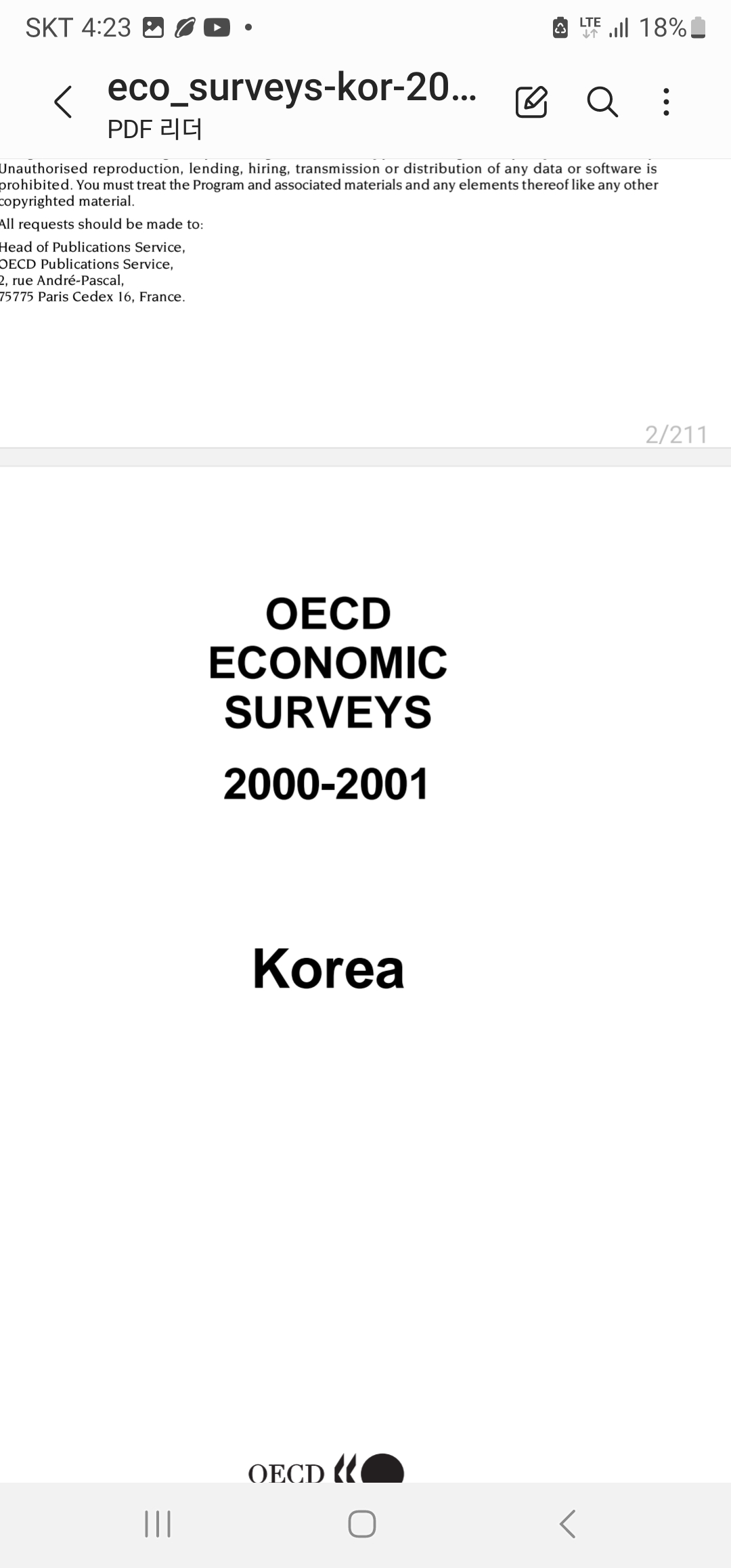
Since the point when the Secretariat of the Organisation for Economic Co-operation and Development (OECD) recommended the introduction of a Basic Pension in 2001, the author has been at the forefront of opposing the introduction of a tax-financed Basic Pension.
This happened at the OECD headquarters in Paris in 2001. Pensions were included in "Preparing for an Aged Society," which was a special theme of the Korean economy review report hosted by the OECD Economic and Development Review Committee (EDRC).
At the time, citing the lack of a proper old-age income security system for the rapidly increasing older population, the OECD Secretariat recommended that a tax-financed Basic Pension be paid to all older people, and at a level of 20% of the average wage of workers.
The author was included in the Korean delegation as an expert in the field of pensions. After two days of tug-of-war at the OECD headquarters in Paris with Randall Jones, Deputy Team Leader of the Korea-Japan desk, a short piece of content was added.
A plan to introduce it as a form of public assistance for vulnerable older people was mentioned as an alternative.
Subsequently, the OECD, having properly grasped the reality of Korea, changed its recommendation.
The OECD report published in 2014 recommended as follows: "Among Basic Pension beneficiaries, one-third are older people who are not poor even by OECD standards, meaning they are above the relative poverty line.
On the other hand, one-third of older people exposed to absolute poverty, falling short of the minimum cost of living, are receiving the same amount of Basic Pension as those who are not poor by OECD standards.
It is being operated as an inefficient system because the effect of alleviating elderly poverty relative to the input cost is low. It is necessary to set the alleviation of economic hardship for vulnerable older people, namely escaping the absolute poverty line, as the top priority of the Basic Pension."
The problem is that in that very same year, specifically on May 2, 2014, the Basic Pension Act, which provides payments to 70% of older people aged 65 and over, was passed by the National Assembly.
The Basic Pension, which was introduced while enduring even a defiance scandal involving the Minister of Health and Welfare at the time, is exposing many problems as time passes. This is because older people who belong to the middle class among all households in our country have come to receive the Basic Pension.
The reality of the amendment to the National Pension Act passed in March 2025 is that it increased the burden on young people and future generations in exchange for further solidifying the vested interests of those aged 50 and over in the National Pension.
At the very least, the Basic Pension, which is already exposing far too many problems, should be able to reduce the burden on young people and future generations.
It is time to gather wisdom across party lines to prepare a solution for the Basic Pension, for which there are more than enough reasons to reform.
Yun Suk-myung, Research Fellow Emeritus at the Korea Institute for Health and Social Affairs (KIHASA)