How Should One Live to Be Happy?
[Seoul Sinmun · Open World · December 5, 2013]
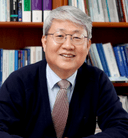
Yun Suk-myung, Director of the Pension Research Center at the Korea Institute for Health and Social Affairs (KIHASA)
The impoverished population in the Asia-Pacific region (people living on $1.25, or 1,350 won, or less per day), which stood at 1.5 billion in 1990, decreased to 950 million in 2008. The UN assesses that efforts toward poverty alleviation were meaningful. This is because the Millennium Project, which set poverty reduction as its goal, reduced the impoverished population at least this much. The problem is that 950 million people in the Asia-Pacific region still live without being able to spend even 1,350 won a day (40,000 won a month), unable to consume the minimum amount of food necessary for survival. This number increases sharply if Africa is included.
Professor Jeffrey Sachs of Columbia University, who also serves as an adviser to UN Secretary-General Ban Ki-moon, preaches that we must actively help our struggling neighbors in the global village. His philosophy is that establishing a foundation for self-reliance is necessary rather than simple support, and he is devoting his utmost effort to this end. While there may be a sense of duty from humanitarian and moral perspectives, it seems to be because he considers the damage industrialization has inflicted on the Earth. Just as there is no such thing as a free lunch, industrialization had a price. That price is global environmental pollution. The problem lies in the fact that those responsible for environmental pollution and those who suffer from it are different. This is because there are many victims who bear the full brunt of environmental pollution without knowing why, despite not having been significantly involved in the destruction of the Earth. As seen in natural disasters in Africa and typhoon damage in the Philippines, the scale of damage caused by global pollution is growing day by day.
In this situation, the happiness of our citizens—which is among the lowest among OECD member countries—namely, the low level of life satisfaction, gives much food for thought. Because satisfaction with life is not high, people rarely blame themselves and mostly blame others. Naturally, most important social issues that become points of contention are attributed to others. How can our citizens become happy?
I would like to share an episode I heard recently. A high school girl from a family of modest means reportedly received 200,000 won as a prize from the literary club. She reportedly asked the teacher she consulted to look for a good cause to which she could donate the money. It seems the teacher was unable to inform her of a place to use it in time due to busy school administrative work. When she returned, she said that since she had the money, she kept wanting to spend it, and asked if the teacher could hold onto it for her. This student reportedly lived in a truck with her family during the IMF economic crisis and still lives in a rented house with one or two rooms.
When it was suggested to do something meaningful during the school festival, a student reportedly came with 80,000 won. Despite living in a single-parent household with modest means, it was money saved by cutting into her own allowance. When told to keep it and donate it during the festival since there was still time, she reportedly returned shortly after. This student also said that because she started wanting to spend the money, she asked the teacher to hold onto it. In the end, the teacher kept the money and donated two goats to Africa through 'Save the Children'.
It seems we must create a social foundation where our children, who possess such warm hearts, can live happily. This is so that they can feel proud in every aspect of having been born in the Republic of Korea. It also seems time to consider our international responsibilities as a nation that produced a UN Secretary-General. Rather than only boasting of our economic status as one of the world's top ten exporters, it seems time to look back at our struggling neighbors in the global village who are suffering because of the Earth we damaged in this process.
In late November, I offered to pay a presentation fee to an official from the New Zealand Treasury who participated in an international conference that I hosted, but he asked me instead to donate that fee to the people of the Philippines who suffered typhoon damage. Although we have achieved rapid economic development, there are still many vulnerable groups around us who cannot even burn enough briquettes during the cold winter. Instead of debates over welfare, should the interest of our society not shift toward showing more consideration for those, both domestically and abroad, who are starving and unable to live a dignified human life? In that process, would our sense of happiness in life not also increase?
Our society contemplates dieting to prevent obesity. As I write this, I too feel ashamed of my protruding belly. It is not because it spoils my figure, but because it feels as if I have eaten alone what should have been shared with others.
Source: Seoul Sinmun (original article)