The Bare Face of Swedish Welfare and the Wisteria Around an Ancestral Grave
[Seoul Sinmun · Open World · September 26, 2013]
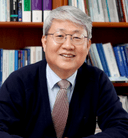
Yun Suk-myung, Director of the Pension Research Center at the Korea Institute for Health and Social Affairs (KIHASA)
There was an important international exchange in the field of old-age income security, which has been fraught with much talk and trouble. This occurred through the "Korea-Sweden Government Forum on Population Aging" recently held at the Korea Press Center and a dinner at the Swedish Ambassador's residence. Through the keynote speeches of the Ministers of Health and Welfare of both countries, serious debates with Lars Danielsson, the Swedish Ambassador to Korea, and various Swedish experts, I was able to experience the bare face of Swedish welfare.
Having long been very interested in Sweden's 1998 pension reform, which automatically reduces pension amounts to the extent that increasing life expectancy and falling economic growth burden pension finances, I asked Ambassador Danielsson about the background that allowed the pension reform to succeed. This is because the exclusion of political logic from pension management and the abolition of its long-standing basic pension were made possible through the 1998 pension reform.
Ambassador Danielsson cited Sweden's long history of welfare as a major factor. He stated that through the learning effect of a long history of welfare, the necessity of welfare systems is deeply ingrained in the people. In this situation, when the government responsible for pension management declared that reform was inevitable, the people accepted it, thinking that there must be a need for reform even if they did not want to accept it. The explanation that frequent changes of government since the 1980s increased the sense of responsibility in the political sphere also sounded important. Since they will hold power someday, considering the political burden caused by reckless opposition or excessive populism, the political sphere does not cross a certain line in debates related to welfare.
The answer that constantly adapting to environmental changes is the true nature of Swedish welfare also touched my heart. This was especially true at the point where he mentioned that the core of Swedish welfare is to constantly revise systems introduced in the past so they can adapt to new environments. The views of the Swedish forum participants, who stated that additional pension reform is inevitable to respond to population aging despite having carried out the world's most powerful pension reform 15 years ago, seemed to prove this.
On the other hand, in response to repeated questions about the direction of introducing the Basic Pension in Korea, which is a subject of controversy, he only repeated a principled answer that the best approach would be to introduce the system in a way that fits the Korean situation and sentiment, considering our history, culture, and tradition. It was an extremely restrained answer, stating that while an objective assessment reflecting the low fertility and rapid population aging Korea is facing could be made, the specific direction of introducing the system is a matter for us to decide ourselves. Although we know our own circumstances best, the reason I went so far as to ask foreigners for a solution was that it is difficult to reach a social consensus on desirable reform.
On my way to visit ancestral graves during Chuseok while cherishing the lingering impressions of these meetings, the wisteria forest around the graves caught my eye. This was because the wisteria, which provides a comfortable shelter during the summer, showed a completely different appearance in the wild mountains. While wisteria growing in limited urban spaces can provide excellent shelters and beautiful flowers, wisteria in a wild state without proper control was killing pine trees over 10 meters tall with its characteristic strong reproductive power.
The difference in function between urban and wild wisteria seemed like a symbol that starkly shows the difference in reality and environment between Sweden and Korea regarding welfare issues. If we acknowledge the stark differences between the two countries in terms of the learning effect on welfare, the level of burden for securing welfare funds, and infrastructure related to income identification, the solution seems simple. It is to set the improvement of the quality of life for vulnerable groups, which is a serious problem in our society, as the first principle of the welfare we pursue.
Considering the large income gap within the older population, it seems desirable for the controversial Basic Pension to be selectively paid and differentially paid to provide greater benefits to low-income older people. This is because additional welfare spending for low-income older people is necessary in a situation where alleviating elderly poverty is impossible with the Basic Pension alone. On the other hand, linking the operation of the Basic Pension and the National Pension, which have different operational principles, is highly likely to function like wild wisteria that could inadvertently kill the National Pension of low-income groups below the middle class. This is the background for my judgment that instead of a linked operational method, the tax-financed Basic Pension should be developed into a system centered on vulnerable older people exposed to elderly poverty.
Source: Seoul Sinmun (original article)