Six Years Since the 'Candy and Medicine Bowl' Remark
[Seoul Sinmun · Open World · July 17, 2013]
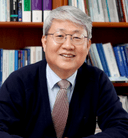
Yun Suk-myung, Director of the Pension Research Center at the Korea Institute for Health and Social Affairs (KIHASA)
Recently, the National Pension Development Committee has been facing severe public backlash after proposing an increase in National Pension contributions as the majority option.
Yun Suk-myung, Director of the Pension Research Center at the Korea Institute for Health and Social Affairs (KIHASA)
There seems to be no interest in what concerns were weighed or how intense the debate was before the necessity of increasing contributions was raised.
The prevailing atmosphere is to dismiss it as the romantic view of armchair theorists who do not know reality. The question is why they played the contribution increase card given the current economic situation. Critics point out that the recommendation failed to consider stagnant income and the worsening corporate environment.
Let us go back to 2003, the starting point of the debate. The first National Pension Development Committee, which began its activities in early 2002, presented three options with similar intents in May 2003. These stated that if benefits were to be received as they are, the increase in contributions would have to be large, and if contributions could not be raised, benefits would have to be significantly cut. Among the three alternatives, the government finalized a plan to increase contributions by 6.9 percentage points (9% → 15.9%) in exchange for cutting benefits by 10 percentage points (60% → 50%).
After the amendment bill was submitted to the National Assembly in October 2003, it underwent three and a half years of debate before being put to a vote in the National Assembly on April 2, 2007. The bills introduced were the Basic Old-Age Pension Act and the amendment to the National Pension Act. The National Pension amendment put to a vote was a revised plan to lower benefits to 40% and increase contributions to 12.9% (by 2018). As a result of the vote, the Basic Old-Age Pension Act passed, but the amendment to the National Pension Act was rejected.
The remark about 'candy and a medicine bowl' was made by the Minister of Health and Welfare on a broadcast after the vote. It was a lament that "because the amendment to the National Pension Act tasted bitter, we placed candy (the Basic Old-Age Pension) next to it, but it turned out that they overturned the medicine bowl and only ate the candy."
The National Pension amendment was rejected with 123 votes in favor, 124 against, and 23 abstentions. It was rejected by a single vote. It is all the more regrettable because if the amendment had passed, about half of the target would have been achieved by now. This regret is brief; what is concerning is the reality six years after the 'candy and a medicine bowl' remark. Six years ago, 123 lawmakers chose the medicine bowl. Now, they consider the medicine bowl itself unnecessary. This is despite the fact that because reform of the system has been delayed, National Pension reform should be all the more urgent.
The population aged 65 and older, currently 6.13 million, will exceed 17 million by 2060. Due to such a rapid increase in beneficiaries, the reserves of 2,600 trillion won are projected to be completely depleted within 17 years. An annual average of 150 trillion won will be paid out for 17 years starting from 2044, and more than 200 trillion won per year will be required after 2060. If no action is taken, contributions to cover pension expenditure after fund depletion in 2060 must rise to over 22% (13 percentage points higher than the current 9%). This is the cost of supporting older people that our society must pay, without even considering the Basic Pension, which would add enormous costs.
Nine times out of ten, people dislike being told to pay more when they receive the same benefits. In such times, correct information must be provided. Instead of an approach suggesting that contributions are hard to raise due to difficult economic conditions and that increasing the fertility rate will suffice, the reason why a contribution increase is inevitable must be put to public deliberation. It should also be made known that Sweden, Finland, and Germany reformed their pensions during periods of economic hardship. A sense of crisis regarding the future served as the link to reaching a national consensus. For the controversial Government Employees Pension and Private School Teachers Pension, reform corresponding to the National Pension—which cut benefits by 43% (70% → 40%) 20 years after its introduction—must occur for reaching a national consensus to become easier.
Sweden, Norway, Germany, and others have already carried out pension reforms that exceed the level of our discussions. Rather than increasing contributions by a few percentage points, they operate systems that automatically link and reduce the pension amount payable in accordance with increasing life expectancy and decreasing economic growth rates. This excludes the possibility of political controversy intervening. The moment of destiny is approaching: whether we will follow these countries or follow Southern European countries like Greece and Spain.
Source: Seoul Sinmun (original article)