Storytelling — 'Vision 2050'
[Seoul Sinmun · Open World · May 25, 2013]
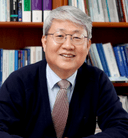
Yun Suk-myung, Director of the Pension Research Center at the Korea Institute for Health and Social Affairs (KIHASA)
It is a well-known fact that among the member countries of the Organisation for Economic Co-operation and Development (OECD), South Korea's national happiness index is at the lowest level. Almost every generation of ours is engulfed in anger. Those in their 20s and 30s are dissatisfied because it is difficult to find employment, and even if they do, they are in non-regular positions with low salaries. Those in their 40s have many grievances as private education costs are enormous while they feel suffocated by the falling prices of homes bought with loans. For those in their 50s, every day at work is like walking on thin ice, and the highest rate of elderly poverty among OECD member countries and the resulting high suicide rate among older people can be seen as a stark expression of the anger shown by the generation aged 60 and over.
In our country, where almost all age groups are engulfed in anger like this, where should we begin to unravel the tangle? Could it be solved if we adopted the Finnish sense of competition, in which one's competitor is not a relationship of superiority or inferiority with people around them, but rather the degree of development between the 'current me' and the 'past me,' represented by yesterday and before? Given the characteristics of our people, who have an exceptionally strong sense of equality, perhaps this can only be resolved if there is a level of self-confidence as strong as the cry in the lyrics of Deulgukhwa's song "March."
Over the past few years, this dissatisfaction has led to a welfare frenzy that swept through our society. Dissatisfaction was expressed in forms starting from "What has the state done for me?" to "We are supposedly an OECD member country, so why is our level of welfare so poor?" The welfare pledges presented to embrace such dissatisfaction do not seem easy to resolve. The Basic Pension pledge for older people aged 65 and over is a representative example. It has for now been settled as the 'National Happiness Pension (Draft),' but the controversies over the proportion of pension recipients, the level of the pension amount, and the criteria for and degree of differential payments will not be easy to resolve.
Whether it is the National Pension, whose fund is projected to be depleted by 2060, or the Basic Pension, which is financed by taxes, the atmosphere has entered a generational power struggle over who will bear how much and who will receive how much. Alternatives for solving the problem are being presented in a truly chaotic manner, with claims such as "If the fund is depleted, we can just cover it with taxes" and "Will I end up paying contributions only to receive not a single penny of pension when I actually grow old?"
The public's expectations have already risen. They seem to expect welfare expenditures on par with those of Scandinavian welfare states. However, they believe that the financing for welfare should be borne by those who are better off than themselves. This is while ignoring the fact that the average tax burden ratio of Northern European countries hovers around 45%, and that the welfare model of Sweden, which is often taken as a role model, is a wage solidarity model called the 'Rehn-Meidner' model. They pretend not to know that it is a system operated in a form where workers receiving high wages set aside a portion of their salaries to subsidize workers receiving low wages.
In this situation, what is the vision for our society that can alleviate the anxiety felt by the '2030 generation'? If we present a vision of how our society will change around 2050, the time when this generation retires, could their anxiety and anger be calmed?
What kind of vision shall we set, and through what kind of storytelling shall we elicit the cooperation of our society's members? This should be done while keeping in mind the background of analyses by Japanese experts who suggest that "since it is seen as not easy to overcome the wave of rapid population aging that will approach, Korea could collapse more easily than expected."
The national liabilities ratios of Sweden and Japan, which were at a similar level of 70% relative to gross domestic product (GDP) in the 1990s, have diverged after about 20 years; while Sweden's decreased to 40%, Japan's increased to more than 230%. A difference of more than five times has opened up. I suspect the reason why the government treasuries of these two once-similar countries became so different is due to the difference in deriving social consensus through vision and storytelling.
In an era where almost all generations are engulfed in anger, vision and storytelling are very urgent tasks of the times. I mean storytelling about what kind of vision is needed and what role each member of our society must play to achieve that vision. It is time for labor, management, the government, and various stakeholders to unite to prepare a vision and storytelling to share the vision and secure momentum.
Source: Seoul Sinmun (original article)