(22nd National Assembly Special Committee on Pension Reform — Presentation Material) Assessment of the Amendments to the National Pension Act Passed on March 20, 2025
- #국민연금법
To summarize in a single sentence the contents of the amendments to the National Pension Act passed on March 20, 2025,
"This is reform in name, deterioration in substance. To put it more bluntly, it can be called a massive fraud perpetrated on the nation."
This is because, in exchange for further entrenching the pension entitlements of those aged 50 and above, the burdens on younger generations and future generations have been increased.
To illustrate with an example, the PAYG cost rate of the National Pension — that is, the annual burden level after the fund is depleted — before the reform discussion commenced was assessed as unsustainable, standing at 36.6%. However, after the system was restructured, the rate surged to 39.4%. If the retirement age extension to 65, which has recently become a matter of controversy, is soon carried out, the PAYG cost rate would reach 41.1%, and the cumulative deficit would increase by an additional 179 trillion won.
Multiple indicators suggest that this represents a deterioration that increases burdens on future generations. If one judges that such system restructuring can nonetheless be called reform, it is requested that following the conclusion of this presentation, members of the advisory committee raise their hands and clarify the grounds for that assertion to the present speaker.
The speaker is prepared, if necessary, to engage in unlimited all-night discussion to ascertain the facts.
(The grounds for the speaker's strong claims include, as currently posted on the Ministry of Health and Welfare website following the March 20 restructuring of the National Pension system,
requests for clarification from experts at Japanese government institutions regarding the content showing that the PAYG cost rate has increased compared to the previous National Pension system. Reference is also recommended to the speaker's discussant remarks at the pension-related seminar hosted by the National Assembly Futures Institute.
Parametric reform discussions, which address only contribution rates and income replacement rates, alone required more than one and a half years of deliberation.
The Special Committee on Pension Reform of the 22nd National Assembly was established precisely to conduct structural reform discussions — to restructure the Government Employees Pension and the Private School Teachers' Pension, which face even more severe financial instability than the National Pension, with a sustainability rate of zero percent.
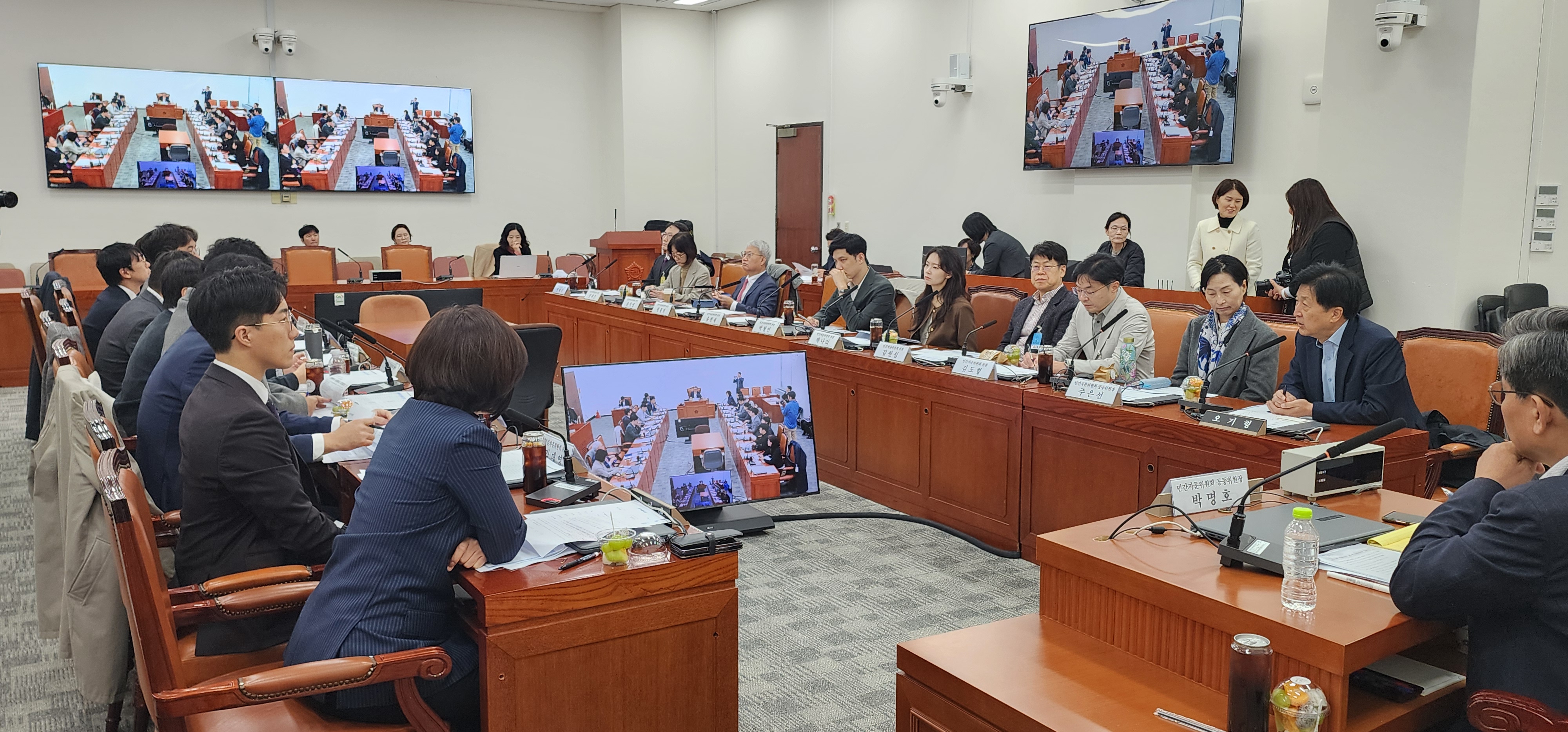
The present speaker, leading the advisory committee that commenced operations for the first time today to support this work, makes a strong call.
The Special Committee on Pension Reform, constituted shortly after passage of the March 20 amendment to the National Pension Act, has still not undertaken proper deliberation. Given the fact that the advisory committee's first meeting, which is to provide in-depth support to the committee's deliberations, was held on November 14, 2025, just before the expiration of the committee's mandate,
at today's meeting, it would appear that extending the mandate of the 22nd National Assembly's Special Committee on Pension Reform by at least another six months should take precedence as the decision that must be made before any evaluation of the March 20 pension amendment!