(Debate Between Committee Member Yun Suk-myung and Professor Joo Eun-sun. JoongAng Ilbo, 2013) [Debate] Is an Increase in National Pension Contributions Necessary? (Posted September 30, 2026)

(The results of the third National Pension
financial projection in 2013 showed
that, to achieve fiscal stabilization
of the National Pension,
contributions would have to
be raised quickly.
Please read and compare
Center Director Yun Suk-myung's argument
that contributions must be raised quickly
with Professor Joo Eun-sun's argument
that there is no need to raise them.)
Pension contribution increases are emerging as an issue now that Moon Hyung-pyo, the Minister of Health and Welfare-designate, has proposed that "National Pension contributions must be raised to 13% (currently 9%)."
On this question, the argument that "an increase is necessary to prevent fund depletion and to strike a balance between the current generation and future generations"
and the counterargument that "simply increasing the size of the fund can hardly be a fundamental remedy" are locked in a tight standoff.
We have listened to these two differing voices.
At This Rate, the Pension Fund Will Run Dry
and Intergenerational Conflict Will Grow
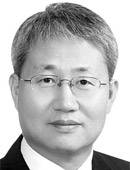
Yun Suk-myung
Head of the Pension Research Center at the Korea Institute for Health and Social Affairs (KIHASA)
Before discussing the need to raise National Pension contributions, let us first examine the reasons for opposing an increase. The leading objection is that, at a time when the Basic Pension is becoming a black hole that sucks in every welfare issue, a contribution increase would not even be achieved and would merely stir up a hornet's nest. The poor state of the economy is also frequently cited as a reason for opposition.
It is also often argued that raising contributions is not urgent if one has in mind a shift to a financing method in which the shortfall in pension expenditure is covered by taxes—specifically, pay-as-you-go (PAYG), under which all the expenditure needed in a given year is raised within that same year. Yet considering that many countries with advanced pension systems that switched to PAYG after World War II are now being battered by population aging and low growth, this too seems unrealistic. Many also argue that, even granting the need to raise contributions, the increase should be postponed. Their question is why the increase should be rushed, stirring up needless conflict, when contributions could simply be raised once the National Pension's deficit between revenues and expenditures materializes.
Then, let us examine why increasing contributions is urgent. According to the third National Pension financial projection, a deficit between revenues and expenditures is projected to occur starting in 2043, with fund depletion expected in 2060. This is because more than 150 trillion won per year will be spent on pension benefits between 2044 and 2060. After 2060, the situation worsens, requiring more than 200 trillion won per year to pay pensions. To pay pensions after 2060 when the fund is depleted, the system can only function if the current 9% contribution rate is increased by 13 percentage points to 22% or more. Of course, this is an extreme scenario. This is the contribution rate under a scenario where contributions are not raised at all until the year of fund depletion, and all required resources are then covered by contributions. Nevertheless, this figure is important because it serves as a benchmark showing that whether procured through contributions or taxes, this much cost is required to maintain the National Pension scheme.
Raising contributions is also urgent from the standpoint of intergenerational equity. The baby-boom generation, to which an income replacement rate of 60–70% applies for a considerable period, is a generation that started out with a contribution rate of 3%. These 7.6 million people, who now pay 9%, will soon leave the labor market. If the contribution increase is delayed, this generation will be fixed for good as one that paid little and received much. Future generations, to whom a 40% income replacement rate will apply, will instead have to be made to bear contributions of 15% or more. Intergenerational conflict is inevitable. Japan is a stark example. Japan's National Pension contribution payment rate, which was close to 90% in the late 1980s, has fallen below 60%. Among young people the payment rate is only 35%. This is because distrust of the National Pension has grown.
Future generations must also shoulder the National Health Insurance and long-term care insurance, which will balloon as the population ages—and they must do so in a society where the potential growth rate falls to 1% or below in the long run and older people make up 40% of the population.
It is the height of irresponsibility to claim that future generations can bear an additional 13 percentage points (whether in contributions or in taxes) when we cannot even push through a 4-percentage-point increase in contributions. The proper way to solve the problem is to build a system that is sustainable to at least some degree and then ask future generations to follow.
A problem that prompt action could contain with little effort may reach a point where even great effort cannot contain it. Rather than taking fright in advance, we must create occasions for dialogue that let the public know why raising contributions is urgent.
Yun Suk-myung, Head of the Pension Research Center at the Korea Institute for Health and Social Affairs (KIHASA)
Rather Than Piling Up the Fund at All Costs,
Build the Foundation for Stable Reproduction

Joo Eun-sun
Professor, Department of Social Welfare, Kyonggi University
A great misconception about the National Pension is prevalent in Korean society: the belief that the National Pension Fund faces a depletion crisis and that the crisis can be overcome by raising pension contributions to enlarge the fund. To state the conclusion first, what is in crisis now is not the National Pension's finances but social sustainability in a broader sense.
Why, and in what sense, is the fund said to be not essentially important to the fiscal stabilization of the pension? The National Pension is not a personal pension in which each person accumulates contributions and receives benefits according to investment returns. It is a public social security scheme based on intergenerational solidarity. In other words, it is a scheme in which the following generation, enjoying the fruits of higher productivity, collectively supports the preceding generation on the economic foundation that the preceding generation built.
Public pension schemes are structured so that the pension contributions paid by the working generation go toward the old-age security of the parent generation. The same holds even in exceptional cases like ours, where pension funds are accumulated on a large scale. When pension benefits are financed by selling the stocks, bonds, and real estate held by the funds, the ultimate source is the wealth created in that society—that is, the working generation.
The problem is that a mass sell-off of fund assets in a phase of population aging drives asset values down, and asset values fluctuate with the real purchasing power of the following generations.
The National Pension is projected to accumulate a fund of more than 3,200 trillion won in nominal terms in the 2040s, but it is unclear whether it will retain that much real value. Piling up as large a pension fund as possible, no matter what, is not the way to guarantee the long-term fiscal stability of the pension.
Ultimately, the fiscal stability of the National Pension scheme can be secured through the reproduction of generations capable of stably paying contributions or taxes in the future, rather than by the size of the fund.
Pension schemes can secure fiscal stability when the various economic, demographic, and institutional factors—the economic growth rate, the fertility rate, the labor income share, the labor force participation rate, the contribution payment rate, and others—are stable. For this reason, most countries target an appropriate size when building up their public pension funds.
The accumulation of a large-scale public pension fund, such as that of the National Pension in Korea, is rare. Even in its current state, the size of the fund relative to gross domestic product (GDP) is 31.2%, the largest in the world.
What the pension needs in the current phase is to find solutions to enhance social sustainability. It is more important to solidify the foundation for the sustainability of the pension scheme, such as by improving the fertility rate and employment rate and building trust in the system.
Ensuring that citizens have decent jobs, bear and raise an appropriate number of children, and live healthily, and ensuring that the pension scheme performs its role properly to build social trust, are more fundamental to the sustainability of the system.
I believe that if there are social resources that could be drawn into the pension funds by raising contributions, it is only right to devote them to expanding welfare so as to improve the quality of Korean society.
Accelerating contribution increases without improving the quality of society to strengthen the foundation of public pensions does not reduce the burden on our children’s generation.
As a result of the basic benefit amount being slashed by as much as one-third, the average income replacement rate for pension benefits expected in 2040 is at the 23% level. This means that a person with an income of 2 million won will receive a pension amount of less than 450,000 won. Without improving this problem of low pensions, unconditionally raising contributions lacks persuasiveness in terms of the balance between benefits and burdens. It is not rational to talk of raising contributions while the old-age security function of the National Pension remains weak.
Public pension policy now needs to move away from a narrow perspective that relies solely on pension contributions.
Joo Eun-sun, Professor, Department of Social Welfare, Kyonggi University