
(JoongAng Ilbo / Pension Future Forum coverage, online edition) Basic Pension Structural Overhaul Effectively Shelved — Both 'More at the Bottom' and 'Less at the Top' Reduced to a Trickle (2026.09.01.)
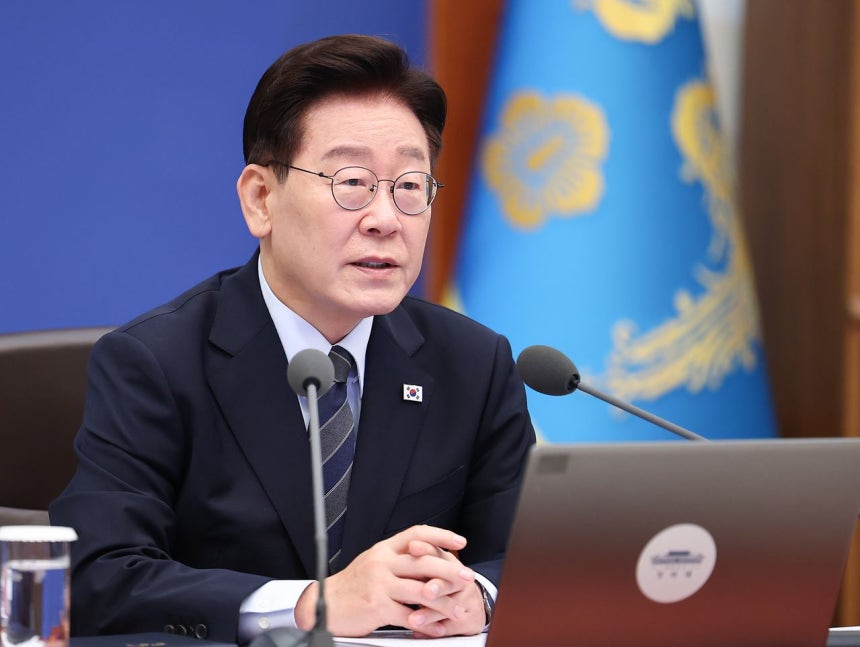
The government has effectively shelved the Basic Pension structural overhaul plan it had pursued at President Lee Jae-myung's direction to achieve 'more for the lower, less for the upper.'
This follows a decision not to implement, starting next year, measures such as changing the eligibility threshold for Basic Pension recipients to 90% of standard median income.
Next year will see only a limited, differentiated payment scheme take effect: an additional 30,000 won a month for low-income recipients, while pensions for relatively higher-income recipients are frozen.
The Ministry of Health and Welfare announced that the 2027 budget bill containing these measures was passed by the Cabinet on the 1st. The government plans to revise the relevant law so that, starting next April, the Basic Pension will be paid at differentiated rates by income level. Earlier, President Lee had said, “An older person with a monthly income in the millions of won and an older person with zero income receive the identical Basic Pension amount,” adding that “one option would be to apply 'more for the lower, less for the upper' only to future increases.” In response, the government had been reviewing a structural overhaul plan that would link the current target take-up rate, set at ‘70% of people aged 65 and over,’ to standard median income.
The overhaul plan the government originally reviewed would have changed the eligibility threshold, starting in 2027, from the bottom 70% by income among older people (roughly 96.3% in standard-median-income terms) to 90% of standard median income. It intended to lower this in stages, to 86.6% in 2028, 83.3% in 2029, and 80% in 2030.
The plan also included a provision to apply a five-year protection period to existing recipients who exceed the new threshold, reducing their payments from 350,000 won a month to 315,000 won, then 280,000 won, 245,000 won, and 210,000 won, before removing them from eligibility. The payment in the final year would be 40 percent lower than the current amount.
(Excerpt omitted)
The Pension Future Forum's Future Generations Network, composed of members of the younger generation, pointed out in a statement on the 1st that “the government has abandoned the structural reform needed to help the poorest older people properly, while passing on nothing but its cost to the next generation.”
They added, “The starting point of this reform discussion was to fix the unrealistic 70% threshold, rationally adjust who is eligible, and use the funds saved to provide stronger, more generous protection for older people who are genuinely in need,”
“and yet it is exactly this core point that disappeared from the government's final plan,” they criticized.
![(연금연구회 성명서 보도. 노컷뉴스) [칼럼] 연기금 카지노 책임론?…'쉬운길' 선택의 결과일 수 있다 (2026.10.20.)](/_next/image?url=%2Fuploads%2Feditor%2F2026%2F10%2Fc6f13b0799b440d0874a9f72413c6f58-0004200449_003_20261020063615439-1.jpg&w=128&q=75)
![(연금연구회 성명서 보도. 중앙일보) [취재일기] 국민 노후보다 코스피를 지킨 국민연금 (2026.10.19. )](/_next/image?url=%2Fuploads%2Feditor%2F2026%2F10%2F7e92f70b0ec843bbb869a4cf46b01f72-0003558751_001_20261019052229249.jpg&w=128&q=75)