
(Chosun Ilbo — Pension Future Forum Report) Basic Pension Overhaul Effectively Shelved — Instead of “More for the Lower, Less for the Upper,” Low-Income Recipients to Get an Extra 30,000 Won a Month (September 2, 2026)
[2027 Budget]
Reform Scrapped Amid Concern over Falling Approval Ratings
Three-Line Summary
• Basic Pension eligibility: bottom 70% by income among older people maintained
• Bottom 30%: 380,000 won; 45–70% band frozen at 350,000 won
• Budget: 25.7 trillion won; criticized as “a retreat driven by approval-rating concerns”
The Basic Pension eligibility standard — “the bottom 70% by income among older people (aged 65 and over)” — will remain unchanged next year as well. Instead, among beneficiaries, the bottom 30% by income (3.48 million people) will receive 380,000 won a month, 30,000 won more than this year.
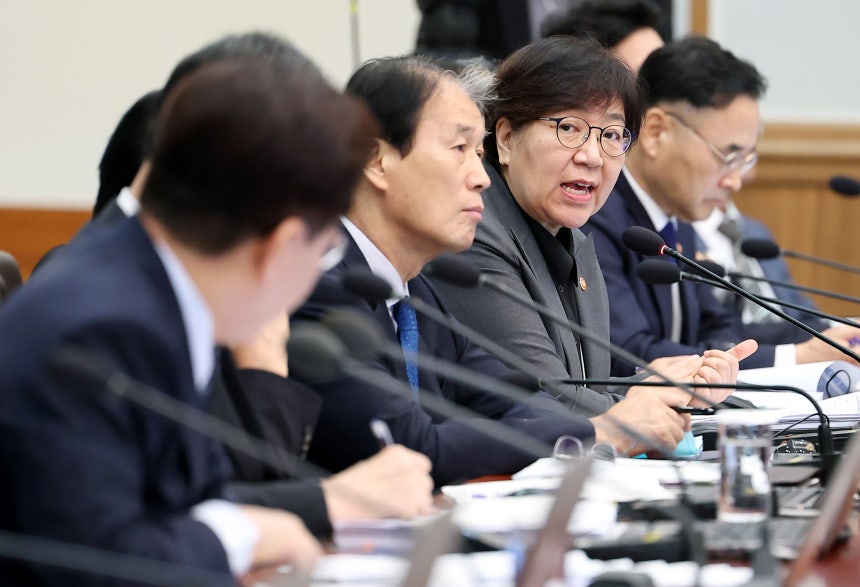
Earlier, following President Lee Jae-myung’s instruction in early this year that the ministry review a “more for the lower, less for the upper (下厚上薄; thick at the bottom, thin at the top)” approach that would give more to low-income older people, the Ministry of Health and Welfare had been preparing an overhaul plan to change the eligibility standard.
But faced with concerns over falling approval ratings among older voters as a result of changing the eligibility standard, along with backlash from civic groups, criticism has emerged that the ministry has in effect put forward a watered-down plan that is neither “more for the lower” nor “less for the upper.”
On the 1st, the Ministry unveiled its Basic Pension overhaul plan while announcing next year’s ministry budget of about 149 trillion won. The core of the plan is “differentiated payment.”
Dividing the bottom 70% by income among older people into three bands, starting in April next year the ministry will pay 380,000 won a month to the lowest band, the bottom 0–30% by income; 359,000 won, reflecting the inflation rate, to the 30–45% band (1.74 million people); and 350,000 won, the same as this year, to the relatively higher-income 45–70% band (2.9 million people).
By freezing the 45–70% band without reflecting the inflation rate, the ministry saves about 170 billion won, which it then redirects — along with an additional 465 billion won — into differentiated payments.
The plan also reduces the “couples’ reduction” for low-income couples. Currently, when both spouses in a couple receive the Basic Pension, each person’s benefit is reduced by 20% regardless of income; for couple beneficiaries within the bottom 45% by income (2.34 million people), the reduction rate will be lowered to 10%.
As a result, couple households in the bottom 0–30% by income, who currently receive 560,000 won a month, will receive up to 684,000 won next year — an increase of as much as 124,000 won.
Beneficiaries and spouses of the special occupational pension schemes — the Government Employees, Military Personnel, and Private School Teachers pension schemes — who had until now been excluded from receiving the Basic Pension, will also become eligible starting in July next year if they fall within the bottom 45% by income (110,000 people).
With this overhaul, the Basic Pension budget — about 23.1 trillion won this year — is projected to grow by about 11% to as much as 25.7 trillion won next year. That is roughly five times the 5.2 trillion won budget of 2014, when the Basic Pension system was first introduced.
(Excerpt omitted)
The Pension Future Forum’s Future Generations Network, which represents the voice of the younger generation, issued a statement that day, saying
“They have abandoned the structural reform needed to help the poorest older people properly, while passing on nothing but its cost to the next generation,” and
“we cannot call it reform to hand tomorrow’s generation the bill for today’s votes.”
![(Report on the Pension Future Forum Statement, Nocut News) [Column] Holding the 'Pension Fund Casino' to Account?… It May Be the Result of Choosing the 'Easy Way' (October 20, 2026)](/_next/image?url=%2Fuploads%2Feditor%2F2026%2F10%2Fc6f13b0799b440d0874a9f72413c6f58-0004200449_003_20261020063615439-1.jpg&w=128&q=75)
![(Report on the Pension Future Forum Statement, JoongAng Ilbo) [Reporting Diary] The National Pension Protected the KOSPI Rather Than the Public's Retirement (October 19, 2026)](/_next/image?url=%2Fuploads%2Feditor%2F2026%2F10%2F7e92f70b0ec843bbb869a4cf46b01f72-0003558751_001_20261019052229249.jpg&w=128&q=75)