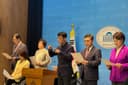
(Pension Future Forum Statement) On the Malicious Framing of the “Give-and-Take-Back” Basic Pension (2026. 8. 30.)
Today the Pension Future Forum
wishes to state its position on the malicious framing
of the so-called
“give-and-take-back” Basic Pension,
which certain organizations have long used
as an “agitation slogan.”
What certain groups whip up as
the “give-and-take-back” Basic Pension
arises from the “principle of supplementarity” and the “principle that other benefits take precedence” in the National Basic Living Security System (NBLSS).
That is because, when the Basic Pension is counted as public transfer income, recognized income rises and the livelihood benefit is cut by the same amount, so that the total received does not change.
The Basic Pension amount they misrepresent
as the “give-and-take-back” Basic Pension
falls short even of 350,000 won a month
for a one-person household as of 2026.
The livelihood benefit under the NBLSS,
by contrast, has risen rapidly of late
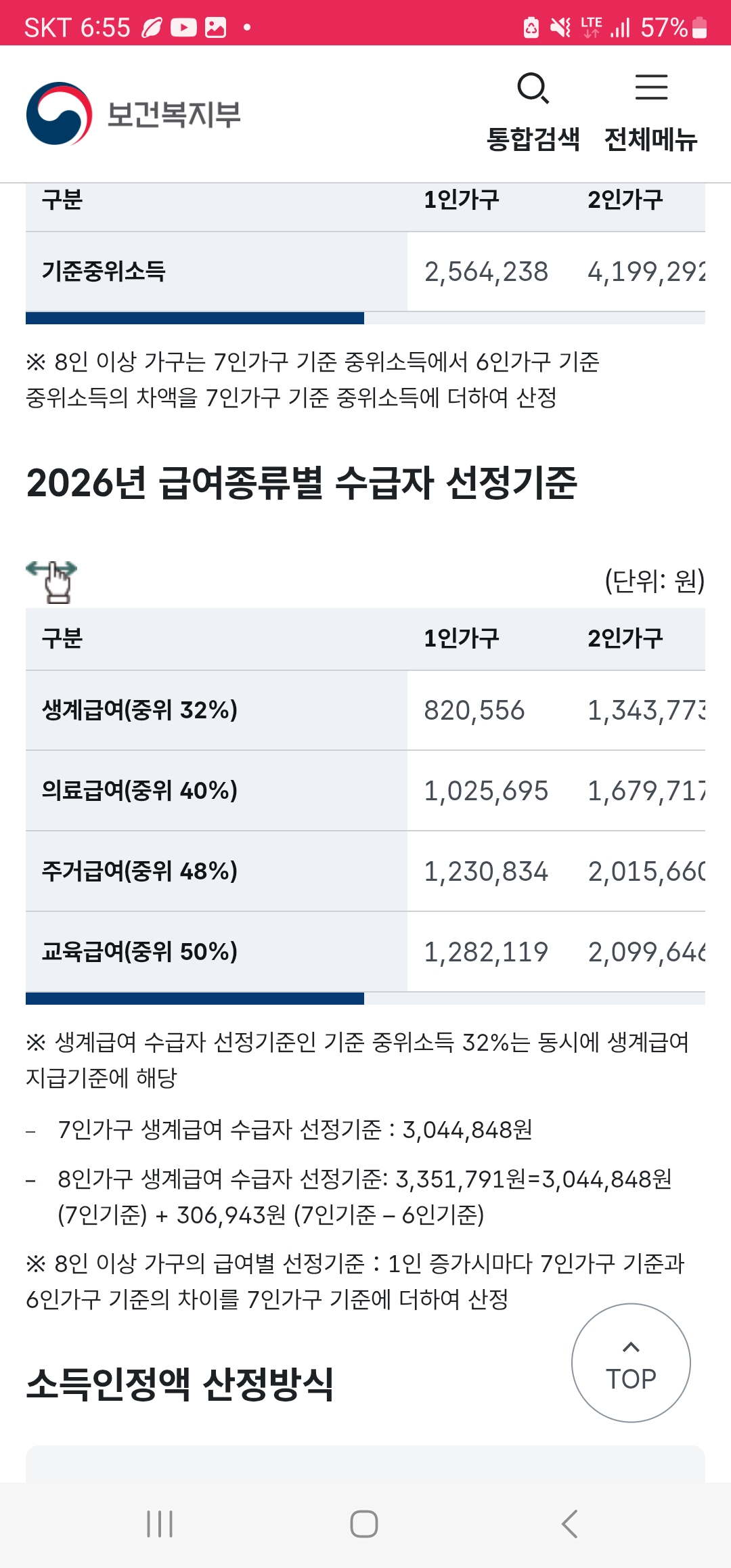
and now stands at about 820,000 won a month.
This is because the livelihood benefit, previously set at 30%
of the standard median income, has been raised to 32%.
In particular, if the livelihood benefit under the NBLSS
is raised further still, to 35% of the standard median income —
a national policy agenda item of the
Lee Jae-myung administration —
it will rise to
897,000 won a month,
that is, to around 900,000 won.
If the standard median income climbs
more steeply from 2027 onward,
an era in which the livelihood benefit reaches 1 million won a month
could arrive in the not-too-distant future.
With the shift from a bundled benefit package to individualized (benefit-by-benefit) eligibility,
among the recipients of the livelihood benefit
under the NBLSS,
some receive
the medical benefit (40% of the standard median income, 1.025 million won a month)
and the housing benefit (48% of the standard median income, 1.23 million won a month)
as well.
Compared with these recipients
under the NBLSS,
the near-poor and the tier immediately above the near-poor —
that is, those whose recognized income is
only slightly higher than that of these
NBLSS recipients —
fail, for that very reason, to qualify
as recipients under the scheme.
That is, they cannot become recipients at all.
The Basic Pension now at issue,
even if its amount were increased dramatically from today’s level,
would still not reach half
of the NBLSS livelihood benefit.
The livelihood benefit under the NBLSS
and the Basic Pension differ
in name only:
both are programs run on the public’s taxes.
At the NPS Forum recently hosted by
the ruling Democratic Party,
Kim Sung-joo, Chairman of the National Pension Service (NPS),
expressed the view that it would be desirable
for the current quasi-universal Basic Pension to be overhauled
into a minimum income guarantee scheme.
That, as in the major OECD countries,
a Basic Pension overhaul that sharply narrows the eligible population
while instead guaranteeing a set benefit level,
that is, a National minimum,
will be unavoidable —
this, it appears, is what he was expressing
in roundabout terms.
If the way our Basic Pension is operated
were changed to match these countries,
agitation through the frame of the “give-and-take-back” Basic Pension
would no longer be easy to sustain.
On these grounds,
to the groups enjoying the benefits of a scheme that differs in name only
yet pays vastly more
than the Basic Pension,
we make this demand:
that they cease the agitation they wage
under the malicious labeling
of the “give-and-take-back” Basic Pension.
The current Basic Pension
is paid, even by the OECD’s definition,
to a considerable number of older people
who are not poor.
As for the direction of the Basic Pension overhaul the government is pursuing —
and, above all, as for alleviating elderly poverty —
if they are so passionate about these matters,
then demanding that the government start by reducing the number of people covered
by this indefensible Basic Pension as it stands
would be the correct approach
and the correct posture.
While treating the OECD’s elderly-poverty indicator
as gospel,
on the OECD’s recommendation for overhauling the Basic Pension,
which could dramatically lower
Korea’s high elderly poverty rate —
why!
do they keep silent?
This is why the motives of those who have agitated
for so long,
calling it the “give-and-take-back” Basic Pension,
invite suspicion.
To the groups that agitate, calling it
the “give-and-take-back” Basic Pension, we hereby put the following questions publicly.
Even if the Basic Pension is transformed into a minimum income guarantee scheme, as Kim Sung-joo, Chairman of the National Pension Service, has said it should be, do you still consider the frame of the “give-and-take-back” Basic Pension to be valid?
State your position on the eligibility criterion of the current Basic Pension, which is paid to older people who are not poor even by the OECD’s standard!
A structural reform plan including the Basic Pension — one that raises pension amounts for every income group relative to the current programs while securing the sustainability of all of them — was presented at the eighth meeting of the Advisory Committee to the 22nd National Assembly Special Committee on Pension Reform. It has already been posted on the Pension Future Forum website. We invite you to assess the Pension Future Forum’s structural reform through the frame of the “give-and-take-back” Basic Pension.