
(Press Coverage of a Statement by the Pension Future Forum Future Generations Network) Young People Incensed at the Basic Pension Overhaul: “It Shifts the Burden onto Future Generations” (2026.09.01.)
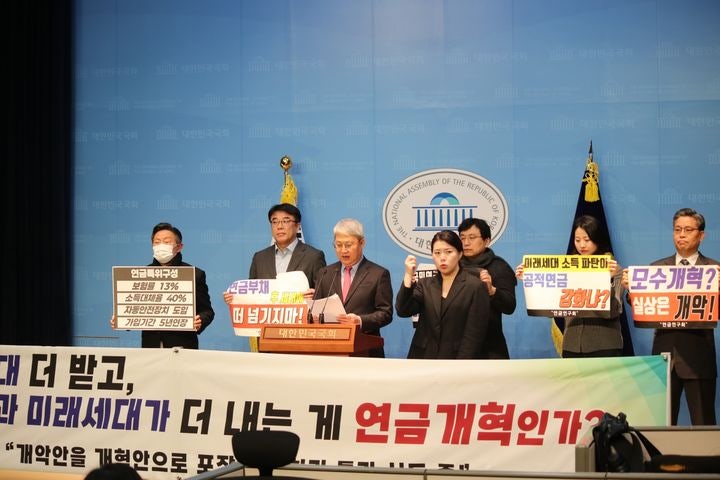
(The Newsis article
that reported the statement
of the Future Generations Network
under the Pension Future Forum
is being posted on the Forum’s website.)
Pension Future Forum Future Generations Network Emergency Statement
“The National Assembly Must Take Up the Overhaul of the Eligibility Criterion Again”
With the government’s Basic Pension overhaul plan now public, criticism that it shifts the cost burden onto future generations is emerging, above all among younger cohorts.
In an emergency statement on the 1st, the Pension Future Forum’s Future Generations Network said: “They have abandoned the structural reform needed to help the poorest older people properly,
while passing on nothing but its cost to the next generation.”
They said: “Correcting the 70% criterion, which is out of step with reality, in order to put the pool of eligible recipients on a rational basis, and using the savings to protect genuinely hard-pressed older people more generously — that was the starting point of this reform debate,” and added,
“Yet in the government’s final plan, it is precisely this core that has vanished.”
The core of the Ministry of Health and Welfare’s 2027 Basic Pension overhaul plan is to leave the eligibility criterion — the bottom 70% by income — unchanged and to pay an additional 30,000 won to the bottom 30% by income.
The Pension Future Forum’s Future Generations Network said: “The plan has left the 70% target take-up rate untouched, raised benefits for low-income groups, eased the couples’ reduction, and newly included even some beneficiaries of the special occupational pension schemes.
As a result, next year’s budget alone rises by as much as 2.6 trillion won,” and added, “The Basic Pension is not paid out of an accumulated fund, so in the end it must be covered by taxes.
Young people will have to pay higher contributions to the National Pension and at the same time carry the cost of a Basic Pension that population aging keeps pushing up.”
They went on: “What angers us is not that older people are being given more.
The problem is that letting even older people with recognized income of more than 2 million won a month draw similar benefits inside the same scheme, while giving everyone a little more, is what is being called reform,” and added,
“The National Assembly must take up again the overhaul of the eligibility criterion that was dropped from the government’s plan.
We cannot call it reform to hand tomorrow’s generation the bill for today’s votes. Young people will remember exactly who wrote that bill.”


![(Pension Future Forum Position Statement, JoongAng Ilbo, October 14, 2026) [Exclusive] As Chairman Kim Sung-joo Returns… National Pension Service Revives '7 Million Won a Month' Team Leader Post](/_next/image?url=%2Fuploads%2Feditor%2F2026%2F10%2F2204b9fa7b7945b39feda2bfbfea1fe9-0003557760_001_20261014052215751.jpg&w=128&q=75)