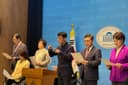
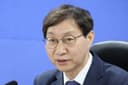
Part of a Recent Position Statement on the Stock Market by Cho Kuk, Former Leader of the Rebuilding Korea Party, Provided by a Member of the Pension Future Forum (2026. 8. 5.)
(A piece by Cho Kuk, former leader of the Rebuilding Korea Party,
who has taken it upon himself to serve as the Democratic Party’s “red team,” is posted here in part
in the Pension Future Forum’s Statements category.
There is much in it worth noting!
However,
officials of the National Pension Service are missing from among the figures the former leader named.
That a considerable part of the public is rebuking National Pension officials
over this episode
is something the new Cho Kuk party
appears to overlook — and that is the point the Pension Future Forum
wishes to stress!)
1. Because the ruling Democratic Party is silent, I will speak clearly from the standpoint of a “red team.”
The government’s introduction of single-stock leveraged ETFs is a plain policy failure. The present situation is a “failure of state-directed finance” created by the core of the government’s policy apparatus — the presidential Policy Office, the Office for Government Policy Coordination, the Financial Services Commission and the Financial Supervisory Service — headed by Policy Chief Kim Yong-beom. On August 2, Bloomberg ran an article headlined “Crushed by Kospi Rout, Angry Koreans Rip Lee and Vow Not to Buy.” The crisis of trust is severe.
2.
After Kim Yong-beom, Chief of the presidential Policy Office, held an informal meeting with the heads of brokerages and asset management firms on January 13 this year, the Financial Services Commission pushed ahead with a legislative notice on January 30.
The enforcement decree of the Financial Investment Services and Capital Markets Act then passed the Cabinet meeting on April 21, and the products were listed on the market on May 27. Experts pointed out that this was hasty, but the presidential Policy Chief advocated their introduction and set the mood, and just before the June 3 election, 16 single-stock leveraged ETFs came to market. Yet on June 22, after the election, came the remark by Lee Chan-jin, Governor of the Financial Supervisory Service, that “we should have lain down in the road to stop it.” This policy decision process can only be called a “mystery.”
In particular, looking at the press release the Financial Services Commission distributed on April 21, titled <Cabinet Approval of the Amendment to the Enforcement Decree of the Financial Investment Services and Capital Markets Act to Resolve Asymmetric Regulation Between Domestically and Overseas Listed ETFs> ( https://www.fsc.go.kr/no010101/86751 ), it appears there was no sufficient discussion of the policy’s side effects at that Cabinet meeting. The published minutes record that, with the President abroad, the Prime Minister presided, and that in the “discussion” section for the resolution on that enforcement decree it is noted “no dissenting opinion.”
In its press release the Financial Services Commission actively stressed the need for the products, saying that “in Korea it was impossible to launch single-stock ETFs and ETNs,” and that “it has been pointed out that demand to invest in a wider variety of ETF products has been difficult to meet domestically.” According to an exclusive report in <the Korea Economic Daily>, the Financial Services Commission did not even conduct a “stress test” before launching the single-stock leveraged ETFs ( https://www.hankyung.com/article/202608031655i ).
At the same time it appended, by way of reference, a face-saving set of cautions: “Since single-stock leveraged ETF products, unlike ordinary products, have a distinctive price structure and risk factors, investors wishing to invest in single-stock leveraged ETFs are advised to pay particular attention to the following and to invest soundly, at their own responsibility, within the limits of the losses they can bear.” It resembled nothing so much as the cautions a private financial firm uses when marketing a high-risk product to customers — announcing the risk in difficult terms while shifting responsibility wholly onto the individual investor.
One cannot help wondering why the government pressed the “money move” from real estate to the stock market so sloppily and so hastily.
What is serious is the chain of aftershocks. After hitting an intraday high of 9,385.59 on June 19, the KOSPI plunged and fell to the 6,000 range within a month. ETF net assets tumbled from 533 trillion won on July 22, when the KOSPI recorded its high, to the 398 trillion won range on July 30, only eight days later. In little more than a month from the peak, an astronomical 135 trillion won of assets vanished into thin air. Wails and cries arose everywhere.
Of the forcibly liquidated accounts, 62% belonged to young people aged 35 or under. Young people who went into the market trusting the government’s resolve were caught in the leverage trap the government had laid, and have been left with trauma and debts they can never erase. Will the government simply tell them, “We gave notice of the cautions”?
By contrast, a small number of forces that seized enormous speculative gains by riding the extreme volatility have been observed pouring the vast liquidity they swept up in the stock market back into the real estate market — a “reverse money move.”
3.
A plain failure of state-directed finance cannot be allowed to pass with a shrug. Responsibility must be brought home, in each case, to Kim Yong-beom, Chief of the presidential Policy Office; Yoon Chang-ryul, the (former) Head of the Office for Government Policy Coordination; Lee Eok-won, Chairman of the Financial Services Commission; and Lee Chan-jin, Governor of the Financial Supervisory Service.
The whole process — from the incomprehensible, “mysterious” introduction, through the belated response that enlarged the damage, to the ineffective, patchwork countermeasures — must be brought to light from beginning to end, and those who must take responsibility must do so. To borrow Governor Lee Chan-jin’s belated regret, it must be established why no one “lay down in the road” to stop it. Speaking on the basis of past experience as Senior Secretary for Civil Affairs, an inspection by the Office of the Senior Secretary for Civil Affairs into those involved in this episode is needed. This is necessary for the success of the Lee Jae-myung government as well. And it is also a way of answering the anger of citizens who are shedding tears of blood over forced liquidations.
Who would dislike a rising KOSPI? But the government must return to the “original intent” with which it set out the goal of an “era of KOSPI 5000.” The stock market must not become a casino.
Above all, the lives of the young who walked into the leverage trap in a bid to escape the swamp of extreme inequality must be addressed. What is needed is not a government that urges young people to invest in stocks, but a government that invests in young people.