Bloomberg: “Korea Is Slipping into ‘Uninvestable’ Territory… Volatility Is Traumatizing Retail Investors” (2026.08.04.)
(Since this was reported extensively in the domestic press,
and in order to leave a record of it,
we post this article in the Pension Future Forum’s
Statements and Commentary category!
Besides the Bloomberg article attached below,
we wish to record that the Financial News
also reported similar content!)
The Government’s Hasty Approval of Leveraged ETFs Disrupts the Market”
“The National Pension’s Inconsistent Management Has Fueled Market Overheating”
“Fears of Policy Failure Similar to China’s”
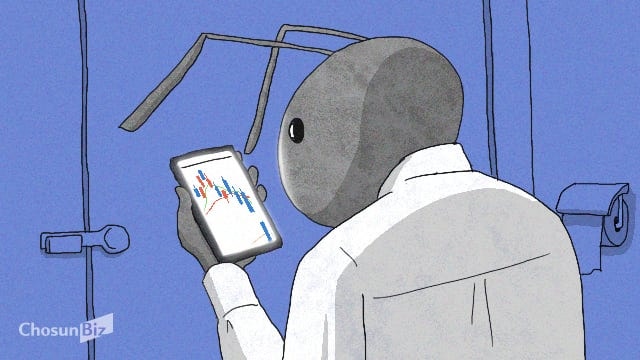
Of the Korean stock market, which showed roller-coaster conditions through the month of July, the US economic outlet Bloomberg has published a column criticizing that “Korea is becoming uninvestable.” The point is that, despite the positive factor of a global artificial intelligence (AI) boom, extreme volatility and the government’s clumsy policy have left investors traumatized.
On the 4th (local time), Bloomberg columnist Shuli Ren, in a column titled “South Korea Is Becoming Uninvestable, Too,” wrote that “Korea is the world’s hottest and most volatile stock market this year,” noting that the KOSPI plunged nearly 40% in just 27 trading sessions. That is on a par with the Chinese stock market crash of 2015.
(abridged)
The column argued that the recent selloff and the government’s clumsy attempts to prop up the KOSPI have traumatized a new class of investors and given the market a bad name.
It singled out “volatility” as the biggest problem. This year the KOSPI has moved by 5% or more in a single day on as many as 33 days, overwhelming Japan’s Nikkei 225 (4 days) and Hong Kong’s Hang Seng Index (0 days). Such extreme volatility acts as the main factor turning foreign institutional investors away from the Korean market.
The column pointed to the single-stock leveraged exchange-traded funds (ETFs) whose introduction the government approved at the end of May as the chief culprit in amplifying volatility. According to Goldman Sachs estimates, in June, when the KOSPI peaked, ETF rebalancing money accounted for 40% of SK Hynix’s average daily trading volume whenever the stock moved 5% — a degree of market disruption.
(abridged)
Bloomberg named retail investors as the greatest victims of the government’s policy failure. Bloomberg noted that they had gone into the market trusting President Lee Jae-myung’s stock market reforms, which promised to resolve the so-called “Korea discount” (the undervaluation of the Korean market).
But while foreigners were leaving the market, the individuals who had bought the KOSPI were left with enormous losses. The most popular SK Hynix leveraged ETF plunged as much as 84% from its June peak.
As many as 360,000 securities accounts were forcibly liquidated. Notably, 62% of the forcibly liquidated accounts were concentrated among young people aged 35 or under.
The National Pension’s inconsistent conduct also came in for criticism.
The column pointed out that the National Pension, in order to avoid selling its KOSPI holdings, arbitrarily raised its target for domestic equity investment, thereby abandoning the role proper to a pension fund of cooling an overheated market.
This is read as meaning that, by not acting according to its previous rules, it helped to fan the KOSPI frenzy.
The column went on to say: “In recent years global asset managers have judged China uninvestable, citing the government’s policy failures and its disregard for investors; unfortunately, similar concerns are now being voiced about Korea,” and
warned that “it is time for the Korean government to reflect on what it is doing, and on whether young investors entering the market for the first time are being properly protected.” At the same time it observed pointedly that “even if one believes in the boom in the global AI industry, it has become possible to stay away from the KOSPI.”