NPS becomes an amplifier, not a stabilizer (KOR) (2026.07.21.)
(The Pension Future Forum
wishes to send its applause to this principled column
in the JoongAng Ilbo!)
The National Pension, an Amplifier Instead of a Stabilizer
Suh Kyung-ho, Editorial Writer
“There seems to be a rumor that the Service bought up domestic shares indiscriminately because of the local elections and drove prices up. Did you actually buy?” (President Lee Jae-myung)
“That is not the case at all. We held the shares as we had them, and as the KOSPI index rose the valuation increased.” (Kim Sung-joo, Chairman of the National Pension Service)
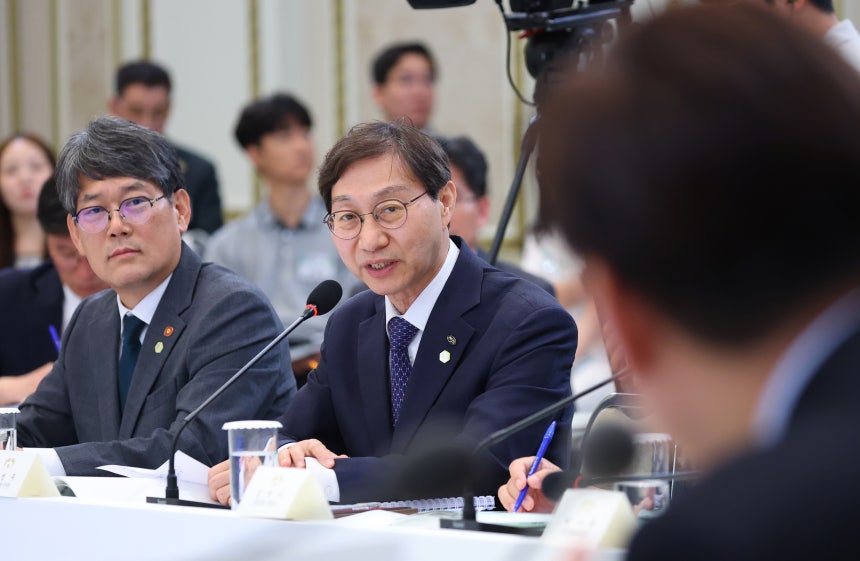
This was the exchange at the presidential policy briefing by the Ministry of Health and Welfare, the National Pension Service and others on the 16th.
When the related article appeared in a KakaoTalk group of professors and journalists, cynical reactions poured in: “A well-scripted set of questions and answers?” “You can see right through it.” “Stockpiling an alibi for later.”
The root of the problem is that the National Pension did not buy shares; rather, even as the valuation of its equity holdings grew, it failed to sell in accordance with its asset allocation rules.
In January the National Pension raised its target allocation to domestic equities by 0.5 percentage point, from 14.4% to 14.9%, and temporarily suspended the rebalancing under which it sells shares to bring the allocation down whenever it exceeds the equity weight permitted to the National Pension.
In May it again raised the target allocation to domestic equities by 5.9 percentage points, from 14.9% to 20.8%, and also widened the permitted range of strategic asset allocation (SAA) that allows deviation from this target in response to market conditions. This was wholly at odds with the management principle it had followed until then, of realizing gains by making use of rising markets so as not to shock the market. It could not escape the criticism that it had done nothing but a favor for foreign investors, who net-sold 149 trillion won of shares in the first half. As foreigners sold shares and converted large sums into dollars, the weakness of the won grew still more severe.
The report last month from the foreign brokerage Barclays was scathing: “In the first half the National Pension functioned in the domestic financial market as an amplifier, not a stabilizer.”
Last year the National Pension recorded an investment return of 18.82%, its best performance since the Fund Management Office was launched in 2000. That is a welcome thing, but what matters for the National Pension, the final bastion of the public’s old age, is the long-term return and stability. Not selling shares may have lifted the short-term return for a moment, but confidence in the independence of pension fund management has been damaged.
The Public Pension Strengthening People’s Action, a coalition of some 300 organizations including the Korean Confederation of Trade Unions, the Federation of Korean Trade Unions and People’s Solidarity for Participatory Democracy, took aim at the National Pension’s May decision to raise the target equity allocation, saying that “the government’s excessive intervention in fund management, which damages the independence of governance, and the attitude that treats the fund as an instrument for government policy, must be avoided.”
Chairman Kim Sung-joo has bridled at the view that the National Pension is the cause of volatility in the domestic stock market. In a recent social media post the chairman argued against overestimating the National Pension’s market influence, writing that “the share of the National Pension in the market capitalization of the domestic stock market is on the order of 6% to 7%.” That is not so. In January, when the KOSPI stood at 4,000–5,000, and in May, when it had surged to 7,000–8,000, the National Pension decided to defer equity rebalancing. Retail investors cheered when the pension fund, a whale in the market, said it would not sell shares straight away, but they are now paying a heavy price for it. The market is at the point of wailing over a “roller-KOSPI” every other day, while the pension fund plays no stabilizing role whatever. Had the fund trimmed its equity bulk early, from the start of the year, it would have calmed the market’s short-term overheating and served handsomely as a stabilizer during the plunge. It is nothing but regrettable.
What force was at work in the National Pension’s mistaken decisions of January and May? Seven months earlier, at the December policy briefing by the Ministry of Health and Welfare and its affiliated agencies, the President said this to the newly appointed Chairman Kim Sung-joo:
“I am not sure whether this is the place to say it, but it is clear that the Korean stock market is undervalued… It is delicate and risky to speak about the stock market, but the National Pension too will need to give the matter a great deal of thought.”
A president who invoked an undervalued Korean market and called on the National Pension to do some “thinking.” One can guess what sort of “thinking” was meant.
Even if the chairman of the National Pension had been an expert versed in financial markets rather than a former politician who had resigned the chairmanship of the Service midway to run for the National Assembly, selling shares would not have been easy.