
The Basic Pension Is to Be Linked to Median Income — but Applying 100% Could Increase the Number of Beneficiaries (2026.07.20.)
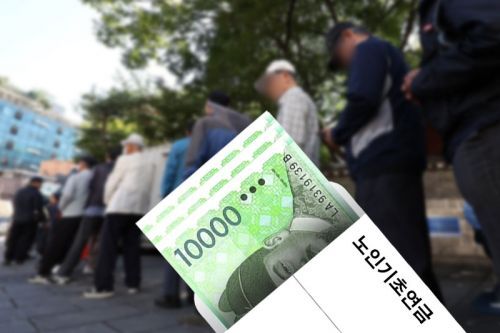
(Reporter Kim Yu-na, who covers the National Pension,
has referred to the position of the Pension Future Forum —
that, as the Basic Pension eligibility criterion,
it is not median income but
the minimum cost of living that should be adopted —
if only briefly.)
As the government pursues, as part of a “more for the lower, less for the upper” overhaul of the Basic Pension, a plan to link the eligibility threshold to the standard median income (the midpoint of all household incomes), observers expect that the ratio at which the standard median income is applied will determine the size of the beneficiary population.
Because the Basic Pension eligibility threshold currently stands at 96.3% of the standard median income, raising it to 100% could actually increase the number of beneficiaries.
(abridged)
According to the report “Directions for Reforming the Basic Pension Selection Method,” published by the Korea Development Institute (KDI) in February of last year, linking the eligibility threshold to 100% of the standard median income would keep the take-up rate at the current level of 70% through 2030 but lower it to 62% of all older people by 2050. Applying 100% of the standard median income could, however, actually increase the number of eligible recipients in the short term, which could dilute the “more for the lower, less for the upper” purpose of the overhaul.
Seok Jae-eun, Professor in the Division of Social Welfare at Hallym University, advised that “rather than widening the pool further, the line for the standard median income should be drawn within the range that maintains the current criterion; only then will there be no fairness controversy.”
Yun Suk-myung, Research Fellow Emeritus at the Korea Institute for Health and Social Affairs, argued by contrast that “to achieve an effect in relieving old-age poverty, the pool must be narrowed and support made generous, so it is right to apply a minimum-cost-of-living standard rather than the standard median income, which is a relative concept.”
Since the ratio at which the standard median income is applied can be adjusted later, once the scheme is in operation, some argue that the first decision should be whether to pay a flat amount or a differentiated one.
Oh Gun-ho, co-representative of Welfare State I Make, said, “A differentiated payment on the ‘more for the lower, less for the upper’ model, giving more to older people in difficulty, is desirable,” adding, “In that case, however, the Basic Pension of middle-income older people could fall, so fiscal input to offset that is needed.”
![(Report on the Pension Future Forum Statement, Nocut News) [Column] Holding the 'Pension Fund Casino' to Account?… It May Be the Result of Choosing the 'Easy Way' (October 20, 2026)](/_next/image?url=%2Fuploads%2Feditor%2F2026%2F10%2Fc6f13b0799b440d0874a9f72413c6f58-0004200449_003_20261020063615439-1.jpg&w=128&q=75)

![(Report on the Pension Future Forum Statement, JoongAng Ilbo) [Reporting Diary] The National Pension Protected the KOSPI Rather Than the Public's Retirement (October 19, 2026)](/_next/image?url=%2Fuploads%2Feditor%2F2026%2F10%2F7e92f70b0ec843bbb869a4cf46b01f72-0003558751_001_20261019052229249.jpg&w=128&q=75)