
Korea Pays Only Half the OECD Average—and Receives Less in Pension Benefits Too, Leaving Old-Age Poverty Severe (July 10, 2026)
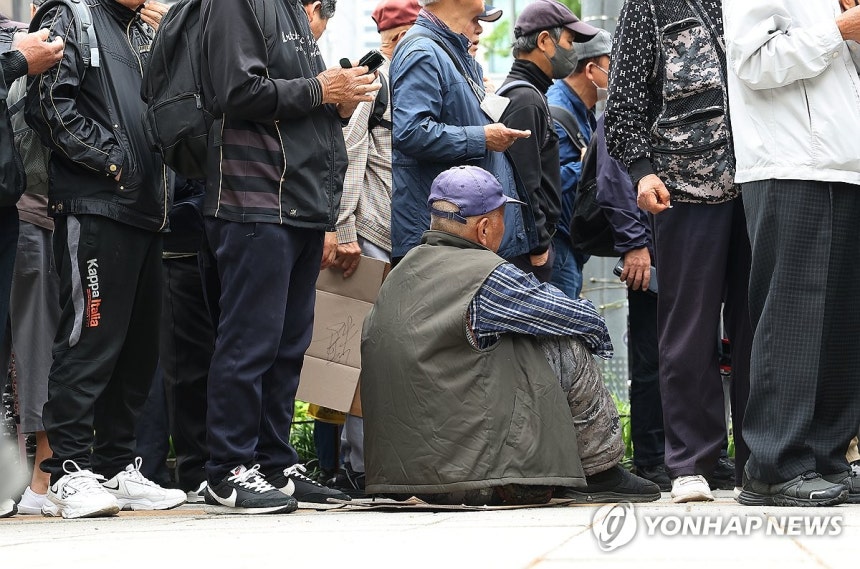
(Regarding media coverage that addresses the National Pension Research Institute's assessment of the OECD report, this is the position statement of the Pension Future Forum.)
The analysis of the OECD-published report conducted by the National Pension Research Institute is a matter of serious concern, insofar as its framing is capable of misleading the pension debate currently unfolding in Korea.
This is particularly true of the passage stating that "the income replacement rate of the National Pension for an average-income worker in Korea stood at only 33.4%."
In addition,
the argument is presented in such a manner as to suggest that, because contributions are paid at half the OECD average, the pension benefits received are correspondingly lower.
The reasons why Korea's National Pension income replacement rate appears low are as follows:
First, unlike other OECD member states, the National Pension incorporates an income redistribution function. If this income redistribution feature—found only in the Korean and American pension systems—were abolished and the system converted to a fully earnings-proportional pension, the income replacement rate would rise dramatically.
Second, the issue arises from the fact that the earnings recognized by the National Pension for its contributors are low. This is simply a problem generated by the large discrepancy between the A value (the economy-wide average of insured earnings used by the National Pension) and the average wages of workers.
Third, this is a phenomenon that results from the failure to achieve proper late-career employment, owing to the most rigid labor market among OECD member states—namely, a seniority-based wage structure.
As the OECD has long recommended, reforming the rigid labor market and extending the mandatory contribution age by five years to 64 would dramatically increase the effective income replacement rate of the National Pension.
Fourth, if the tax-financed Basic Pension—paid to 70% of those aged 65 and older—is also included,
then, should the three measures mentioned above be implemented,
(excluding the top 30% of income earners,)
the income replacement rate for all income brackets would exceed 43%.
In summary, the problem is not that people receive less because they contribute less; it is simply a problem arising from the failure to operate the system properly.
This problem could be resolved automatically if the structural reform advocated by the Pension Future Forum were carried out.
The analytical report by the National Pension Research Institute—which describes the situation as though lower contributions mechanically yield lower benefits—
appears to be highly problematic in that it is capable of misleading the direction of genuine pension reform!
(Excerpt from Yonhap News Agency coverage of the National Pension analysis)
It has been found that the level of pension benefits received by the average Korean worker upon retirement falls far short of the average for member countries of the Organisation for Economic Co-operation and Development (OECD). Because the monthly contribution rate is only half the level of advanced countries, the pension benefit amount itself is low, and this has prompted criticism that the public pension system is failing to fulfill its proper role of securing old-age income.
According to an analysis of OECD data from "Pensions at a Glance 2025" conducted by the National Pension Research Institute and released on the 10th, the mandatory pension contribution rate—paid equally between the employee and employer each month by Korean salaried workers in order to receive a pension—stood at 9% as of 2024, remaining at half the average of 18.8% across the 38 OECD member countries. Italy has the highest rate at 33%, while Mexico has the lowest at 8.456%; Korea ranks among the lowest.
Because pension contributions paid during one's working years are thus low, the pension benefits received in old age are inevitably meager. In terms of the income replacement rate—which shows how much of pre-retirement earnings is received as pension income after retirement—the National Pension income replacement rate for an average-income worker in Korea stood at only 33.4%. Although this represents an increase of 2.2 percentage points from the previous survey, it remains far below the member-country average of 43%.
![(문화일보) 시혜성 복지의 종말 보여주는 佛 사태[포럼] (2026.10.21.)](/_next/image?url=%2Fuploads%2Feditor%2F2026%2F10%2Fe852859ea69a44569c7f0e995ab34d4d-0002826667_002_20261021112109438.jpg&w=128&q=75)
![(A Column Sharing the Pension Future Forum's Position, Kookje Shinmun) [Lee Sang-yi Column] The 'Principle of Need' in Welfare and Populism (Posted October 15, 2026)](/_next/image?url=%2Fuploads%2Feditor%2F2026%2F10%2F2e14f0e21c8c4e828b8477e370b55be9-1792132943202.jpg&w=128&q=75)
![(Content the Pension Future Forum Finds Hard to Agree With, Kyunghyang Shinmun, Professor Woo Seok-jin) [Economic Straight Talk] We Won't Pay Your Pensions (October 13, 2026)](/_next/image?url=%2Fuploads%2Feditor%2F2026%2F10%2F5d8f006695804398b4ae104d5181dc9e-1792129375063.jpg&w=128&q=75)