"There Is No Freedom for Those in Debt." —A Statement by Göran Persson, Prime Minister of Sweden (March 31, 2024)
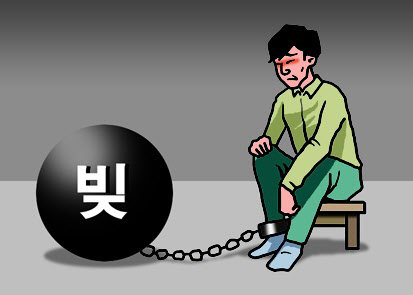
This remark appears in "The Swedish Paradox," co-authored by Yumoto Kenji and Sato Yoshihiro.
In 1993, Sweden's fiscal deficit reached 11.9% of gross domestic product (GDP). By 1994, the government's outstanding debt had risen to 76.2% of GDP. Following Prime Minister Persson's appeal, the entire nation endured painful expenditure cuts, including reductions in social security benefits—and as a result, the public finances were restored. This was achieved through a massive reduction in the fiscal deficit equivalent to 8% of GDP over the four-year period from 1995 to 1998.
Korea, by contrast, stood at 44.2% in 2019, and its national debt is rising rapidly. This is the product of a political judgment that "national debt is still low enough to justify borrowing more."
Outside observers describe Korea as a country deteriorating rapidly due to a plummeting birth rate, yet domestically the country appears to be on a course toward even greater indebtedness. Watching the government and the National Assembly stand aside while delegating decisions to stakeholders is deeply frustrating—like being unable to swallow something that has gone down the wrong way.
Under the pretext of deciding the matter through a public deliberation committee, the fiscal stabilization measures most strongly preferred by members of the National Pension Financial Estimation Committee and the advisory committee of the National Assembly Special Committee on Pension Reform have been excluded at the insistence of stakeholders—and the deliberations are being steered in a direction that renders an already unsustainable National Pension even less sustainable.
The public will soon be watching a live televised debate in which citizen representatives are first instructed that a proposal adding 702 trillion won to the deficit by the time today's teenagers reach retirement age constitutes a "fiscal stabilization measure"—and then asked to deliberate on that basis.
Even as "pensions are 99% a mathematical problem," essential information is being concealed while a change for the worse is being presented as reform—and witnessing this reality makes Prime Minister Persson's words resonate all the more deeply.
Having experienced the loss of economic sovereignty during the 1997 International Monetary Fund (IMF) foreign exchange crisis—and learned firsthand that there is no freedom without it—it is deeply troubling to see the country apparently heading down that same path once more.
Yun Suk-myung, Honorary Research Fellow, Korea Institute for Health and Social Affairs (KIHASA)
![(A Column Sharing the Pension Future Forum's Position, Kookje Shinmun) [Lee Sang-yi Column] The 'Principle of Need' in Welfare and Populism (Posted October 15, 2026)](/_next/image?url=%2Fuploads%2Feditor%2F2026%2F10%2F2e14f0e21c8c4e828b8477e370b55be9-1792132943202.jpg&w=128&q=75)
![(Content the Pension Future Forum Finds Hard to Agree With, Kyunghyang Shinmun, Professor Woo Seok-jin) [Economic Straight Talk] We Won't Pay Your Pensions (October 13, 2026)](/_next/image?url=%2Fuploads%2Feditor%2F2026%2F10%2F5d8f006695804398b4ae104d5181dc9e-1792129375063.jpg&w=128&q=75)