
U.S. Treasury Yields Reach the 4.5% "Pain Point" — Semiconductor Sector Faces Direct Hit if AI Investment Contracts (May 18, 2026)
- #국민연금법
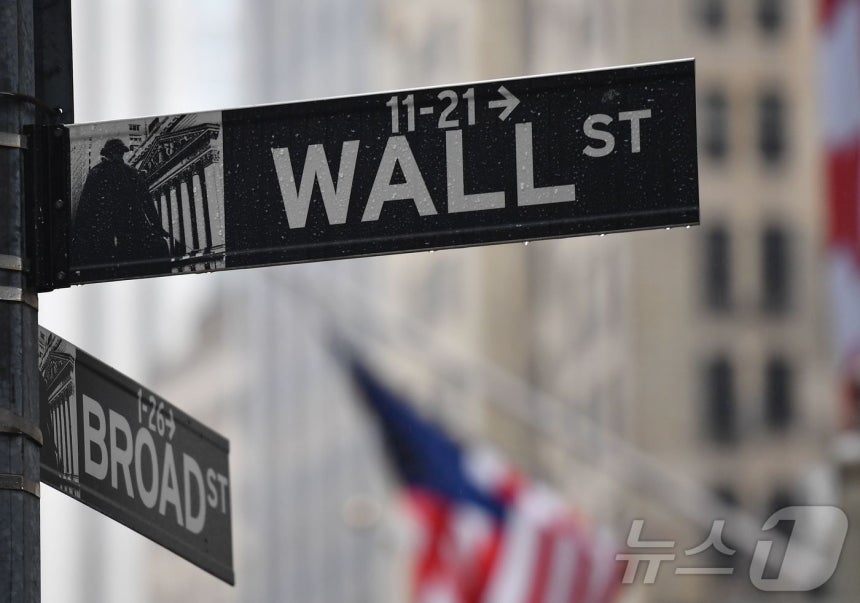
The yield on the 10-year U.S. Treasury note — the benchmark long-term interest rate in the United States and a widely regarded barometer of the global economic cycle — has broken through 4.5%, the market's psychological resistance level. Observers note that if the upward trend in Treasury yields persists, capital outflows by foreign investors and a deceleration in the semiconductor industry's growth trajectory could subject the KOSPI, which had surged to 8,000 points, to a period of correction.
According to the financial investment industry on the 18th, the 10-year U.S. Treasury yield closed at 4.595% on the 16th (local time), up 0.136 percentage points from the previous session. The 30-year U.S. Treasury yield also rose 0.115 percentage points to 5.128% on the same day — its highest level in approximately 19 years, since July 2007, just prior to the Global Financial Crisis.
(omitted)
In the securities industry, the psychological resistance level for the 10-year U.S. Treasury yield is generally set at 4.5%.
Past episodes suggest that when bond yields exceed this threshold, market funds tend to shift from equities — a relatively riskier asset class — into bonds, thereby increasing the likelihood of a stock market correction.
Kim Seok-hwan, a researcher at Mirae Asset Securities, stated: "In general, the market defines 4.5% on the 10-year U.S. Treasury yield as the 'pain point,'
and in many instances it has served as a catalyst for equity market corrections." He added: "Unofficially, President Trump has also demonstrated a pattern of 'one step back' — the so-called 'TACO' response — whenever the 10-year yield approaches or exceeds the pain point."
https://n.news.naver.com/article/421/0008950024?sid=101![(Report on the Pension Future Forum Statement, Nocut News) [Column] Holding the 'Pension Fund Casino' to Account?… It May Be the Result of Choosing the 'Easy Way' (October 20, 2026)](/_next/image?url=%2Fuploads%2Feditor%2F2026%2F10%2Fc6f13b0799b440d0874a9f72413c6f58-0004200449_003_20261020063615439-1.jpg&w=128&q=75)

![(Report on the Pension Future Forum Statement, JoongAng Ilbo) [Reporting Diary] The National Pension Protected the KOSPI Rather Than the Public's Retirement (October 19, 2026)](/_next/image?url=%2Fuploads%2Feditor%2F2026%2F10%2F7e92f70b0ec843bbb869a4cf46b01f72-0003558751_001_20261019052229249.jpg&w=128&q=75)