
Will the 70% Rule for the Basic Pension Be Broken? Concentrated Support for Low-Income Elderly Gains Traction (February 27, 2026)
- #연금특위
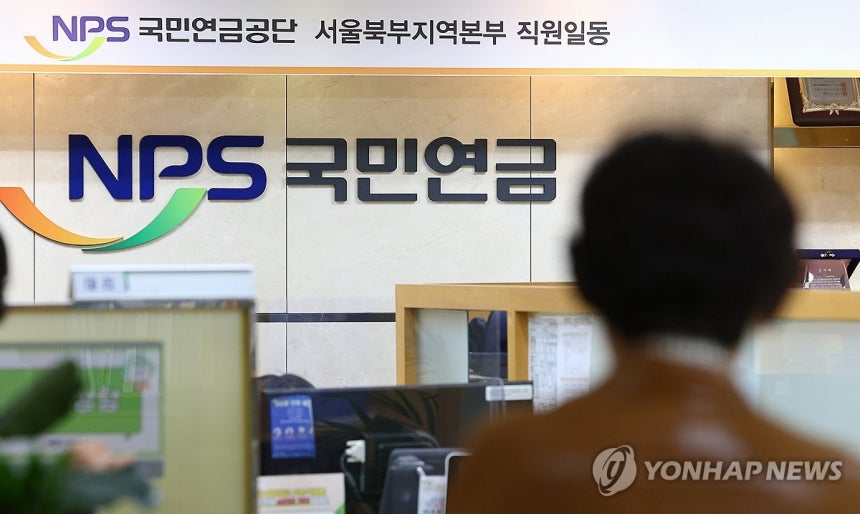
(At the time the Basic Old-Age Pension was introduced in 2007,
and again when the current Basic Pension was introduced in 2014,
Yun Suk-myung, Honorary Research Fellow at the Korea Institute for Health and Social Affairs (KIHASA)
and leader of the Pension Future Forum,
opposed both measures more forcefully and publicly than anyone else.
At the time of the 2007 Basic Old-Age Pension introduction,
drawing on KIHASA's Survey on the Living Conditions of the Elderly,
he argued emphatically that benefits should be paid only to the bottom 35% of those aged 65 and older.
At the time of the 2014 Basic Pension introduction,
beginning at 4:00 p.m. the day after Minister Jin Young took office at the Ministry of Health and Welfare,
at a closed-door meeting held at the National Pension Service (NPS) Gangnam Regional Headquarters in Sinsa-dong, he argued on multiple occasions—for approximately 40 minutes in total—that introducing the Basic Pension in its current form was inadvisable.
This was the starting point that led Minister Jin, despite having served as Deputy Chair of the Presidential Transition Committee of the Park Geun-hye administration, to report to the Blue House in August 2014 a plan different from the one the Transition Committee had proposed.
After the Blue House issued instructions to proceed in a manner inconsistent with Minister Jin's report, the Minister announced his intention to resign voluntarily from his position as Minister of Health and Welfare.
The resignation announcement came the day after a joint seminar held at the Seoul Press Center following the signing of a Memorandum of Understanding between the Korean and Swedish Ministers of Health and Welfare in 2014.
The two Korean presenters at the Press Center seminar the previous day were Honorary Research Fellow Yun Suk-myung and Kim Seong-suk, President of the National Pension Research Institute.
Despite the opposition of numerous qualified experts at the time, those self-styled specialists who advocated for the introduction of the Basic Pension must now make their position clear regarding the current state of its operation!
The reason they must do so is that history repeats itself.
From the perspective of the Pension Future Forum, "experts who now strongly oppose the introduction of an automatic adjustment mechanism"
are likely to receive a historical evaluation similar to that of those experts who supported the introduction of the Basic Pension in 2007 and 2014.)
(This is why we are attaching links to columns written during the peak of the Basic Pension debate in 2006 and 2014.
https://www.pensionfutureforum.org/index.php/2026/02/01/post-20260201-111930-8806/
https://www.pensionfutureforum.org/index.php/2026/02/01/post-20260201-113428-2165/
https://www.pensionfutureforum.org/index.php/2026/02/01/post-20260201-114745-8748/
https://www.pensionfutureforum.org/index.php/2026/02/20/post-20260220-024605-5767/
https://www.pensionfutureforum.org/index.php/2026/02/20/post-20260220-025848-3400/ )
The Basic Pension—currently paid to 7 in 10 persons aged 65 and older—stands at a major crossroads of reform.
Since its introduction in 2014, the program has played a significant role in reducing elderly poverty; however, voices are growing louder that sustaining the current approach is untenable in the face of precipitous declines in the birth rate and rapid population aging.
Consensus is forming among government officials and experts that the program should be restructured to provide more concentrated support for elderly individuals in greater need, rather than distributing benefits at a modest level to all elderly persons.
According to the National Assembly on the 27th, at the plenary session of the Democratic Party of Korea's Special Committee on Pension Reform held at the National Assembly Members' Office Building on the 25th—convened to give concrete shape to these discussions—
Choi Ok-geum, Director of the Pension Policy Research Division at the National Pension Research Institute, who served as the lead presenter,
identified the most critical problem with the current system as the fact that the policy rationale for setting the target coverage rate at 70% has become unclear.
https://n.news.naver.com/article/001/0015928008?sid=102![(연금연구회 성명서 보도. 노컷뉴스) [칼럼] 연기금 카지노 책임론?…'쉬운길' 선택의 결과일 수 있다 (2026.10.20.)](/_next/image?url=%2Fuploads%2Feditor%2F2026%2F10%2Fc6f13b0799b440d0874a9f72413c6f58-0004200449_003_20261020063615439-1.jpg&w=128&q=75)

![(연금연구회 성명서 보도. 중앙일보) [취재일기] 국민 노후보다 코스피를 지킨 국민연금 (2026.10.19. )](/_next/image?url=%2Fuploads%2Feditor%2F2026%2F10%2F7e92f70b0ec843bbb869a4cf46b01f72-0003558751_001_20261019052229249.jpg&w=128&q=75)