Assessment of the Adequacy of Foreign Exchange Reserves (February 8, 2026)
- #국민연금법
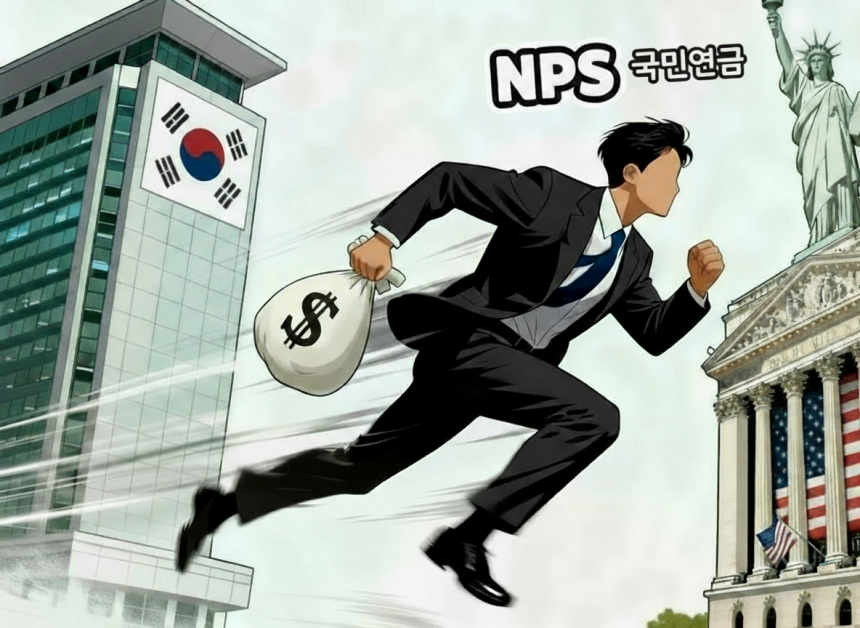
The policy authorities have consistently maintained that Korea's foreign exchange reserves are at an appropriate level and that, given the country's status as a net external creditor, the exchange rate situation does not warrant significant concern.
The Pension Future Forum assesses this reading of reality by the policy authorities to be an extremely complacent judgment. This is the background to our frustration with the Bank of Korea's position that there is little cause for alarm on the grounds that the current-account surplus is large.
The government, which had long been criticized for lacking foreign exchange specialists, recently appointed a second vice minister at the Ministry of Economy and Finance to oversee foreign exchange policy.
The Pension Future Forum wishes to raise the following points. While a variety of perspectives on foreign exchange issues are possible, based on observations over an extended period, the arguments advanced by Dr. Kim Dae-ho, who appears regularly every morning on SBS Biz, appear to be persuasive.
The following is a summary of Dr. Kim Dae-ho's arguments.
1. The proportion of domestic equities and bonds held by foreign investors is high. Although substantial foreign investment in Korea is welcome, a shift to a negative outlook on Korea could trigger a rapid outflow of capital.
(The Pension Future Forum judges the following recent developments to be a cause of serious concern: foreign investors' net sales in the domestic stock market exceeding 14 trillion won over the past seven trading days, and the so-called "bond rate tantrum" in which the yield on 10-year government bonds—an indicator of Korea's medium- to long-term economic outlook—has risen to a level 1.2 percentage points above the policy rate.)
2. Current foreign exchange reserves stand at approximately USD 420 billion. Coincidentally, approximately USD 41.1 billion in foreign exchange reserves has disappeared since Governor Lee Chang-yong took office at the Bank of Korea. This appears to reflect the cost of resisting downward exchange rate pressure resulting from Korea's inability to match the pace of U.S. interest rate hikes. The concern is that should reserves decline by a further USD 20 billion from the current USD 420 billion level, that point could be interpreted as a signal that the situation is beginning to deteriorate.
3. The claim that Korea ranks ninth in the world in foreign exchange reserves does not accurately reflect reality. This ranking excludes a considerable number of significant economies. Most notably, the ranking omits the United Kingdom and France—countries regarded as issuers of reserve currencies—in addition to the United States as the issuer of the dollar as the global reserve currency. Germany, in particular, holds large gold reserves and does not include the euro in its foreign exchange reserve calculations. Korea, by contrast, includes the euro in its reserve totals.
4. The argument that Korea's status as a net external creditor renders a foreign exchange crisis a non-issue is also not fully persuasive. If problems were to emerge in the foreign exchange market and a trend of won depreciation became entrenched, the incentive to convert overseas assets back into won would diminish further.
The four points above represent a synthesis of Dr. Kim Dae-ho's remarks on foreign exchange issues over time. The Pension Future Forum assesses these questions raised by Dr. Kim to be highly valid.
The Pension Future Forum is convinced that, amid the uncertainty now facing the Korean economy, the path forward lies in demonstrating a clear commitment to structural reform.
This is why the Forum holds that escaping this crisis will require presenting a blueprint for structural reform of public pensions—reform capable of reversing the declining potential growth rate and placing an unsustainable public pension system on a sustainable footing—together with a concrete roadmap for implementation.
This is likewise why a fiscal rule must be introduced at the earliest opportunity to halt deficit budgeting and prevent any further increase in national debt.
The data underpinning Dr. Kim Dae-ho's arguments are attached hereto.