Splitting Into an “Old Pension” and a “New Pension” — The Truth About the National Pension as Told by the KDI Reform Proposal [Deep&wide] (March 18, 2024, 4:30 a.m.)
Editor’s Note
An in-depth report in which experts in each field analyze major domestic and international issues with deep knowledge and a wide perspective.

Lee Kang-gu (right) and Shin Seung-ryong, Research Fellows in the Fiscal and Social Policy Research Division of the Korea Development Institute (KDI), explain the “Plan for Structural Reform of the National Pension” at the Government Complex Sejong on the 21st of last month. Taking intergenerational equity into account, they proposed introducing a fully funded “new pension” that guarantees future generations pension benefits equal to the contributions they paid plus investment returns, without concern over fund depletion. Yonhap News
The reform proposal put forward by the Korea Development Institute (KDI)—calling for a dualization of the National Pension—has been attracting considerable attention. KDI has proposed restructuring the system so that benefits are commensurate with contributions, with all those insured under the National Pension enrolling in a new pension scheme from the point of reform. The proposal envisions operating the current National Pension as an “old pension” and the new scheme as a “new pension,” with the two running in parallel.
Before analyzing the KDI proposal, it is necessary first to explain the disarray of Korea’s National Pension. All of Korea’s pension systems are defined benefit schemes, that is, schemes that pay a specified pension amount regardless of how much one pays in contributions. Yet two-thirds of the member countries of the Organisation for Economic Co-operation and Development (OECD) have abandoned this approach. Sweden, the very byword for a welfare state, was the first country in the world to introduce a defined contribution (DC) approach. Sweden introduced it 26 years ago, and Germany and Japan 20 years ago.
◇ The KDI Reform Proposal as a Lens on the Vulnerabilities of the National Pension
The problems of the National Pension are confirmed in the data as well. While the majority of OECD member countries have adopted fully earnings-proportional pension systems, Korea applies a contribution rate of only 9%—half the OECD average of 18%—despite incorporating an income redistribution function.
KDI appears to estimate the pension payment shortfall through 2023 at 609 trillion won, inclusive of such factors. Furthermore, it projects that a delay of approximately five years in implementing reform would cause the shortfall to surge to 869 trillion won. The KDI proposal appears to have been advanced with the aim of accelerating reform in order to prevent further growth of the liability.
It is important to note that even the KDI estimate represents a minimum figure. The unfunded pension liability—the shortfall relative to the total pension payments required to cover current beneficiaries and the insured until their deaths—amounts to 1,825 trillion won (as estimated by Professor Jeon Young-jun of Hanyang University, a member of the Pension Future Forum). The proposal is for the state to assume responsibility for the shortfall while ensuring that the new pension does not accumulate additional liabilities. To this end, the plan calls for all of the insured to transition to the new pension beginning in 2024, under which benefits will be strictly proportional to contributions paid.
KDI projected that raising the contribution rate to 15.5% in a single step in 2024, combined with sound fund management, would make it possible to achieve an annual investment return of 4.5%. The proposal also allows an income redistribution function to operate within specific birth-year cohorts, that is, within the same cohort. Through the Cohort Collective Defined Contribution (CCDC) mechanism, the income redistribution function would be able to operate even under a defined contribution (DC) framework.
◇ The KDI Proposal as a Desirable Direction in Broad Outline
Viewed in broad outline, the KDI proposal appears to represent a desirable direction for reform—if it can actually be implemented. The difficulty is that even this proposal rests on rather optimistic assumptions. Most notably, it assumes that the total fertility rate will rise to 1.21 by 2040, whereas Statistics Korea has already projected a decline to approximately 1.0. The feasibility of achieving an average annual investment return of 4.5% must also be examined carefully. The proposal assumes an identical return for all cohorts despite the fact that different generations will experience different phases of economic boom and recession. Cohorts that are unlucky in this regard are likely to receive less than they contributed even under the KDI proposal’s principle of benefits commensurate with contributions.
Although it is confined to the same birth year, the proposal has an income redistribution function, so the problem is that the income replacement rate falls for high-income earners. In truth, it is politically difficult to fend off the argument that the income replacement rate should be raised further. The plan for the state to take responsibility for the shortfall also needs to be clearer. Therefore, while agreeing with the direction of the KDI proposal, I would like to propose the following supplementary directions.
An alternative under which people receive as much as they paid in is the right direction. Measures are needed to rule out the possibility of receiving even less than one paid in. To that end, Korea needs to adopt the Swedish approach. The problem is solved by linking the return on the principal paid in by the insured to the real economic growth rate. If the rate of return is set at 0 in years when economic growth is negative, no return that leaves less than the principal will arise. Under this approach, individual accounts are set up and the contributions paid are credited to each person’s own account to operate a 100% earnings-related pension, with the economic growth rate applied as the rate of return and the return treated as 0 when economic growth is negative.
For this, the balance between contributions and benefits must be achieved first. According to the German and Swedish national reports, Germany, which charges 18.6%, expects an income replacement rate of 37% in 2050, and Sweden, at 18.5%, only 31%. This is living proof of the imbalance between contributions and benefits in the National Pension, which provides 42% for 9% in contributions. It is the reason a substantial contribution increase is needed quickly. The results of the 5th National Pension financial projection suggest that fiscal stabilization cannot be achieved even if the rate is kept at 40% and contributions are raised to 15%. The KDI proposal would raise contributions by 6.5 percentage points, to 15.5%, in 2024. If, acknowledging the reality that raising contributions this way is difficult, contributions are raised gradually, the pension paid in proportion to what was paid in will be far smaller than KDI estimates. A supplementary measure is needed for this.
In short, this is why adopting a 100% earnings-related pension after introducing Swedish-style individual accounts is unavoidable. Young people will willingly take part in pension reform only if they are confident they can get back what they paid in.
The concept of receiving as much as one paid in must also be conveyed accurately. It must be properly conveyed that an investment return is added to the principal. In this way, an income replacement rate of around 40% applies to all income groups. Once the system switches to a fully earnings-related pension, the income replacement rate of middle- and low-income earners falls, raising their likelihood of being exposed to poverty. This problem can be solved with two measures: introducing a minimum guaranteed pension for vulnerable groups, or operating the Basic Pension with a focus on low-income older people. There is also a solution through the National Pension: the approach adopted by Germany and France of applying a higher income replacement rate to middle- and low-income earners who have contributed faithfully. The required funding can come from the Basic Pension savings that would arise from narrowing the pool of Basic Pension recipients.
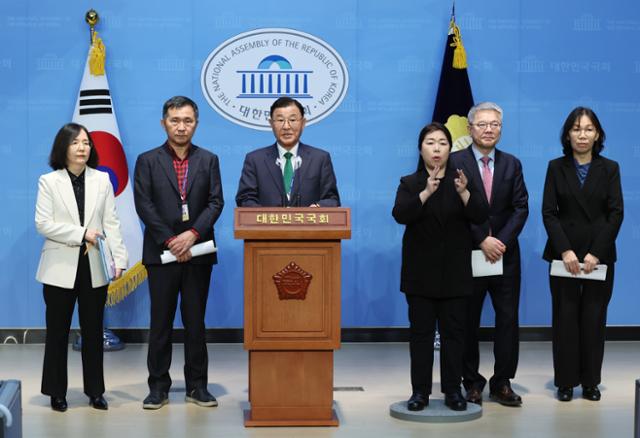
Kim Sang-gyun (third from left), chair of the Public Deliberation Committee on Pension Reform, briefs the main results of the workshop of the agenda-deliberation panel of the National Assembly Special Committee on Pension Reform’s Public Deliberation Committee at the National Assembly Communication Center on the 12th. Yonhap News
◇ The seriousness of the cumulative deficit and the unfunded liability must first be made known to the public
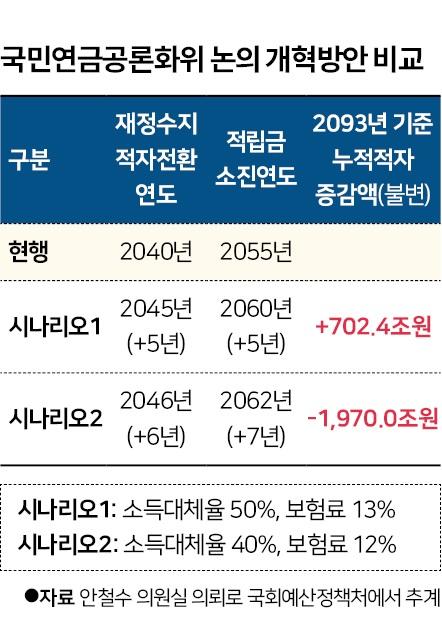
Table 1: Comparison of the reform options discussed by the National Pension Public Deliberation Committee
The National Assembly is also currently discussing National Pension reform options through the Public Deliberation Committee. The committee is seeking a final plan between the two options presented in the table. Yet under Scenario 1 the cumulative deficit actually increases by 702.4 trillion won, while under Scenario 2 the cumulative deficit decreases by 1,970 trillion won. Although this is considerably less than the 3,699 trillion won reduction in the cumulative deficit under the combination of “a 40% income replacement rate and a 15% contribution rate,” which experts most preferred but which was excluded from this agenda-deliberation panel, where stakeholders led the discussion, Scenario 2 reduces the cumulative deficit and can therefore be called a fiscal stabilization plan in the true sense.
Yet Scenario 1, which increases the cumulative deficit, is being presented as Fiscal Stabilization Plan 1, and Scenario 2, which at least reduces the cumulative deficit, as Fiscal Stabilization Plan 2, which looks highly problematic. Above all, it is reported that Scenario 2 was preferred in the agenda-deliberation panel’s discussions, so it is also hard to understand why Scenario 1, which the panel preferred less, is being presented as the first-ranked fiscal stabilization plan.
Whichever is adopted, the KDI proposal or the National Pension reform plan discussed in the National Assembly, there is something that must be done urgently. To properly inform the public of the reality we face, the cumulative deficit and the unfunded liability must be disclosed quickly. The ratio of the cumulative deficit to gross domestic product (GDP) in the Financial Estimation Committee report must also be published as a figure discounted at the government bond interest rate, as the committee originally agreed, because discounting at the fund’s investment return cuts the deficit ratio in half.
Reform must put its top priority on the imbalance between contributions and benefits. Contributions should be raised swiftly to a bearable level to partly resolve the imbalance, and then structural reform should begin. In that sense, the KDI proposal can develop into a good alternative through a process of supplementation.
Extending mandatory contributions through “re-employment after retirement,” discussed at the Economic, Social and Labor Council, must also be hastened. If the Korea Workers’ Compensation and Welfare Service’s “Blue Seed,” which covers workplaces with fewer than 30 employees, were expanded to companies with 100 or fewer employees, vulnerable workers could also secure additional old-age income. For most citizens to receive pensions that allow a stable life while the system also secures sustainability, a national consensus must be formed that an effective policy mix of the National Pension, the Basic Pension, retirement pensions, and other schemes is needed.
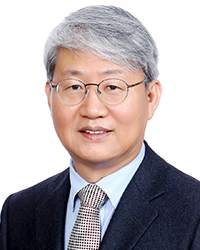
Yun Suk-myung, Research Fellow Emeritus, Korea Institute for Health and Social Affairs; former President of the Korean Pension Association
M.A. in economics from Korea University; Ph.D. in economics from Texas A&M University in the United States (on pensions and health security). At the Korea Institute for Health and Social Affairs he served as Director of the Social Security Research Division and head of the Pension Research Center, among other posts, researching public pensions and the health insurance system. He has served as a member of the 1st through 5th National Pension financial projection and system development committees and as President of the Korean Pension Association, among other roles. He is currently Research Fellow Emeritus at the Korea Institute for Health and Social Affairs and takes part in a number of government committees.
Yun Suk-myung, Research Fellow Emeritus, Korea Institute for Health and Social Affairs; former President of the Korean Pension Association
<Copyright ⓒ Hankook Ilbo. All rights reserved. Unauthorized reproduction and redistribution prohibited.>
https://www.hankookilbo.com/news/article/A2024030813370000072