(Seoul Economic Daily) [Direct Opinion] “The Poly-Professors Around the President Who Say ‘Give More Pension’ Are Ruining the Country” [Direct Opinion] (April 8, 2021)
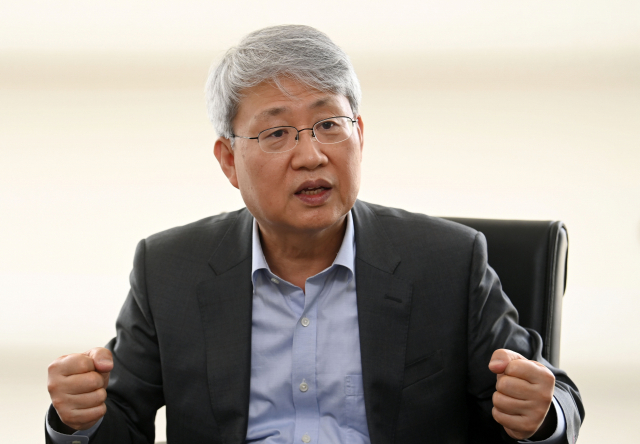
“To receive the National Pension at its current level, the contribution rate would have to be roughly doubled right now,” Yun Suk-myung, President of the Korean Pension Association, said in an interview with the Seoul Economic Daily on the 6th.
“Not raising the current generation’s contribution rate by even a few percentage points while telling future generations to pay 2~3 times more is the height of irresponsibility,” he said.
/Reporter Seong Hyeong-ju
[Seoul Economic Daily]
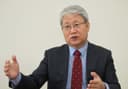
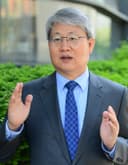
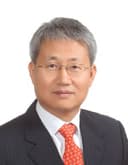
Yun Suk-myung, President of the Korean Pension Association (Research Fellow, Korea Institute for Health and Social Affairs)
The political sphere and compliant experts have formed a cartel to dilute National Pension reform
Unfunded liability of 1,500 trillion won; cumulative deficit of 17,000 trillion won by 2088
No magic formula for 'contributing the same and receiving more'
… face the 'inconvenient truth'
After the fund is depleted, future generations will have to bear more than 30% of their income
National Pension reform is often likened to “moving an elephant.”
The resemblance lies in its being so large that it draws attention and so sluggish that it is hard to move.
On the direction of reform, people argue back and forth over whether to “pay more and receive more” or “pay less and receive less,” but the inconvenient truth of the National Pension is that even to receive the same, people must pay more.
This is because, with low fertility and population aging advancing at the fastest pace in the world, the current fiscal structure can hardly cope with future spending.
The projected date of fund depletion keeps moving forward, too, from 2060 to 2057 to 2054, yet there is still no plan at all for the period after depletion.
Yun Suk-myung, Research Fellow at the Korea Institute for Health and Social Affairs (KIHASA), who this year became the 11th President of the Korean Pension Association, is known as a leading proponent of fiscal stabilization.
Arguing that people should “pay more and receive less,” he introduced himself as someone who “for more than ten years has not been welcome anywhere.”
Since the Moon Jae-in administration’s National Pension reform ran aground, President Yun has concentrated on publicizing the structural problems facing public pensions.
The webinar the association held last month to call for public pension reform was part of that effort. Meeting us in a Seoul Economic Daily conference room on the 6th, President Yun spoke in a tone so forceful that it was hard to believe he was a researcher at a government-funded research institute.
-The clock on National Pension depletion is running faster and faster.
△Experts in the association’s population division are concerned that the total fertility rate, which fell to 0.84 last year, will drop into the 0.7 range this year or next as a result of the novel coronavirus infection (COVID-19). The Fourth Financial Projection for the pension in 2018 is based on 2015 statistics (a fertility rate of 1.24), but the situation now is very different. As fertility falls and life expectancy rises, a special projection is needed rather than waiting for the next scheduled projection in 2023. Statistics Korea produced a special projection of the future population in 2019. Shortening the financial projection cycle from the current five years to three is also worth considering.
-Pension financial projections look 70 years ahead. What about other countries?
△Japan looks 100 years ahead. Canada works in 150-year units. It is nothing short of a problem that, even though life expectancy is 83, we still use the same standard as at the time of the first financial projection in 2003.
-Financial projections look 70 years ahead, that is, to 2088, so why are there no official indicators at all for the period after depletion?
△Probably because they want to hide an inconvenient truth. What deserves attention is the unfunded pension liability. National Pension reserves have accumulated to 833 trillion won (as of 2020), but the unfunded liability is estimated at about 1,500 trillion won (as of 2019). It is money that must be paid to the insured someday but has not been set aside. This means that after the pension fund is depleted, the gap must be filled either with taxes or by later generations of contributors paying more. In 2088, the final year of the projection, the National Pension’s cumulative deficit reaches 17,000 trillion won. These chilling figures were not released by the government; Representative Kim Se-yeon, Chair of the Health and Welfare Committee in the 20th National Assembly, added up, one by one, the data he had received from the government. Disclosing the statistics transparently is the starting point of reform.
Raise National Pension depletion, and they slap a “fear marketing” frame on it
-How much would people have to bear to sustain the pension system after the fund is depleted?
△The contribution rate would have to rise to about 29%, three times the current 9%. Even that is an optimistic scenario. Given the pace of low fertility and population aging, it seems likely to far exceed 30%. And that is not all. Adding income tax, health insurance contributions, and the like, about half of one’s income would have to be deducted.
-Some argue that since the depletion date lies in the distant future, reform can wait.
△That is a typical attempt to dilute reform. It is what the advocates of old-age income security who gained sway under the current administration say. The moment anyone raises fiscal depletion, they slap the “fear marketing” frame on it. Putting off reform amounts to dumping a debt bomb on future generations.
-There are also calls to write a state guarantee of benefit payment into law.
△One must be careful. Codifying the payment guarantee in law could become a stumbling block to reform. If the state is taking responsibility, voices asking why people should pay more rather than filling the gap with taxes will grow louder. Legislation would have no practical effect, either. Unless the country collapses, there will be no case in which pensions go unpaid. Abroad, too, there are almost no cases of codifying a state guarantee of payment. Germany is often cited as an example of such codification abroad, but there the money must be returned to the state once the liquidity problem is resolved.

View original 2018. 12. 14. Minister of Health and Welfare Park Neung-hoo explains the Fourth Comprehensive National Pension Operation Plan. Earlier, in August, after President Moon Jae-in rejected the government’s draft as “not in line with the public’s expectations,” the government put forward four options, including one maintaining the current system. /Yonhap News
-How would you assess the government’s 2018 pension overhaul plan?
△I have taken part in all four financial projections, from the first in 2003 to now, and this was the worst. The very composition of the Pension System Development Committee was heavily biased.
Because the current administration put the emphasis on strengthening old-age income security, I was the only economist among the 12 civilian members, and most of the rest came from the social welfare side.
In the past, economists made up about 30–40%. As a result, the structure of the discussion inevitably tilted toward expanding benefits rather than fiscal stabilization.
Whenever pension reform is discussed, the government, the political sphere, and compliant intellectuals always form a cartel to dilute reform.
Interest groups such as politically powerful labor organizations were absorbed in defending their vested interests, and the government was preoccupied with reading the room.
It was especially bad during the 2018 overhaul discussions. This runs exactly counter to the global trend toward the sustainability of the system and the depoliticization of pensions.
-Some argue that raising the income replacement rate is unavoidable to prevent old-age poverty.
△The idea that raising the income replacement rate can prevent old-age poverty is a fiction.
Coverage gaps, where people cannot even join the pension scheme, are widespread.
Moreover, the lower people’s incomes, the shorter their contribution periods.
This means that raising the income replacement rate would produce inequality in old-age income.
It is often said that Korea has the highest elderly poverty rate among the member countries of the Organisation for Economic Co-operation and Development (OECD), but there is an optical illusion in this.
The OECD standard is disposable income. Once the assets people hold are reflected, Korea is by no means on the low side.
Raising the income replacement rate prevents old-age poverty?···On the contrary, it deepens inequality
-There are many complaints that the National Pension is just “pocket money for the people.”
△Korea has a contribution rate of 9% and a replacement rate of 44% (40% in 2028). The OECD average contribution rate is around 20%, yet its replacement rate is similar to ours or slightly higher. To receive more, people must pay far more. The government’s (failed) overhaul plan has no measures whatsoever for the period after fund depletion.
-Among the government’s four options, there were also Option 3 (contribution rate of 12%, income replacement rate of 45%) and Option 4 (13%, 50%), which assume a higher contribution rate.
△Extending the depletion date by a few years should not be packaged as reform.
Under Option 3, the contribution rate would have to rise to 36.6% after fund depletion to maintain an income replacement rate of 45%.
Option 4 would require raising the contribution rate to 40.7%.
Can that be called reform? True reform is fixing the system so that it secures sustainability.
-The campaign pledge was to raise the income replacement rate. Did the government lack the will to reform from the start?
△After being briefed on the government’s draft, President Moon Jae-in ordered a complete reconsideration, saying it was “not in line with the public’s expectations.”
That means he would not raise contributions.
What on earth is reform in line with the public’s expectations?
Is the role of a national leader not to properly inform the public of the problems and realities inherent in the system and to persuade the public on the basis of objective data?
Many countries abroad pushed ahead with reform prepared to lose power. Sweden and Germany did.

View original 2018. 8. 29. Members of the Public Pension Strengthening People’s Action stage a picket protest in front of the presidential office, demanding the creation of a social dialogue body to secure higher National Pension benefits. /Yonhap News
-During the presidential campaign, President Moon said the income replacement rate could be raised without increasing the burden on the public. Is there such a magic formula?
△No. People who joined the campaign must have given such information to someone who did not know much about it (candidate Moon Jae-in), and they must be held to account by history.
The “polifessors” (politically engaged professors) who drew up five-year pledges are ruining the country.
Looking at the pension landscape of the three Northeast Asian countries, Korea has the weakest reform and the flimsiest preparation for the future. Japan keeps enough money set aside to pay a year’s worth of benefits even 100 years from now. China’s contribution rate, too, reaches 16%.
-No one likes higher contributions, though.
△The problem is being held captive by pension populism.
Once in power, a government should not be intoxicated only by sweet things but should set the nation’s most critical tasks as its agenda and pursue them first.
The president, first of all, must face the fact that if the pension system is not fixed in time and the golden opportunity is lost, the ship of the Republic of Korea will be on the verge of sinking.
Can it be right to hide inconvenient truths and simply follow what the public likes?
A responsible government should not boast that reserves will accumulate to as much as 1,700 trillion won, but should answer what it will do about the unfunded liability and cumulative deficit lying beneath the surface.
There is also the Basic Pension, funded entirely by taxes. Even so, calling for paying the same and receiving more means that the 586 generation in power intends to pick clean even the fish bones of future generations.
-Is that not extreme pessimism?
△If things are left as they are, painful reform may be forced on us from outside. In other words, the worst possibility, losing even economic sovereignty, cannot be ruled out at all. That is what happened to Greece, which was plugging the hole in its pension finances with sums amounting to half of the government’s fiscal deficit. In its 2018 report on Korea, the OECD warned that if the National Pension contribution rate were raised to 16%, the ratio of national debt to gross domestic product (GDP) (general government basis) would be about 100% in 2060, but that if left as it is, it would rise to around 200%. That is for the National Pension alone; how much worse would it be once other variables are considered?
-Then how should reform be carried out?
△People must pay more and receive less. To receive what they do now, the contribution rate would have to rise to 18% immediately, but realistically, doubling it is difficult. First raise the rate to about 13%, then, as Finland does, put in place an “automatic adjustment mechanism” that reduces benefits in line with changes in life expectancy. The right path is to make the pension system sustainable to some degree and then have later generations follow. Failing to raise the rate by even a few percentage points while telling later generations to pay two or three times as much is the height of irresponsibility.
He is···
Born in 1961 in Yangyang, Gangwon Province, he graduated from the Department of English Language and Literature at Korea University and earned a master’s degree in economics at the same university. He received a Ph.D. in economics from Texas A&M University in the United States with a dissertation on the U.S. pension system. He has since researched public pension systems at the Korea Institute for Health and Social Affairs, serving as Director of the Social Insurance Division and Director of the Pension Research Center, among other posts. He has served as a member of the first through fourth National Pension Financial Estimation and System Development Committees, as a member of the Government Employees Pension Financial Estimation Committee, and as chair of the financial projection committee for the Basic Old-Age Pension (now the Basic Pension). For 11 years he served on the Korean delegation, in the pension field, to the Economic and Development Review Committee of the Organisation for Economic Co-operation and Development (OECD), which prepares economic reports on member countries.
/Senior Reporter Kwon Gu-chan [email protected]