(Seoul Economic Daily Editorial, March 12, 2025) Is Clinging to a Plan to Pay 4 Percentage Points More and Receive 4 Percentage Points More Pension Reform? (Posted October 9, 2026)
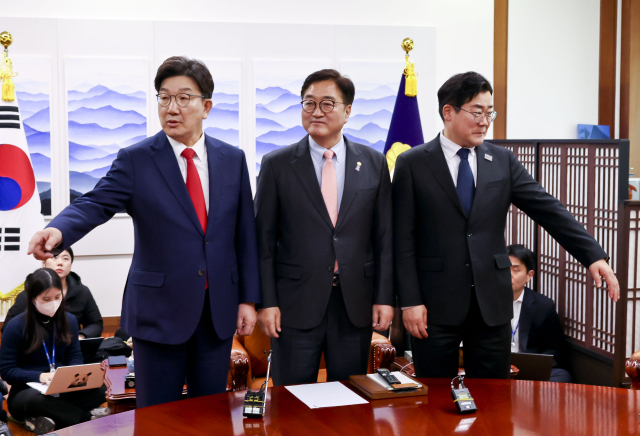
The third meeting of the consultative council on state affairs, held on the 10th, broke down after 32 minutes, failing to narrow the differences between the ruling and opposition parties over the National Pension reform plan.
The People Power Party and the Democratic Party of Korea share the same position on raising the pension contribution rate (what people pay) from the current 9% to 13%.
On the income replacement rate (what people receive), however, the People Power Party has proposed raising it from 40% to 43%, while the Democratic Party is countering with a call to raise it to 44%.
The ruling party also put forward a proposal to introduce an automatic adjustment mechanism that cuts pension benefits as the number of contributors falls and life expectancy rises. The Democratic Party had at one point said it would consider the "43% income replacement rate plan," but that day it reversed course and came out against it, saying, "As a result of party discussions, our position is that it must be 44%, without an automatic adjustment mechanism."
The People Power Party protested in response, saying, "It has gone back to square one," and the talks ended empty-handed.
The National Pension Fund is expected to turn to deficit in 2041 and be depleted in 2056. Raising both the contribution rate and the income replacement rate by 4 percentage points each, as the Democratic Party proposes, would only delay the date of pension depletion by seven to eight years.
Yun Suk-myung, Research Fellow at the Korea Institute for Health and Social Affairs, said, "Raising the income replacement rate above the current 40% makes it hard to ease the burden on future generations, and raising it to 44% would simply be a pension deterioration."
The political sphere's insistence on raising the contribution rate only marginally while fixating on a higher income replacement rate amounts to a patchwork reform plan with an eye on votes at election time, and it cannot be called pension reform.
If pension reform, stalled since 2007, is left as it is, future generations will be saddled with a ticking time bomb. Not only will they have to take on the accrued pension liability, but they may also face a situation in which they receive no pension at all.
To make the pension system sustainable, reform must be pursued that holds the income replacement rate at its current level as far as possible while raising the contribution rate beyond the 13% proposed by the ruling and opposition parties.
In a recent public opinion poll, a considerable share of respondents said they could bear not only a 13% contribution rate but even 15%. It should also be noted that the average pension contribution rate among Organisation for Economic Co-operation and Development (OECD) member countries reaches 18.2%.
The automatic adjustment mechanism already adopted by advanced pension countries should also be introduced this time. The ruling and opposition parties should set aside the debate over parametric versus structural reform, focus on the "pay more" approach, and perform fundamental surgery on the pension system.