(Chosun Ilbo Report, September 2, 2023) Only '15% + Age 68 + 1 Percentage Point Higher' Keeps the Fund Going Through 2093. "A Pension Reform Plan to Pay More and Receive Later" (Posted October 9, 2026)
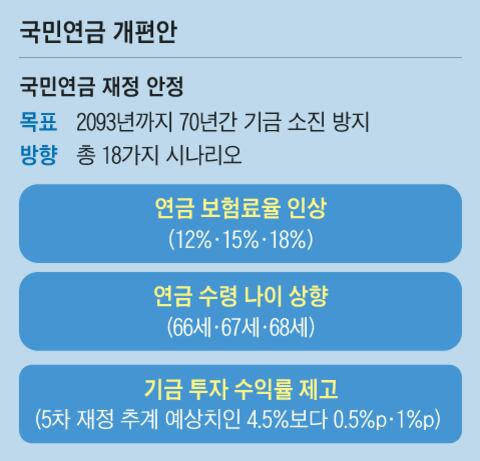
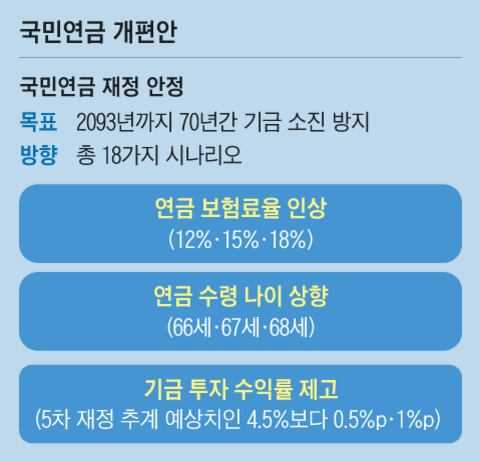
On the 1st, the Financial Estimation Committee, a government advisory body that presents National Pension reform proposals, unveiled a blueprint for pension reform in the direction of "paying higher contributions and receiving the same amount, but later."
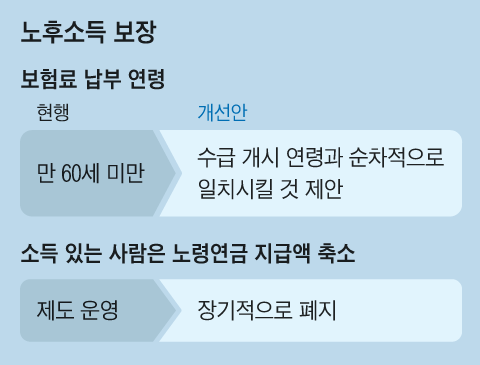
It combined measures to raise contributions, now 9% of monthly earnings, by 0.6 percentage points a year from 2025 to 12–18% over 5 to 15 years; to delay the pensionable age to 66–68; and to raise the fund's investment return by 0.5 percentage points or 1 percentage point.
No improvement plan raising the pension's income replacement rate (the ratio of pension benefits to lifetime average income), currently 40%, was presented.
Without reform now, the National Pension Fund will be depleted in 2055. The generations after that would have to pay contributions of up to 34.9%. The reform scenarios this time could push the depletion date back as far as beyond 2093.
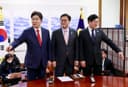
Before the "Public Hearing on the Fifth National Pension Financial Projection" held at COEX in Seoul that day, Kim Yong-ha, Chair of the Financial Estimation Committee, said, "Those who are 20 this year will turn 90 in 2093, and the key goal is to keep the fund from being depleted until then."
To that end, the committee said, the contribution rate, frozen at 9% since 1998, needs to be raised step by step every year, and the pensionable age delayed from 65 to 68. As of 2020, the average public pension contribution rate in Organisation for Economic Co-operation and Development (OECD) countries was 18.3%, and the income replacement rate 42.2%.
The Ministry of Health and Welfare plans to submit a pension reform plan to the National Assembly by the end of October, drawing on the committee's report. However, critics point out that the committee merely presented 18 scenarios instead of two or three leading options, and that even if the government submits one or two reform plans to the National Assembly at the end of October, the ruling and opposition parties are unlikely to pass pension reform legislation that will not help them win votes, with the general election seven months away.
The previous Moon Jae-in administration did not touch pension reform at all. As a result, the projected date of fund depletion was moved up two years, from 2057 to 2055. Conditions surrounding pensions have also deteriorated. The total fertility rate has fallen to the 0.7 range, the lowest in the world, and population aging has accelerated. That day, the committee said, "The goal is to keep the fund from being depleted." To this end, it created 18 scenarios combining three variables: the contribution rate, the pensionable age, and the fund's rate of return.
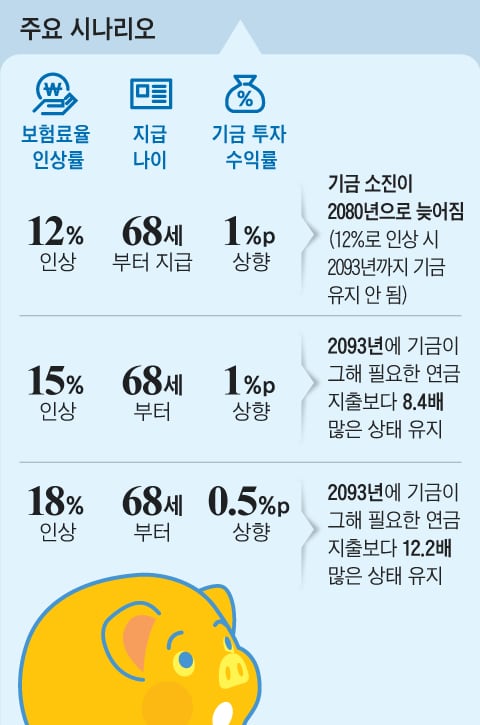
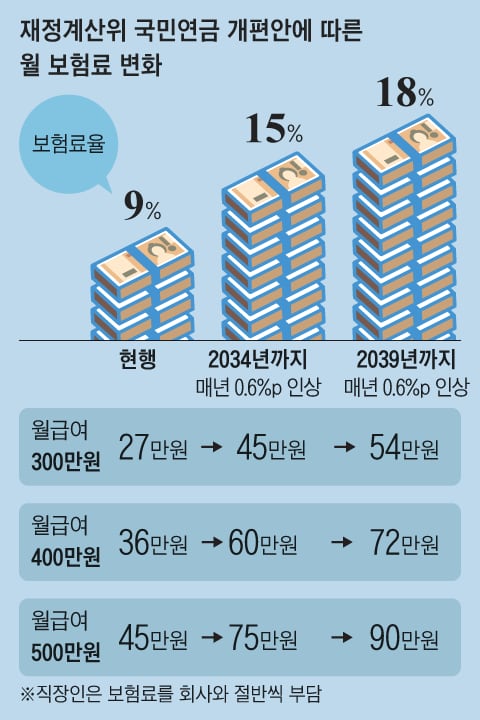
First, there is an option to raise the contribution rate to 15%, delay the pensionable age to 68, and raise the fund's rate of return by 1 percentage point. The contribution rate, currently 9%, would be raised by 0.6 percentage points a year for 10 years from 2025, and the pensionable age would be pushed back by one year every five years after 2033 until it reaches 68.
The fund's rate of return would also be brought to 5.5% a year. In this case, a worker with a monthly income of 3 million won currently pays 270,000 won a month in contributions (half borne by the employer), but from 2034, when the contribution rate reaches 15%, would have to pay 450,000 won a month.
Graphic: Yang Jin-gyeong
Scenarios combining an 18% contribution rate with one or more of a pensionable age of 68 and a higher fund return (by 0.5 percentage points or 1 percentage point) were also presented. Under these, the contribution rate would be raised by 0.6 percentage points a year for 15 years from 2025, and the pensionable age pushed back by one year every five years after 2033. In this case, the contributions of a worker with a monthly income of 3 million won would rise from 270,000 won a month to 540,000 won in 2039 (when the contribution rate reaches 18%).
If the contribution rate were raised only from the current 9% to 12%, the calculations showed, it would be difficult to sustain the fund until 2093. With an increase to 12%, the fund would be depleted by 2080 even if the pensionable age were delayed to 68 and the fund's return raised by 1 percentage point.
To bring down the elderly poverty rate, the committee also proposed support for low-income contributors, expanded military service and childbirth credits, and concentrating the Basic Pension on low-income older people.
Currently, the "childbirth credit" recognizes additional National Pension contribution periods from the second child onward; the proposal is to consider recognizing 12 months for each child starting with the first, and expanding the "military service credit" from the current six months to recognition of the entire period of service.
Many expect that it will be difficult for the Ministry of Health and Welfare to accept the Fifth Financial Estimation Committee's proposals as they are. A ministry official said, "Public understanding and persuasion matter most, but I do not know what people will think of a plan to 'pay more and receive later, with the pension amount unchanged.'"
The Financial Estimation Committee is convened every five years.
Graphic: Yang Jin-gyeong
https://www.chosun.com/national/welfare-medical/2023/09/02/NOLZWJXJUJGG5LQ4P26226LVXE/