(Committee Member Yun Suk-myung, Weekly Donga Interview, May 14, 2024) [Video] "Left as It Is, the National Pension Will Lead the Nation to Ruin" (Posted May 14, 2024)
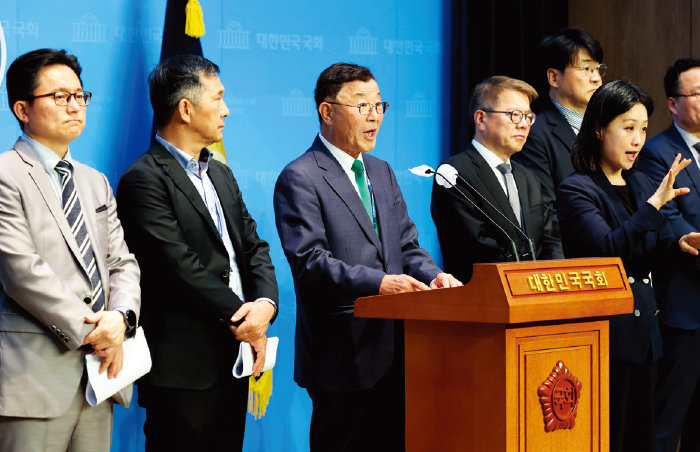
(In the Weekly Donga interview, Committee Member Yun Suk-myung,
speaking of those who claim to be helping the political sphere
while habitually distorting the facts,
takes direct aim at these politicized professors ("polifessors").
This can be seen in the attached video
at the 2-minute-10-second mark.)
Yun Suk-myung, Research Fellow Emeritus at the Korea Institute for Health and Social Affairs (KIHASA)
"Money does not fall from the sky; we must reform, however painful it is"
"Once, pension experts from Korea, China, and Japan gathered for a meeting. When I finished my presentation, a Japanese official in charge of pension affairs hesitated and then asked a question. The official was asking for our secret: 'Korea's contributions are not even half of Japan's, so how can it pay out far larger pensions?' I was so ashamed that I could not raise my head."
This is how Yun Suk-myung, Research Fellow Emeritus at the Korea Institute for Health and Social Affairs, described the way foreigners view Korea's National Pension in an interview with Weekly Donga on May 7. Research Fellow Emeritus Yun is a pension expert who took part in every National Pension financial projection, from the first through the fifth. Yun has long maintained that the current National Pension system is unsustainable.
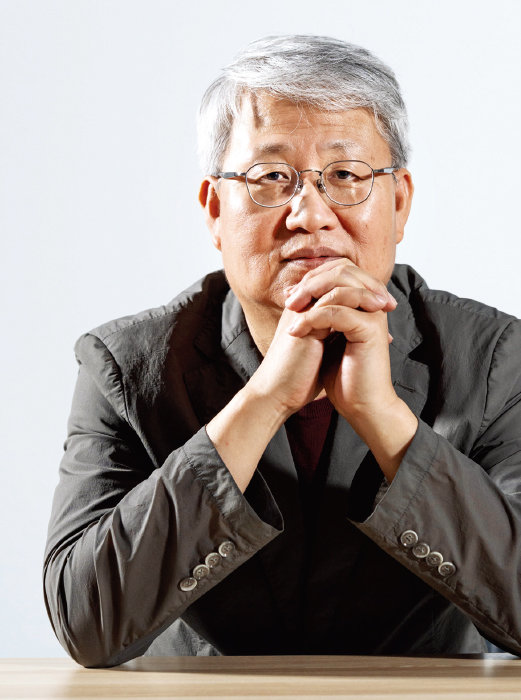 View original Yun Suk-myung, Research Fellow Emeritus at the Korea Institute for Health and Social Affairs. [Hong Tae-sik] |
An Appalling Catastrophe
Doubts about whether the National Pension can be sustained are shared by the great majority of the public. This is also why the Public Deliberation Committee on Pension Reform recruited 500 citizen representatives. As a result of the public deliberation, the direction of National Pension reform was set on the so-called "pay more, receive more" plan. In the third survey, 56% of the citizen representatives backed Plan 1, which raises the contribution rate from 9% to 13% and the income replacement rate from 40% to 50%. Plan 2, which raises the contribution rate from 9% to 12% while keeping the income replacement rate at its current level, received only 42.6% support. With the ruling and opposition parties failing to agree on a National Pension reform plan in the 21st National Assembly, pension reform has been pushed back to the 22nd National Assembly.
The problem is that National Pension reform was originally taken up in order to improve fiscal stability. Experts continue to point out that this reform plan, which raises the contribution rate by only 4 percentage points while raising the income replacement rate by 10 percentage points, will instead undermine fiscal stability. Research Fellow Emeritus Yun said, "The average contribution rate in countries that pay an income replacement rate of 40% is above 18%." What follows is a question-and-answer session with Research Fellow Emeritus Yun.
How did you view the results of the deliberative poll by the Public Deliberation Committee on Pension Reform?
"It is an appalling catastrophe. Korea's situation differs from that of the major member countries of the Organisation for Economic Co-operation and Development (OECD). Welfare states such as Germany and Sweden began paying pensions back in the days of people's great-great-grandfathers, so to speak. In Korea, by contrast, many people are still only paying contributions and have not yet entered the stage of drawing pensions in earnest. As a result, reserves of about 1,000 trillion won have piled up. This appears to be creating an enormous optical illusion."
What do you mean by an optical illusion?
"The thinking goes, 'Other countries' pension systems run perfectly well without reserves. We have as much as 1,000 trillion won, so what is the problem?' But the unfunded pension liability must be taken into account. The pensions that have been promised amount to more than 2,800 trillion won. Even counting the reserves, there is a shortfall of 1,825 trillion won. If the income replacement rate is kept at 40%, the contribution rate has to be raised to around 20%. Yet the decision was to raise the contribution rate by 4 percentage points and the income replacement rate by 10 percentage points. Is that not setting out on the road to national ruin?"
Those who defend the citizen representatives' decision say the situation could improve, for example if the total fertility rate rebounds.
"At the time of the Fifth National Pension financial projection, the conclusion was that fiscal stabilization would be hard to achieve even if the income replacement rate were kept at 40% and the contribution rate raised to 15%. Even that projection was the result of adopting rather optimistic assumptions. It assumed that the total fertility rate would rebound to 1.21 after 2040. Last year the total fertility rate was 0.72, and in the fourth quarter it fell to 0.65. From many angles, it is nothing more than wishful thinking and the torture of false hope."
Inject Treasury Funds? Does Money Fall from the Sky?
Some argue that, instead of raising the contribution rate, the problem can be addressed through "advance treasury injections."
"Because the public so dislikes higher contribution rates, voices seem to have emerged saying, 'Let us raise the contribution rate only slightly and put in tax money.' But the unfunded liability that must already be resolved alone amounts to 1,825 trillion won. Does the money used for treasury injections fall from the sky? In the end, the economically active population has to bear it. That means the next generation will face a contribution rate of 13 to 15% and will also have to pay a great deal in taxes on top of that, even though the National Pension income replacement rate they receive will be far lower than that of the older generations."
How much heavier will the burden on future generations become?
"Between the generation born around the 1960s and the generation working after the fund is depleted (estimated for 2055), the lifetime contribution rate will differ by a factor of nearly four. They will have to shoulder additional taxes to resolve the debt problem that has already arisen, and they are also projected to pay about twice as much in health insurance contributions. Long-term care insurance contributions will rise as well. On top of this, a generation of whom 200,000 to 250,000 are born each year has to support generations of whom 700,000 to 1,000,000 were born each year. Having increased their burden four- to fivefold, is it right to tell them, 'Do not worry. A public pension system is by nature one in which generations support one another this way'? Using abstract words, they have made decisions in a direction where they themselves bear no responsibility."
In effect, it seems the responsibility has been handed over to future generations.
"Over the past 26 years, economic growth was higher than it is now and the population structure was more stable, yet the contribution rate could not be raised by even 1 percentage point, on the grounds that life was hard. If Plan 1 is adopted, the contribution rate is projected to exceed 43% in 2093. If they truly believe this approach is feasible, let them at least bear half of that, a 21.5% contribution rate. Only that kind of action can confirm their sincerity and secure intergenerational equity."
Whenever the National Pension is discussed, the problem of elderly poverty always comes up.
"There is a trap in the elderly poverty statistics. The elderly poverty rate is said to be high, but strictly speaking it is a poverty rate in terms of income. When income and assets are considered together, about 25% of older people are struggling. They should be helped out of poverty through various welfare benefits, but the Basic Pension is paid equally to 70% of those aged 65 and over. One-third of the older people receiving the Basic Pension cannot be called poor by OECD standards. The OECD has long recommended that, since Korea's Basic Pension system does little to alleviate elderly poverty, Korea should support truly struggling older people in a more concentrated way."
Some say the National Pension income replacement rate should be raised to address elderly poverty.
"Raising the National Pension income replacement rate cannot alleviate the problem of elderly poverty. The vulnerable are outside the National Pension system to begin with, and their contribution periods are short, so their monthly benefits are small. The current approach is highly likely to deepen asset polarization while the older generations, who have built up their assets securely, pass an enormous burden on to future generations. Under the Benito Mussolini regime, Italy raised its pension benefit levels very high to justify the dictatorship. It was good for the moment, but under the pressure of pensions, contributions, and the like, talented young people began to leave the country. If something similar happens in Korea, could this country secure global competitiveness?"
Some point out that 53.2% of the citizen representatives in their 20s supported Plan 1.
"The most important thing in a pension system is stability, being able to keep receiving it until death. If you told people in their 20s, 'You will pay high contributions now, but I cannot say whether you will properly receive a pension later,' would they make the same choice?
Instead of saying that, they gaslighted them, saying, 'Later the state will collect taxes or something and make sure you get paid somehow,' and that is why this result came out."
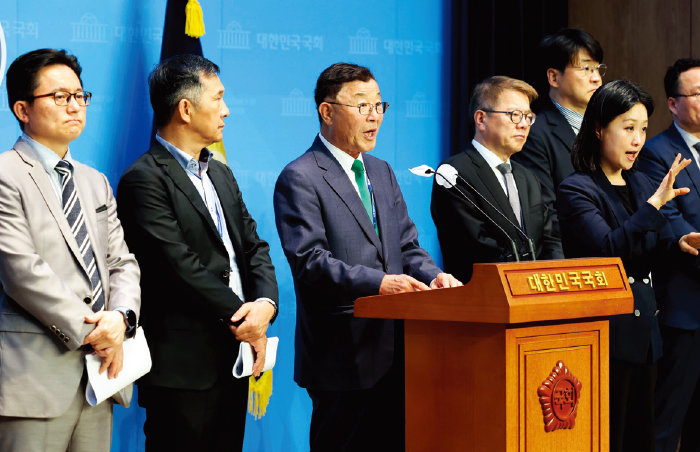 View original Kim Sang-gyun, Chair of the Public Deliberation Committee on Pension Reform (third from left), on April 22, announces the final results of the pension reform public deliberation at the National Assembly press briefing room. [News1] |
Defrauding the Public
Do you think the National Pension is unsustainable?
"How could it be sustainable? Sweden's contribution rate is 18.5%, Germany's is 18.6%, and Japan's is 18.3%. Sweden's income replacement rate is projected to fall to 33% by 2050. Germany's income replacement rate will also be around 37% as of 2050, and Canada, with a contribution rate of 11.9%, has an income replacement rate of around 33%. Finland, whose contribution rate is 24.4%, will likewise see its income replacement rate fall to 44.3% in the long run once the life expectancy coefficient is applied. Korea's National Pension system is absurdly out of balance between what is paid in and what is paid out.
When enormous liabilities are already in store, telling young people, 'Do not worry, the state will pay no matter what,' is effectively no different from defrauding the public."
How do you think the National Pension should be reformed?
"If the National Pension is left as it is, it can only lead the country to ruin. It must be reformed, however painful. If reform at a single stroke is difficult, let us keep the income replacement rate at the current 40% and raise only the contribution rate, to 15%. If even that is difficult, let us raise the contribution rate to at least 13%. After this emergency measure, there needs to be focused discussion of the Swedish model, which switched its benefit method to a defined contribution (DC) pension system, so as to carry out structural reform. It is a method in which the contributions paid over a lifetime, plus interest (the real economic growth rate), are paid out monthly as a pension."
Reporter Choi Jin-ryeol [email protected]
https://n.news.naver.com/article/037/0000034406?sid=101