(Dong-A Ilbo, May 28, 2024) [Song Pyeong-in Column] The Real Pension Reform Lee Jae-myung Should Carry Out (Posted October 7, 2026)
(“A 13% contribution rate with a 44% income replacement rate”
Individuals pay 2% more and receive 4% more
Pension reform of this kind is not possible
Lee Jae-myung took up a deceptive reform plan to steal a march)
I read with great interest a recent Weekly Donga interview with Yun Suk-myung, Research Fellow Emeritus at the Korea Institute for Health and Social Affairs (KIHASA). He said: “Once, pension experts from Korea, China, and Japan gathered for a meeting. When I finished my presentation, a Japanese official in charge of pension affairs hesitated and then asked a question.
‘Korea pays contributions of less than half of Japan’s; how can it pay out far larger pensions?’ He was asking for the secret. I was so ashamed I could not raise my head,” he said.
Saying that the difference between a 44% and a 45% income replacement rate is a mere 10,000 won is deceptive. With a monthly wage of 1 million won, a 44% income replacement rate means 440,000 won and 45% means 450,000 won, so the statement is true. Nobody earns a monthly wage of 1 million won. With wages of 2 million won and 3 million won, the gap grows to 20,000 won and 30,000 won. Once the baby-boom generation has all reached pensionable age, the number of recipients will approach 10 million. Thirty thousand won each for 10 million people is 300 billion won. That is not per year but per month.
With a monthly wage of 3 million won, when the income replacement rate rises from 40% to 44%, the pension grows from 1.2 million won to 1.32 million won a month. At 120,000 won each for 10 million people, an extra 1.2 trillion won goes out every month, or 14.4 trillion won every year.
There is broad agreement on raising the pension contribution rate from 9% to 13%. At 9%, the individual and the company each bear 4.5%. Raising it to 13% means 6.5% each, so each pays 2% more. With “a 13% contribution rate and a 44% income replacement rate,” individuals pay 2% more and receive 4% more, so they come out ahead. They pay 2% more and receive not 2% but 4% more. This magic works because the company bears an additional 2%.
Even now, Koreans pay contributions of less than half of Japan’s while receiving larger pensions than the Japanese; there can be no reform that leaves them even better off.
The argument that the income replacement rate must be kept at 40% even if the contribution rate rises to 13% is right. Individuals will be unhappy at paying 2% more without receiving anything more. But no reform is possible other than in this way.
In fact, even a 13% contribution rate falls short. Looking at advanced countries that run their pension systems stably, the contribution rate has to rise to 18% to sustain a 40% income replacement rate. It should be raised to 13% for now and then raised further when the opportunity arises.
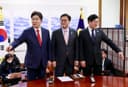
Lee Jae-myung, leader of the Democratic Party of Korea, as head of the party holding an overwhelming majority in the National Assembly, cannot escape a considerable share of responsibility for pension reform, even though his is the opposition party.
In these circumstances, he chose, from among the several options of the National Pension Public Deliberation Committee, the deceptive plan that merely made a show of reform, and swiftly stole a march.
What good can come out of Lee Jae-myung? As soon as he became mayor of Seongnam, he declared a moratorium (a suspension of payments), which was a fraud designed to disparage his predecessor. And when his predecessors had worked hard to develop Pangyo into a high-tech industrial complex, he used its fruits to hand out largesse that no other basic local government could even imitate. Policies he introduced, such as the Youth Basic Income, were eventually abolished, and the voices calling for their revival are faint.
As mayor of Seongnam, he once came all the way to Seoul to go on a hunger strike. Because a flawed ordinance was diverting to Seongnam tax revenue that should have gone to the poor cities and counties of Gyeonggi Province, the Ministry of the Interior and Safety ordered the ordinance corrected, and he resisted with a hunger strike. Having become the head of the richest of all the basic local governments, he staged a greedy hunger strike.
It is not as if he is good at nothing. He cracked down on illegal street stalls at Namhansanseong and subdued Shincheonji during COVID-19. Setting aside that these were not free of violations of fundamental rights, being good only at such things is what dictatorial politicians do best.
Do parametric reform first, then structural reform? On a parametric foundation of “a 13% contribution rate and a 44% income replacement rate,” no structural reform, whatever it may be, can amount to reform.
Judging by what Lee has done so far, his intention was probably to make a preemptive move as soon as the chance for a deceptive parametric reform came along, and then hold out for the three years until the presidential election. With people going along with it, he must be thinking that “the trickery that worked in the provinces when he declared the moratorium works at the center too.”
The people of Jerusalem thought that nothing good could come out of Galilee, yet, exceptionally, something did.
If Lee says he will go for “a 13% contribution rate and a 40% income replacement rate,” I will gladly admit that my preconception was wrong. But that does not seem likely to happen. His life has contained no choice that entailed self-sacrifice. That is where he differs from Roh Moo-hyun.
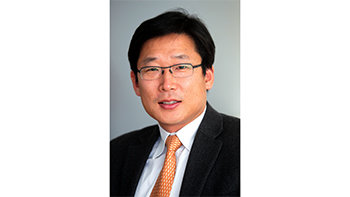
Song Pyeong-in, Editorial Writer [email protected]