(JoongAng Ilbo, Bylined Column by President Ko Hyun-kon, June 2024) [Ko Hyun-kon Column] Pension Reform That Has People Pay More and Receive More Is a Deception (Posted October 6, 2026)
(Pension Future Forum comment:
In May 2024,
when nearly every media outlet in the Republic of Korea
was demanding that the National Pension deterioration bill be passed
and putting the Yoon Suk-yeol administration of the time
under enormous political pressure,
almost the only voice
(together with Dong-A Ilbo columnist Song Pyeong-in)
to back the Pension Future Forum’s position
was a column by Ko Hyun-kon, then president of the JoongAng Ilbo. That
bylined column
we now post on the newly redesigned Pension Future Forum website,
in its archive category,
under the “Pension Reform” heading,
as its very first entry.
We do so because we consider its historical significance that great.
It is also because, compared with most pension experts,
he understood more accurately
the heart of
the matter.)
(Raising the income replacement rate from 40% to 44% is a deterioration
Once raised, it becomes hard to lower again
No country is going into reverse to pay out more
Japan is at 33%; we too should freeze or cut it)
Watching the latest pension reform debate, I was struck anew by how frightening a frame can be. A frame has the vicious power to turn even black into white.
At the end of last month, a single remark by Democratic Party leader Lee Jae-myung—“Let us agree on an income replacement rate of 44%”—turned the tide of pension reform. It came to look like a magnanimous concession.
A frame took shape in which the Democratic Party supports pension reform while the government and the People Power Party oppose it. Should problems arise with the pension in the future, the government and ruling party, which hesitated in the closing days of the 21st National Assembly, now stand to take the blame.
The government and ruling party do not even seem to realize that they have been driven into a corner.
Until now, Lee had shown little interest in pension reform. He said nothing of note about it during the presidential election either. Over the past two years, pension reform was never among the bills the Democratic Party vowed to pass. With this single blow, he seized the upper hand on pension reform at a stroke. When it comes to political calculation, he is certainly a master tactician.
The plan Lee says he will accept raises the contribution rate from 9% to 13% and the income replacement rate from 40% to 44%.
The contribution rate is what one pays in (relative to standard income), and the income replacement rate is what one receives (relative to average income over the contribution period). As if he had been waiting for it, then National Assembly Speaker Kim Jin-pyo chimed in: “Let us pass it, even if it takes a plenary session convened for that one item.”
Pension experts, as well as a considerable number of ruling-party politicians and the media, joined in.
The atmosphere was such that anyone who objected was branded a traitor.
Before anyone knew it, this plan had established itself as the right answer for pension reform. There is a strong chance it will be pushed through as is in the 22nd National Assembly as well.
Their argument is that “raising the contribution rate, which has stood at 9% for 26 years, to 13% is significant in itself.”
Some even hailed it as a “historic agreement.”
At first glance this sounds plausible, but there is a problem.
They emphasized only the contribution-rate increase and conveniently left out the fact that raising the income replacement rate to 44% is a deterioration. Raising the income replacement rate offsets much of the effect of the higher contribution rate. Paying more and receiving more is a reform that might as well not happen. It is a kind of deception.
It means that the older generation intends to avoid any great loss, whatever becomes of future generations. Moreover, once the income replacement rate starts going up, it will be hard to bring it down later. It sets a bad precedent.
The goal of pension reform is to prevent fund depletion. Left as it is, the fund will run dry in 2055. Those born in 1990 or later may end up only paying in. Adjusting to a 13% contribution rate and a 44% income replacement rate pushes the depletion date back by nine years, to 2064.
Nine years is not enough.
When the system is fixed, it must be fixed properly, because there is no telling when it will be touched again. According to the Fifth National Pension Financial Projection, avoiding a shift of the burden onto future generations would require raising the contribution rate to 19.8% while freezing the income replacement rate at 40%.
Pension fund depletion driven by low birth rates and population aging is a worry the world over. Countries are carrying out reforms in which people pay more and receive less. They raise contribution rates and lower income replacement rates. They lengthen contribution periods and raise the eligibility age.
No country is going into reverse by raising its income replacement rate.
Still less is there any country that touts an increase in the income replacement rate as reform.
Korea, too, has lowered its income replacement rate over 40 years, from 70% to 40% (as of 2028). During a presidential debate in 2002, former President Roh Moo-hyun opposed cutting the income replacement rate, asking, “Are you going to create a pocket-money pension?”
Once in office, he quickly recognized that the income replacement rate had to come down. He changed his conviction. That is what made former President Roh outstanding. Braving the backlash, he pushed through the plan to lower it to 40%. If we raise it back to 44%, the whole world will mock us: “Has Korea hidden a magic wand somewhere?”
In the end, the opposition, armed with a flawed plan, triumphantly pressed for its swift passage. The government and ruling party, having sat idle, lost the initiative and floundered.
The best counter they could come up with was to propose carrying out parametric reform (adjusting the contribution rate and income replacement rate) together with structural reform (adjusting the National Pension, the Government Employees Pension, and the Basic Pension).
Having done nothing for all of their two years in power, suddenly bringing up structural reform looks lame. Structural reform is hard in the latter half of an administration.
Tacking on something unrealistic only invites the misunderstanding that they are doing so because they do not want pension reform.
The government and ruling party are being dragged along because their goals and position are unclear. I am not even sure they have the will to see it through.
Rather than watering the issue down with structural reform, they should stand firm that raising the income replacement rate is out of the question.
They should propose raising the contribution rate to 13% while freezing the income replacement rate at 40%. Having done this, the next step must be to raise the contribution rate above 13% and lower the income replacement rate below 40%. There is a long way to go.
Japan has a contribution rate of 18.3% and an income replacement rate of 33%. The Japanese pay twice as much as we do and receive less. As a result, they have built up enough money to pay benefits for 100 years.
No one is pleased to pay more and receive less. That is why everyone, calculating votes, merely makes a show of reform. As President Yoon Suk-yeol put it, it is an “unpopular policy.”
The first priority is for the government and ruling party to present a roadmap for raising the contribution rate and lowering the income replacement rate.
If Lee accepts that, his sincerity about pension reform would deserve recognition.
A leader who worries about the nation’s future needs this kind of attitude.
We must not shift debt onto young people.
On this, there is no conservative or progressive.
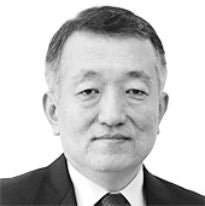
Ko Hyun-kon, Editor