It Is Time to Properly Compare Statistics Among OECD Member Countries
[Seoul Sinmun · Open World · April 19, 2015]
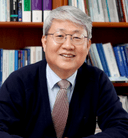
Yun Suk-myung, Research Fellow at the Korea Institute for Health and Social Affairs (KIHASA) and Adjunct Professor of Economics at Korea University
Yun Suk-myung, Research Fellow at the Korea Institute for Health and Social Affairs (KIHASA) and Adjunct Professor of Economics at Korea University
It has already been 20 years since joining as a member of the Organisation for Economic Co-operation and Development (OECD). At the time of joining in 1996, there was much debate. This was due to criticisms that the country was rushing to join without having the necessary capabilities. Some also pointed out that the IMF economic crisis was caused by implementing a loose exchange rate policy to facilitate early membership. Public opinion at home before and after joining was not favorable.
Although the number of member countries increased significantly after the collapse of the Eastern Bloc, only Korea and Japan remain in the Asia-Pacific region. It is also noteworthy that despite Japan's presence, the OECD office responsible for the Asia-Pacific region is located in Korea under the name "OECD Korea Policy Centre." Personally, I believe that the Kim Young-sam administration's decision to join early was a good one. This is because, beyond the justification of joining the club of developed nations, modernization efforts were carried out in many fields according to OECD guidelines. I believe this is especially true in terms of producing reliable statistics, which serve as a yardstick for judging national competitiveness. Since joining, the reliability of our country's statistics has increased as we produced statistics that meet OECD standards. While there are many such positive aspects, there also seem to be negative ones. A representative example is the unproductive debate and confusion caused by simply comparing the statistics of member countries horizontally.
The OECD is effectively an international organization led by Western European countries. The contents of discussions, especially in the field of social security schemes, tend to be centered on European values. This is something I felt while participating as a member of the Korean delegation in OECD meetings held more than 10 times in Paris, France, over the past decade. Even Japan, which exerts great influence worldwide, does not seem to lead discussions in committees related to social security schemes. This is likely because its development process for social security schemes differs from that of Western European countries. If this is the case for Japan, which achieved modernization first in Asia, what then is the situation for Korea, a latecomer?
In the field of social security schemes, the materials distributed and published at OECD meetings are filled with content stating that Korea belongs to either the lowest or highest ranks. It is in the lowest rank for good rankings and the highest rank for bad rankings. In international comparisons of social security expenditure, which determines a country's level of social security, Korea competes with Mexico for last place. 'National happiness' is also in the lower ranks. On the other hand, the elderly poverty rate and suicide rate are at the highest levels among OECD member countries. As these comparative materials are delivered to the public through experts in related fields and the media without any filtering process, Korea is being perceived as a country full of problems.
A significant number of members of our society seem to agree with the general direction that areas falling below the OECD average should be raised to the average level. The problem is that comparisons between member countries are exaggerated beyond necessity and conducted without reflecting Korean particularities, which in many cases actually becomes an obstacle to development in a desirable direction. This is despite the fact that it is absurd to simply compare the social security expenditure of countries with over 70 years of history in implementing social security schemes with ours, which is still in its infancy.
Despite significant differences in population aging, the maturity of social security schemes, income identification capabilities, levels of tax burden, and civic consciousness, the current reality is that claims for a course correction in the development direction of our social security schemes are flooding in, citing the fact that we cannot immediately reach the OECD average. Because social security expenditure is simply compared while ignoring the particularities of latecomers—namely, the characteristics of pension schemes where full-scale expenditure occurs only after a long time following the introduction of the system—confusion is being caused in the interpretation of statistical indicators. I am concerned that instead of efforts to properly compare by correcting OECD statistical data from an objective perspective, these statistics are becoming the background for wasteful debates and populist election pledges.
I believe it is now time to return to the original mindset we had at the time of joining as an OECD member. Recalling the criticisms that joining was too hasty, it is necessary to distinguish between what needs to be supplemented quickly and what can be supplemented over time. Now, I believe it is also time to go one step further and consider an 'Asian Way' that can encompass the Asia-Pacific region in the field of social security schemes. This is because we are the country with the greatest possibility of establishing a new welfare model that appropriately fuses the values of Europe and the Asia-Pacific region.
Source: Seoul Sinmun (original article)