Social Security in the Era of the 'New Normal'
[Seoul Sinmun · Open World · January 31, 2015]
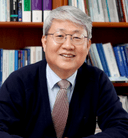
Yun Suk-myung, Research Fellow at the Korea Institute for Health and Social Affairs (KIHASA) and Adjunct Professor of Economics at Korea University
Yun Suk-myung, Research Fellow at the Korea Institute for Health and Social Affairs (KIHASA) and Adjunct Professor of Economics at Korea University
At some point, looking at the sky thick with fine dust and haze began to evoke gloomy thoughts. This is because the "old normal"—the high growth and full employment we were once accustomed to—has faded into an outdated standard of the past since the 2008 global financial crisis, and a "new normal" (a new standard for a new phase) characterized by low growth and low income is becoming the new benchmark. To make matters worse, another "new normal" in the form of ultra-low fertility and rapid population aging is approaching. The "demographic bonus" period, characterized by a high proportion of the working-age population, will shift to a "demographic onus," meaning a decrease in the working-age population, starting in 2017. The number of older people aged 65 and over, currently about 6.6 million, will increase to 16 million in 25 years, and the number of older people aged 65 and over living alone will increase from 1.32 million (2013) to 3.43 million (2035). Meanwhile, the potential growth rate, which was 7–8% per year in the 1980s, is currently around 3%, is expected to drop to the 2% level after 2017, and plummet to below 1% after 2050.
As the situation is serious, the government has accelerated its pace, with the government budget invested in the "2nd Basic Plan for Low Fertility and Aging Society" from 2011 to 2015 reaching 70 trillion won (40 trillion won for low fertility and 30 trillion won for the aging society). Despite the investment of massive resources, the government's concerns are deepening as the effects on raising the fertility rate and alleviating elderly poverty have not been significant. In a low-growth society, it is difficult to find employment, and even if one does, most positions are non-regular with low wages, while high housing prices make people hesitant to marry. Working mothers find it difficult to raise children and feel burdened by the prospect of childbirth. It is said that many young people give up on having children because they fear their children will live as they do. Because a significant portion of the younger generation is in a situation where it is difficult to plan for the future, government policies are not working.
At the New Year's Grand Debate for solving low fertility and population aging, the request from the younger generation was "selection and concentration." They asked that resources be concentrated where policy effects can be most significant. To reflect such demands in policy in the era of the "new normal," a major overhaul of the existing social security system is necessary. For such an overhaul to be possible, the understanding and concessions of groups in better situations are required. This is because limited budgets must be used to prioritize the protection of groups more exposed to social risks due to low growth and low income (the working poor, unemployed youth, long-term unemployed, etc.).
The Ministry of Health and Welfare's work report for this year includes policies consistent with the era of the "new normal." This is particularly true for allowing part-time and short-term workers, who previously lacked eligibility, to join social insurance; government support for social insurance contributions during periods of unemployment; and the expansion of beneficiaries for "Durunuri Social Insurance," which supports the contributions of low-income workers. Despite these efforts, some regrettable gaps remain. This is because there are no measures for low-income self-employed people who must bear 100% of their contributions, day laborers heavily exposed to social risks, and special employment types such as courier drivers and ready-mixed concrete truck drivers.
In this situation, the government—and particularly the Ministry of Health and Welfare as the primary ministry—seems to be in a difficult position as it must prepare the "3rd Basic Plan for Low Fertility and Aging Society" starting next year. This is because it is difficult to solve problems as complex as a tangled skein through the efforts of a specific government ministry alone. Regarding low fertility and population aging, we must set aside political inclinations and ideological differences, share the reality and severity of the problems we face, and establish a basic plan in the direction that yields the greatest policy effect. In the era of the "new normal," where the socially vulnerable are bound to increase due to deepening low growth, low income, and income polarization, the social security schemes must be overhauled with a vision looking at least 20 to 30 years ahead so that groups most exposed to social risks can receive social security benefits preferentially.
Countries where social security schemes function well seem to have their own reasons. The story told by an official from the Swedish Pensions Agency is a good example. It is said that the Swedish Tax Agency is the most trusted government institution in Sweden due to its fair performance of duties. The government is trusted, and citizens with ingrained civic consciousness are fulfilling their own responsibilities. What if we set a trusted government and mature civic consciousness as our vision? Through such efforts, I hope we can become a society where the majority of social members can have hope.
Source: Seoul Sinmun (original article)