Crossing Hangyeryeong Pass
[Seoul Sinmun · Open World · November 17, 2014]
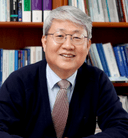
Yun Suk-myung, Research Fellow at the Korea Institute for Health and Social Affairs (KIHASA) and Adjunct Professor of Economics at Korea University
Jinburyeong is the pass I crossed the first day I came to Seoul, having been born in the mountains of Gangwon Province. Because it was a winding and narrow gravel road where cars could barely pass each other, even the fast express buses could not exceed 40 km/h. In an era when simply having visited Seoul once was a great point of pride, the road to Seoul was the very definition of "Hanyangcheonri" (the long journey to the capital). This was because there were few opportunities to go to Seoul, and the road was so rugged that it was as difficult to cross as the "barley hump" (the spring famine period). Now, more than 40 years later, the routes from Seoul to the East Coast have become diverse.
Yun Suk-myung, Research Fellow at the Korea Institute for Health and Social Affairs (KIHASA)
Among the various paths to the East Sea, Hangyeryeong is the mountain pass that feels like Jinburyeong from days gone by. Although it is said that road conditions have improved significantly compared to before due to recovery efforts from the damage caused by "Typhoon Rusa," Hangyeryeong remains a rugged road to drive. I am now crossing Hangyeryeong in the opposite direction from Seoul to visit my parents, who once held the hand of their ten-year-old child while heading toward Seoul, and who have now passed the age of 80.
In the era when the population flocked to cities in search of work, the government actively pursued birth control because food was scarce. Birth control was successful under the slogan, "Even with only two children, the three thousand ri of this land will be overcrowded." Until the early 1990s, it was even boasted that the birth control policy was the most successful among government policies. That supposedly successful policy has turned into a national disaster. Because the country has been in a state of ultra-low fertility (a fertility rate of 1.3 or lower) for 20 years—to a degree rarely seen anywhere in the world—8 million fewer people were born during that time. This means the future economically active population has decreased by that much.
The severity of the problem lies in the fact that even if the fertility rate rises in the future, the lost 20 years cannot be recovered. The government, recognizing the severity, is taking active measures, but it is not enough. Although 70 trillion won (40 trillion won for low fertility measures and 30 trillion won for aging measures) is being invested over five years under the "2nd Basic Plan for Low Fertility and Aging Society" (2011–2015), there are no signs that the problems of low fertility and elderly poverty will be alleviated. This is because the possibility of the fertility rate rising in the future remains small. The more people who remain unmarried for their entire lives, the smaller the possibility that the fertility rate will rise.
Demographically, those who do not marry by age 45, when a woman's fertile period ends, are classified as the "lifelong unmarried population." According to research by the Korea Institute for Health and Social Affairs (KIHASA), one in five men and women in their early 20s (23.8% of 20-year-old men and 18.9% of 20-year-old women) is expected to remain "lifelong unmarried" 20 years from now. As the proportion of singles increases in this way, one-person households are also surging. Already, 4.53 million households (as of 2012), reaching 25% of all households, are one-person households. With the increase in one-person households, lonely deaths—where individuals face death alone—are also increasing.
In a situation where demands for welfare are erupting in every field, the very foundation of society responsible for meeting them is collapsing. The way to effectively respond to a fertility rate that does not seem likely to rise easily is to preemptively reduce the factors that will cause expenditures to surge in the future. The time has come to recall the days when we tightened our belts to cross the "barley hump."
This is why I felt heavy-hearted even while smelling the fresh air and the scent of fallen leaves while crossing Hangyeryeong. We can no longer leave it solely to the government to handle low fertility and population aging—which will become a national disaster if left alone—and the problem of approximately 3.5 million "lonely death reserves" resulting from the surge in the unmarried population and one-person households. It seems the time has come for all sectors of society to step forward and actively inform people about the various risks that changes in our social environment will bring.
For us, who have been in a state of ultra-low fertility for 20 years, the time has come to convey without embellishment the fact that we are in a "situation where we have no other choice but to tighten our belts because there are no other options." Only when the actual situation is properly disclosed will our society be able to feel firsthand how dangerous a stage we are entering.
The scale of the total burden that our society must endure and the urgency of preparing countermeasures must be shared. If this is properly shared, productive discussions will be possible regarding various difficult challenges facing our society, such as the Government Employees Pension reform, which is currently highly controversial. I say this because it is distressing to watch the reality of our society, which remains trapped in past paradigms and merely repeats wasteful debates. We must quickly, widely, and properly inform people that a future as rugged as the Jinburyeong and Hangyeryeong passes of the past has already arrived before us.
Source: Seoul Sinmun (original article)