At Finlyandsky Station
[Seoul Sinmun · Open World · October 14, 2014]
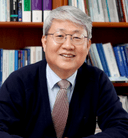
Yun Suk-myung, Research Fellow at the Korea Institute for Health and Social Affairs (KIHASA) and Adjunct Professor of Economics at Korea University
Taking a high-speed train from Helsinki Central Station in Finland for three and a half hours leads to Finlyandsky Station in Saint Petersburg, Russia. This is where Lenin, departing from Helsinki, arrived on April 16, 1917. In front of Finlyandsky Station stands a statue of Lenin overlooking the Neva River. On the opposite side of the river, near Saint Isaac's Cathedral, stands a bronze equestrian statue of Peter the Great, who founded Saint Petersburg. Seeing the statues of Peter the Great, who laid the foundation for Imperial Russia to emerge as a great power, and Lenin, the protagonist of the revolution that brought down Imperial Russia, coexist in one city makes me feel the irony of history.
Saint Petersburg is the place that became the foundation for Russia, which was then an underdeveloped country, to leap forward as a great power. It is a city that was painstakingly built, with more than 100,000 deaths occurring during the process of constructing the city on marshland for the sake of a struggle for hegemony with Sweden, which was a powerful nation at the time. It is a place imbued with the tenacity of Peter the Great, who personally designed and directed the city's construction based on his experience working in shipyards of advanced countries.
The Peter and Paul Fortress in Saint Petersburg is living evidence of the fierce struggle for hegemony between Russia and Sweden. After winning the war against Sweden, Russia began to soar from an underdeveloped country to a powerful nation. Finland, which had belonged to Sweden before the war between Russia and Sweden, was incorporated into Russian territory after the war. The reason I went to Saint Petersburg was that I wanted to properly understand the situation faced by Finland, which maintains its independence as a sovereign state among surrounding great powers.
Finland is a country that was ruled for about 300 years by Sweden, which was the hegemonic power of Northern Europe until Russia emerged as a great power. After Russia won the war against Sweden, Finland remained under Russian rule for over 100 years. Although it declared independence on December 6, 1917, taking advantage of the Russian Revolution, it barely managed to protect its national independence through two wars with Russia. The nation was able to preserve itself in a war against a superpower through the strategy of General Mannerheim, whose role was similar to that of Admiral Yi Sun-sin. Only then did I understand why my Finnish acquaintance, Ismo, explained the war with Russia in detail in front of the statue of General Mannerheim in Helsinki.
The pressure felt by Finland, with a population of only 5.4 million, being surrounded by Russia with 143 million and Sweden with 9.6 million, seems similar to that of Korea, which is surrounded by China with 1.35 billion and Japan with 127 million. I also understood the psychological state of the Finnish people, who feel they must win at all costs in sports games against Sweden, much like in Korea-Japan matches.
Finnish people say that Sisu (a spirit of indomitability) was developed in them through the process of surviving while surrounded by great powers. It is assessed that both the protection of the nation during two wars with Russia and the Finnish miracle, represented by 100 innovations, ultimately stemmed from the Sisu spirit (The Finnish Miracle, 2014). The international comparison introduced in the same book makes me think about Korea again. Korea's working hours are first in the world, but its national competitiveness is 22nd (p. 121). On the other hand, Finland, whose national competitiveness is 7th, has working hours that are 16th in the world. It seems necessary to examine whether there are major problems with our system in terms of efficiency and creativity, and how these can be improved.
Beyond geopolitical conditions, Finland and Korea share commonalities such as a surge in urban population due to rapid urbanization and rapid population aging. As is well known, Finland shows world-class levels of transparency in national administration, national competitiveness, and preparation for the future. To increase the sustainability of public pensions, whose sustainability is increasingly declining due to population aging and low growth, they have also introduced an adjustment mechanism that automatically links the pension amount payable to changes in social and economic conditions.
While leaving Finlyandsky Station and heading toward Helsinki, the thought that countries surrounded by great powers must respond preemptively to potential future risks did not leave my mind. Regarding the issue of public pension reform, including the Government Employees Pension, which has recently emerged as an important agenda in our society, I believe we must quickly prepare countermeasures while acknowledging that it is ultimately caused by rapid population aging. This is because if we keep postponing it just because it is a difficult problem, I fear we will be entirely swept away by the giant tsunami of population aging.
Source: Seoul Sinmun (original article)