12 Years After the 'Tears of Malmo'
[Seoul Sinmun · Open World · August 5, 2014]
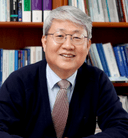
Yun Suk-myung, Research Fellow at the Korea Institute for Health and Social Affairs (KIHASA) and Adjunct Professor of Economics at Korea University
Sweden is a country that has secured sustainability from both financial and social perspectives in the field of old-age income security. This is because it introduced an automatic adjustment mechanism that automatically links environmental changes—such as an increasing older population and a falling economic growth rate—to the pension system. Since this automatic adjustment mechanism was introduced in 1999, 15 years have already passed. As my field of research is income security, I naturally take a great interest in Sweden, which has secured an automatic adjustment mechanism. I visited Malmo, Sweden, this summer out of concern about sustainability. As extreme weather events caused by environmental pollution and other factors occur frequently and interest in sustainable growth increases, interest in Malmo, an eco-friendly city pursuing sustainability, has grown.
If you take a train across the Oresund Bridge from Copenhagen Airport in Denmark, it takes about 30 minutes to reach Malmo, Sweden. Having taken the train myself, the bridge over the sea and the wind power plants constructed between the straits catch the eye. The early morning in Malmo, a city of 300,000 people, was very peaceful. Unlike the winter season, when it is difficult to adapt to the weather, the pleasant July weather seems to have made the impression of Malmo even better.
The reason why attention has recently been focused on Malmo is that the city pursues sustainability with eco-friendliness as its motto. For us, interest seems to have grown further due to the "Tears of Malmo." The phrase "Tears of Malmo" came from a Swedish state broadcaster that was live-broadcasting the scene where the Goliath crane of the Kockums shipyard—sold to Hyundai Heavy Industries for a mere 1 dollar in 2002—was being loaded onto a ship for Hyundai Heavy Industries. It must have been a sense of self-loathing regarding the declining city of Malmo. Malmo was once Sweden's representative shipbuilding city; however, despite the Swedish government investing massive resources to revive the shipbuilding industry, which had lost competitiveness to emerging shipbuilding powers such as Korea, Malmo's shipbuilding industry could not be revived. Afterward, Malmo bore the stigma of being a "city of death." To escape this crisis, Malmo established an urban regeneration plan to transform abandoned coastal industrial areas into ecological residential complexes. This involves replacing energy sources with water, wind, and new renewable energy. Electricity is supplied by wind farms in the Baltic Sea, and heating energy is produced via geothermal power. Solar collectors are installed on apartment walls and parking lots, and food waste is recycled into biogas for vehicles. As the city of death comes back to life through the urban regeneration project, attention is focusing on Malmo. This seems to be even more so as sustainability has become a central theme of the era.
Sweden's experience with industrial restructuring, represented by Malmo, and its pursuit of sustainability with eco-friendliness as its motto provide important implications for us. This seems to be especially true in terms of the direction of government industrial policy. After the failure of shipbuilding industry restructuring—which had to be closed despite the injection of large-scale finances—the Swedish government established a firm principle. When industrial competitiveness in a specific field weakens, the possibility of recovery is evaluated; if there is no possibility of recovery, the government absolutely does not provide financial support. In return for winding down non-viable workplaces or industries, the government guarantees that workers who worked at those disappearing workplaces can obtain other jobs through retraining. Even if the process of finding new jobs through retraining is difficult, it is said that both the employers and workers of the workplaces subject to restructuring agree to the government's restructuring. This is because they can obtain new jobs after retraining, even if they are not as good as their original jobs. This is possible because of the government's maintenance of firm principles and the people's trust in the government.
Beyond the already widely known urban regeneration project and industrial restructuring experience of Malmo, what caught my eye was the atmosphere provided by the city of Malmo. This was particularly evident in the architectural process that ensures every newly built building harmonizes with the existing urban environment, the scenes where the past and present exquisitely coexist through this, and the creativity provided by the videos playing continuously on the walls of Malmo railway station. Among these, what I envied most were the clear skies and air, and the sight of people and wild animals living comfortably within them.
With our hazy skies that have worsened recently, and our society where many faces are as gloomy as those hazy skies, can we and our descendants live sustainable lives in such an atmosphere? It seems to be time for deep contemplation on building a sustainable society that considers environmental issues. This is so that we do not shed tears like the "Tears of Malmo" of 12 years ago.
Source: Seoul Sinmun (original article)