(코리아중앙데일리) All rig A president's reprimand, and a minister's discomfort (KOR)(2026.10.28.)
President Lee Jae Myung’s rebuke over youth pension support highlights the harder task of restoring trust in the system and pursuing structural reform.
Shin Sung-sik
The author is a welfare specialist reporter at the JoongAng Ilbo.
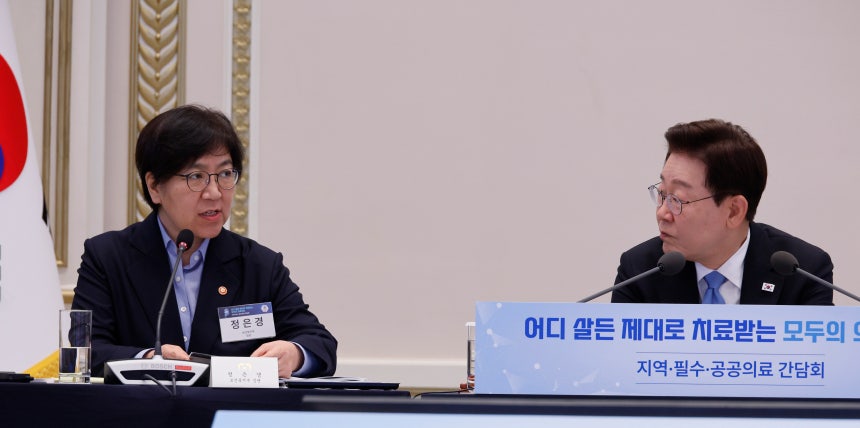
The atmosphere at the 45th Cabinet meeting on Oct. 20 turned tense for three minutes. President Lee Jae Myung resembled a scolding teacher, while Health and Welfare Minister Jung Eun-kyeong looked like a chastened student.
Lee interrupted Jung nearly 10 times, raised his voice, demanded to know the reason four times and sighed in frustration. At times, his language became unusually blunt. Jung maintained an awkward expression throughout. Lee's words took 1,070 Korean characters, compared to Jung's 429.
The dispute concerned a government plan to cover one month's National Pension Service (NPS) contribution, worth 42,000 won ($30), for 18-year-olds. Starting in January, eligible young people must apply to receive the benefit. Alongside abortion medication and universal menstrual products, the initiative exemplifies Lee's attention to detailed welfare policies.
Why did this seemingly minor issue provoke such anger?
People aged 18 to 27 are generally exempt from mandatory pension contributions while studying or serving in the military. However, making even one payment allows them to make additional contributions retroactively later, increasing their eventual benefits.
Since his days as Seongnam mayor, Lee has argued that only young people whose parents understand the system benefit from this arrangement, creating inequity. As Gyeonggi governor in 2018, he sought automatic government payments for 18-year-olds. But then-Health Minister Park Neung-hoo opposed the proposal, arguing that government-financed contributions contradicted social insurance principles.
Automatic support is not inherently harmful. Those who dislike the arrangement can simply decline to make retroactive payments. Lee argued that young people had no reason to object and that opposition stemmed from misunderstanding.
He pressed Jung to explain whether NPS finances were the real concern. Jung replied that officials had debated automatic enrollment but ultimately adopted applications to preserve individual choice.
Automatic support would indeed cost more, as Lee suggested. Yet another factor influenced the decision. Following last year's presidential election, the State Affairs Planning Committee revised the pledge after opposition from young people.
Many distrust the pension system, fearing they will contribute throughout their working lives without receiving benefits. An official familiar with the discussions recalled strong objections from young people who believed the government was trying to bind them to the pension system.
Why force them into participation merely to provide one month's contribution? Their reaction illustrates how deeply pension distrust has taken root.
Confucius taught that a nation cannot stand without public trust. Imposing automatic enrollment amid widespread suspicion could deepen that distrust.
Lee has consistently advocated replacing application-based welfare with automatic benefits. That approach works for universal programs such as child allowances and parental benefits. But the initial pension contribution for 18-year-olds raises different considerations.
Lee has also repeatedly questioned pension payments to foreigners, citing suspected abuse of NPS and basic pension benefits. At the Cabinet meeting, he demanded action against those who improperly received payments.
Recovering unlawfully obtained benefits is necessary, whether recipients are Korean or foreign. Singling out foreigners, however, risks appearing discriminatory.
Meanwhile, suspicions have emerged this year that the National Pension Fund is being used to support stock prices, an unusual controversy.
When stocks rose in May, Lee said he had heard that the fund's projected depletion date had been postponed by 20 to 30 years. Markets have since fallen, changing that calculation.
Assessing pension sustainability according to short-term market fluctuations is unusual. The law requires comprehensive actuarial assessments every five years, incorporating economic growth, demographic trends and other factors.
Detailed initiatives such as subsidizing the first contribution for 18-year-olds can be left to ministries. The president has more consequential pension challenges demanding attention.
These include reforming civil servants' and private schoolteachers' pensions, along with basic pension reforms that previous governments attempted but abandoned.
Such structural reforms would do more for younger generations than disputes over automatic enrollment.
Former President Roh Moo-hyun pushed through national pension reform through persistent persuasion. Former President Park Geun-hye reformed civil servants' pensions. Pension reform became a defining achievement of both presidencies.
혼낸 대통령, 혼난 장관
신성식 복지전문기자
지난 20일 45차 국무회의는 분위기가 사뭇 살벌했다. 딱 3분 그랬다. 이재명 대통령은 혼내는 선생님, 정은경 보건복지부 장관은 혼나는 학생 같았다. 이 대통령은 열 차례 가까이 정 장관의 말을 끊었다. 언성이 높아졌고, “이유가 뭐냐”고 네 차례 다그쳤고, “아이고”라며 한숨을 쉬었다. 이 대통령은 “그게 왜 손해야. 이익만 주는 거지”라는 식으로 가끔 말이 짧아졌다. 정 장관은 계속 멋쩍은 표정이었다. 대통령의 말은 1070자, 정 장관은 429자였다.
이날 이슈는 18세에게 국민연금 한 달치 보험료(4만2000원)를 지원하는 문제. 내년 1월 시행하며 신청해야 받는다(신청주의). 임신중지약 미프진, 보편적 생리대 등과 함께 이 대통령의 대표적 ‘디테일 복지’다. 이게 얼마나 중요하길래 대통령이 화를 냈을까.
18~27세는 학업·군복무 등을 고려해 국민연금이 적용되지 않는다. 다만 한 번이라도 보험료를 내면 나중에 추후납부(추납)해서 연금을 늘릴 수 있다. 이 대통령은 성남시장 시절부터 ‘제도를 잘 아는 부모만 활용한다’는 문제의식을 가졌다. 형평성에 문제 있다는 것이다. 2018년 경기지사 시절 18세 청년에게 보험료를 자동으로 내주려 했다. 그러나 문재인 정부의 박능후 복지부 장관이 “사회보장 근본 원칙에 안 맞는다”며 막았다. 소득이 있을 때 보험료를 내는 사회보험인데, 정부가 내주는 게 취지에 안 맞다는 것이다.
‘자동 지원’이 나쁠 게 없다. 본인이 싫으면 추납하지 않으면 된다. 이 대통령은 “청년이 반대할 이유가 없다. 오해에서 기인한 것”이라고 했다. 이 대통령은 정 장관에게 “솔직하게 얘기해라”며 “연금재정 때문이 아니냐”며 따졌다. 정 장관은 “첫 보험료 지원을 자동으로 할지 논란이 있었는데, 선택권을 주는 신청주의로 바뀌었다”고 설명했다.
대통령 말대로 자동 지원이 되면 재정이 더 드는 건 맞다. 그러나 이게 신청제로 바뀐 또 다른 이유가 있다. 지난해 대선 직후 국정기획위원회에서 공약을 정리하면서 이렇게 바꿨다. 청년의 반발 때문이다. 이들은 “보험료를 내기만 하고 나중에 못 받을 것”이라며 연금을 불신한다. 당시 사정을 잘 아는 관계자는 “청년들이 ‘우리를 연금에 옭아매려는 게 아니냐’고 강하게 반발했다”고 말한다. 한 달치 보험료를 내주고 생색내면서 왜 억지로 가입시키려 하느냐, 젊은 층은 이렇게 반발한다. 국민연금 불신이 이렇게 뿌리 깊다.
공자는 민무신불립(民無信不立)이라고 했다. 백성의 믿음이 없으면 나라가 설 수 없다는 뜻이다. 연금 불신이 심한 상황에서 강행하다가는 불신이 더 깊어질 게다. 이 대통령은 복지의 신청주의 타파를 강조해 왔다. 아동수당·부모급여처럼 모두 받으면 가능하지만, 18세 첫 보험료 정책은 결이 다르다.
이 대통령은 외국인 연금에도 집요하다. 외국인이 편법으로 국민연금·기초연금을 받는 걸 수차례 지적했고, 20일 국무회의에서 “(편법 수급을 한) 사람들에 대한 조치가 필요하다”고 말했다. 편법·불법 수급액은 환수가 당연하다. 그건 내국인도 마찬가지다. 외국인만 강조하면 차별로 비칠 수 있다.
올 들어 국민연금이 주가 부양에 동원된다는 의혹에 휩싸였다. 20여 년간 이런 적이 별로 없다. 이 대통령은 지난 5월 주가가 오르자 “연금기금 고갈 시기가 20~30년 늦춰진 걸로 들었다”고 했다. 지금은 주가가 떨어져 상황이 달라졌다. 주가 등락에 맞춰 고갈 시기를 따진 전례도 드물다. 법에서 5년마다 성장률·인구 등을 종합해 따지도록 규정한다.
18세 첫 보험료 같은 미시적 정책은 부처에 맡기면 된다. 대통령의 의제, 수두룩하다. 공무원·사학연금 개혁, 손대다 후퇴한 기초연금 개혁 등. 이런 게 청년을 위한 일이다.
노무현 대통령은 설득을 거듭해 국민연금 개혁을 돌파했다. 박근혜 대통령은 공무원연금을 개혁했다. 연금개혁은 두 대통령의 대표 브랜드가 됐다.
BY OPINION DESK [[email protected]]
Copyright ⓒ 코리아중앙데일리. All rights reserved. 무단 전재 및 재배포