The Baby-Boom Generation of the 'Museum of Human History'
[Seoul Sinmun · Open World · May 6, 2013]
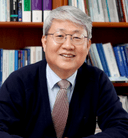
Yun Suk-myung, Director of the Pension Research Center at the Korea Institute for Health and Social Affairs (KIHASA)
The first baby-boom generation, consisting of approximately 7.6 million people born between 1955 and 1963, is an exceptionally unique group not only in our country but globally. This is because they are the only generation to have experienced almost everything that can be encountered in the process of human development, with the exception of war.
In the past, under the slogan "Son or daughter, make no distinction; even with just one child, the land of three thousand ri is overcrowded," classrooms were so overcrowded that they resembled bean sprout jars, leading to two-shift classes; however, we now live in a world where all efforts must be focused on raising the fertility rate. They are the generation that stayed up all night rubbing sleepy eyes while operating sewing machines for clothing exports, and also the generation that rode oxcarts as children but experienced the era of private car ownership and began enjoying color TV and professional sports for the first time.
They are also the generation that personally experienced the processes of industrialization and democratization and began to acquire an international perspective by venturing abroad in earnest. Having experienced the 'barley hump' (the lean spring months) of the era when fields were plowed with oxen and lived through industrial and post-industrial societies into the information society represented by smartphones, a single baby-boom generation is experiencing things that were not encountered even over thousands of years in the past. Given this situation, it seems the seat of honor in the museum of human history is reserved for the baby-boom generation.
Reports are being published daily in the media that a significant number of this extraordinary baby-boom generation have failed to prepare for their old age. Voices of concern are growing that many members of the baby-boom generation, called the "sandwiched generation" referring to a dual burden of supporting both parents and children, have not properly prepared for their own old age. Perhaps due to these concerns, the bill on raising the retirement age, one of the greatest interests of the baby-boom generation, was passed abruptly by the National Assembly. The prevailing opinion is that this was heavily influenced by the baby-boom generation, who hold significant decision-making power in our society. Even though they have secured the spoils of a raised retirement age, demands concerning old-age income security will grow even louder in the future, given that many members of the baby-boom generation have not properly prepared for their old age. Since the influence of this group is so great, it seems that the tendency to walk on eggshells around the baby-boom generation in our society will also intensify.
There is something the baby-boom generation, which is such a powerful group, must do before they step back from the forefront of history. This is because it seems desirable for the baby-boom generation themselves to propose solutions for their own old-age problems, as they are the generation that reaped the most fruits during our country's industrialization process and the generation among which the income gap widened the most. It is no exaggeration to say that the future of the ship of the Republic of Korea depends on how the policy direction for the baby-boom generation is determined. Would it not seem too irresponsible for the baby-boom generation, who on average reaped the most fruits during the rapid industrialization process, to demand that the young and future generations—for whom low wages and non-regular employment are the norm—take full responsibility for their old age?
The baby-boom generation must actively participate in the overhaul of social security schemes, particularly the overhaul of the pension system, which would otherwise transfer an enormous burden to future generations. Even to drastically lower the elderly poverty rate, which is the highest among the member countries of the Organisation for Economic Co-operation and Development (OECD), and the high suicide rate of the current older generation caused by destitution, they must become the protagonists in establishing proper operating principles for social security schemes. Even from the perspective of solving the problem of old-age poverty that will be inevitable for many baby boomers due to income polarization within the baby-boom generation—despite being the wealthiest on average among all age groups—it is necessary to build a consensus that the primary beneficiaries of tax-funded social security schemes for poverty prevention should be the vulnerable groups, such as low-income earners, among the baby-boom generation.
It seems that the financial and political sustainability of our country's welfare system can be enhanced if the baby-boom generation leads the principle that "the welfare system shall be operated so that capable people among the baby-boom generation contribute more, while economically vulnerable baby boomers receive more welfare benefits." Should they not play at least that role if they wish to take their place with honor in the seat of honor in the museum of human history? If such efforts lead future generations to leave an evaluation in the museum of human history stating, "It is thanks to the baby-boom generation that we are able to live like this," that would be a pleasant bonus.
Source: Seoul Sinmun (original article)