(Pension Future Forum Position Statement) One Day Before the Debate Hosted by the 22nd National Assembly Special Committee on Pension Reform (Posted September 27, 2026)
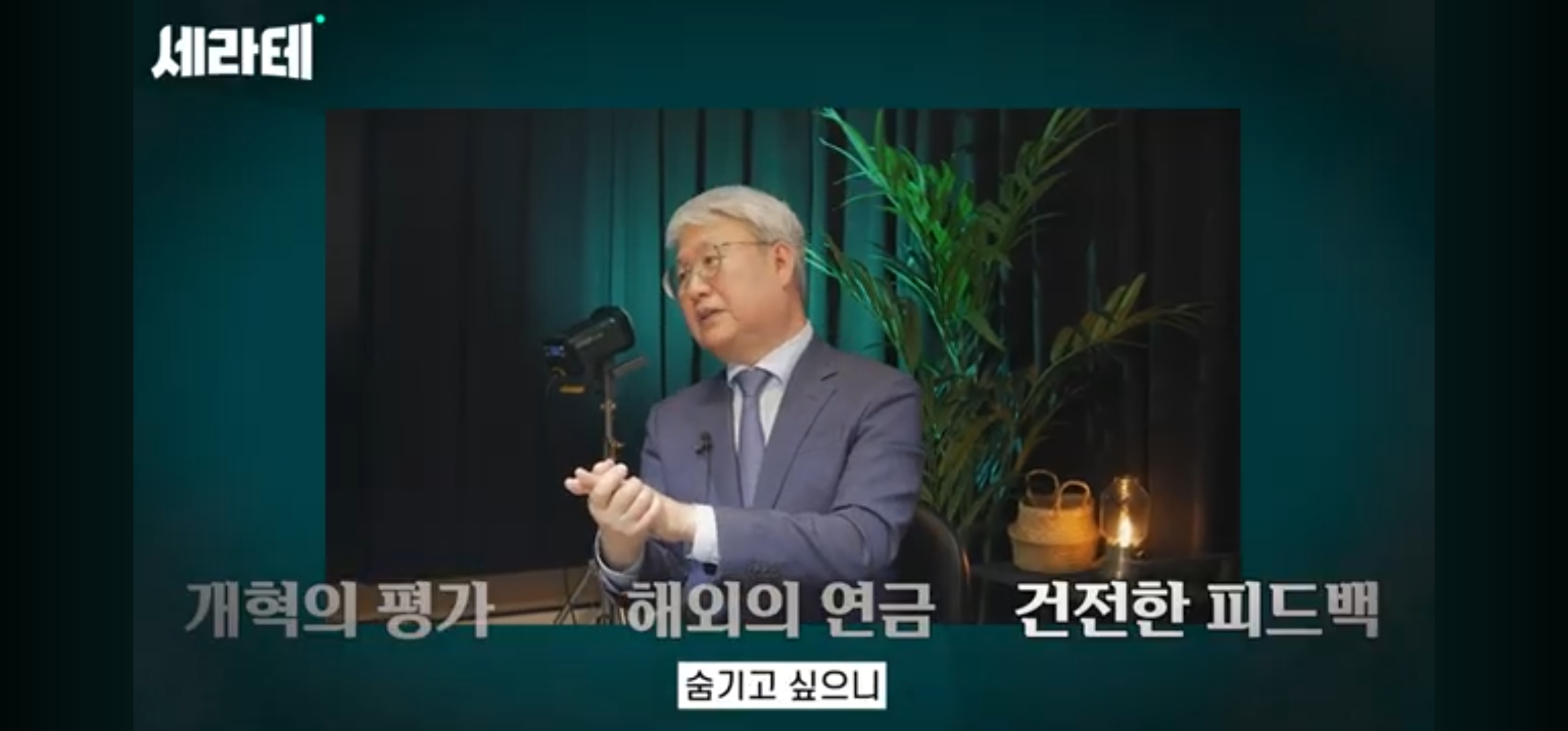
After the Advisory Committee to the 22nd National Assembly Special Committee on Pension Reform
concluded at the end of May 2026,
and after many twists and turns,
a debate is scheduled to be held from 2:00 p.m. on September 28, 2026,
in a small conference room
of the National Assembly Members' Office Building.
One day later,
on September 29, reports recording the activities
of the advisory committee members, along with other documents,
are expected to be distributed
to the lawmakers who sit on
the Special Committee.
Launched to focus on discussions of structural reform,
the advisory committee
came to an early end
without holding even a proper discussion
of structural reform.
Instead of a proper discussion of structural reform, the committee stalled over
the ratio of pension expenditure to GDP,
the elderly poverty rate,
whether retirement pensions count as old-age income,
the unfunded pension liability,
the automatic adjustment mechanism, and the like—
figures, facts, or concepts
that should be the most objective of all—
because understanding of them varied and opinions on them differed,
and so it could not hold even a full-scale debate
on the core issues themselves.
The advisory committee was thus
brought to a premature and futile close.
Because proper discussions
through the advisory committee
could not take place,
we are posting to the Pension Future Forum's
"Statements and Commentary" category
a roughly 25-minute YouTube broadcast
that focuses on the issues
that were in dispute throughout
the advisory committee's meetings.
We ask that you, if necessary,
watch this YouTube video
(broadcast on April 4, 2025.
The ruling and opposition parties mentioned
here have since traded places.
This means that the ruling party mentioned
in the broadcast is now the opposition party.)
and, having watched it,
state your position on
the following five issues.
Transition of the Basic Pension to a scheme centered on vulnerable groups, as the OECD recommends
Transition of the National Pension to a 100% earnings-related pension
Strengthening the old-age income security function of the National Pension by extending its mandatory contribution age by five years, premised on reform of the rigid labor market
Introduction of an automatic adjustment mechanism applied simultaneously, immediately from next year, to National Pension contributors (a Finnish-style life-expectancy coefficient) and beneficiaries (a Japanese-style macroeconomic slide)
Securing an additional income replacement rate, by OECD standards, through the gradual mandating of retirement pensions
On these matters, the Pension Future Forum hereby puts its questions publicly.
Regarding the five issues above,
we put this to each advisory committee member
who opposed them throughout the committee's work,
and to the organizations
that have openly voiced their opposition
all along:
Why!
We ask that you present the grounds
on which you have opposed them.
Even after watching the attached
YouTube video,
do you still oppose them?
We put this question publicly as well.
We request an official response.