(Chosun Ilbo Interview on the Basic Pension, September 3, 2026) "They Should Have Just Left the Basic Pension Alone — In Trying to Trim the Fat, They Only Added More Bulk" (Posted September 14, 2026)
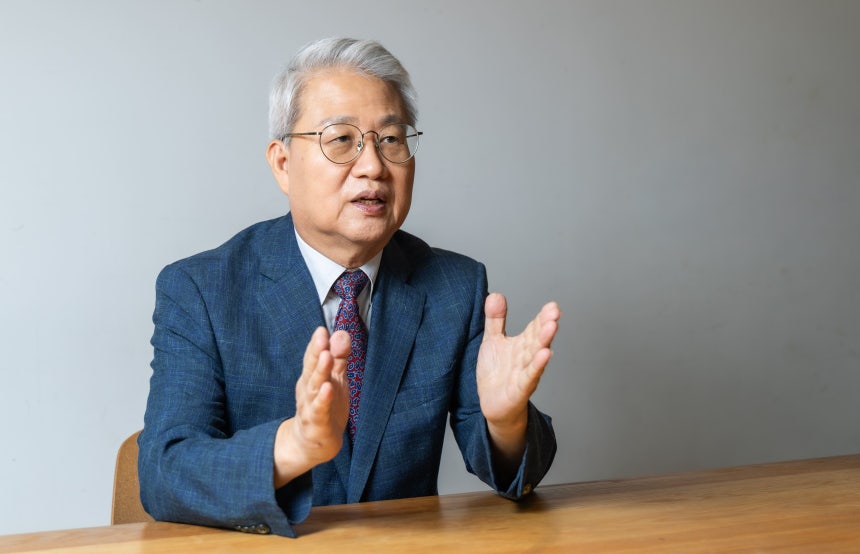
(This is the content of an interview
on the government's Basic Pension overhaul plan
given by Pension Future Forum leader
Committee Member Yun Suk-myung
to the Chosun Ilbo on September 1, 2026.)
Yun Suk-myung
Former President of the Korean Pension Association Interview
3-Line Summary
- The Basic Pension overhaul plan that maintained the 70% take-up rate is a deterioration
- Increasing the benefit by 30,000 won for the bottom 30% is inefficient in alleviating poverty
- Opening it to recipients of the special occupational pension schemes (the Government Employees, Military Personnel and Private School Teachers pension schemes) is a fatal blunder that will breed expedient workarounds
"They should have just left it alone... By leaving the structure as it is while making it cost more money, they have only increased the burden on future generations. It is like telling an overweight patient with adult-onset diseases to lose weight, only for them to add more bulk instead."
Yun Suk-myung (65), Research Fellow Emeritus at the Korea Institute for Health and Social Affairs (KIHASA), stated in an interview with this paper on the 1st regarding the government's Basic Pension overhaul plan, "People who do not urgently need support are receiving money indiscriminately, and those in absolute poverty receive amounts similar to them. It is populism that pours in more taxes while barely reducing the poverty rate," he assessed. The government announced an overhaul plan that maintains the 'bottom 70% of older people by income' as the eligibility threshold for the Basic Pension, while providing 30,000 won more than this year to those in the bottom 30% among beneficiaries.
- What is the problem with this government overhaul plan?
"The plane called 'Republic of Korea' needs to reach New York's JFK Airport and was on the verge of falling over Hawaii, so we began pension reform to install a powerful engine; however, this measure has made it crash over Tsushima. It can be called a deterioration that is worse than having done nothing at all. A 'targeting' reform to break the framework of the 70% target take-up rate and concentrate benefits on poor older people was discussed. However, they could not even touch the 70% threshold."
- Why was the 70% threshold not corrected?
"It is because of the cowardice and populism of the political sphere. Conscious of votes, they cast aside necessary structural reform to avoid offending prospective beneficiaries in their 50s and 60s. Politicians are not in those positions just to calculate votes. They were put there to design the future for the sustainability of society and intergenerational equity. This announcement, which fails to present any financial roadmap, is a political fraud wearing the mask of 'pension reform.'"- Do they not provide an additional 30,000 won per month to those in the bottom 30% by income?
"For those on the borderline, 30,000 won may be a meaningful sum and might have some effect in reducing the poverty gap. However, it is difficult to drastically lower the elderly poverty rate with a 30,000 won increase for which the basis of calculation is thin. It is populism that pours in more taxes while failing to lower the core indicator of 'poverty rate.' The Organisation for Economic Co-operation and Development (OECD) has pointed out since Korea introduced the Basic Pension scheme that its poverty alleviation effect is inefficient relative to the input costs."
- Issues regarding equity with the National Pension and financial sustainability are also being pointed out.
"If cash benefits of the Basic Pension are blindly increased for the vast majority, it could create side effects where workers who have faithfully contributed to the National Pension feel a sense of loss and give up their contributions. As we enter a super-aged society, the financial burden of the Basic Pension returns entirely as a tax burden on future working generations. Since cash expenditures were increased without consideration for the division of roles with the National Pension or long-term financial sustainability, the consistency of the multi-tiered old-age income security system has been greatly damaged."
- It was decided to provide the Basic Pension to beneficiaries of the special occupational pension schemes (Government Employees Pension and Private School Teachers Pension) who are below the bottom 45% by income.
"It is a fatal blunder. The Government Employees Pension and others have a loophole where one can receive a 'lump-sum payment' instead of a pension. There is a risk that some will use the expedient of receiving only a portion as a lump sum to meet the income threshold. The law must first be amended so that the Government Employees Pension and Private School Teachers Pension are received 100% as pensions, just like the National Pension."
- The issue of reducing the amount received by those who simultaneously receive the Basic Pension and the livelihood benefit, which has faced criticism for 'giving and then taking away,' was not addressed this time. Should this also be fixed?
"This is a wrong frame. Both the livelihood benefit and the Basic Pension are schemes operated with taxes, so their essence is the same. The livelihood benefit is in nature a payment to fill the difference in income up to the minimum cost of living. To say that it is 'taking away' when the livelihood benefit decreases by the amount the income was filled by the Basic Pension is agitation."
- In what direction should the Basic Pension go?
“It must move toward a minimum income guarantee system that focuses on the 'truly poor' below the livelihood benefit threshold. Moving away from the 70% target take-up rate framework, the Basic Pension beneficiaries should be set at 40–60% of the median income (the middle income when lined up by income), which the Organisation for Economic Co-operation and Development (OECD) views as the poverty line. Afterward, the Basic Pension should be separated into multiple tiers, such as cash benefits, vouchers, and housing support. This method involves giving only a basic cash amount of 350,000–450,000 won to all beneficiaries, while adding food vouchers or housing support for the extremely poor who need additional help. If only cash is increased, it may only create a sense of relative deprivation for those who have faithfully contributed to the National Pension. Managing the cash amount at an appropriate level while guaranteeing a minimum living standard through vouchers is the way to increase financial efficiency.”
☞ Yun Suk-myung is considered a leading domestic pension expert who participated in all the 1st through 5th (2003–2023)
National Pension financial projection committees. He has served as a Committee Member of the Government Employees Pension Financial Estimation Committee, Chairman of the Basic Old-Age Pension financial projection committee, and President of the Korean Pension Association. After graduating from Korea University, he received his doctorate in 1997 from Texas A&M University in the United States for research on the US Social Security system; since then, he has consistently worked in the field of public pensions and social security schemes research, serving as the Director of the Research Coordination Office at the National Pension Research Institute and the Director of the Social Security Research Division at the Korea Institute for Health and Social Affairs (KIHASA).