(A Column Sharing the Pension Future Forum's Position, Kookje Shinmun) [Lee Sang-yi Column] The 'Principle of Need' in Welfare and Populism (Posted October 15, 2026)
(The Pension Future Forum
agrees with this column by Professor Lee Sang-yi
of the progressive camp.
In Europe, it is said,
the old left has already disappeared.
It is said that much of what groups in Korea
calling themselves progressive argue —
that is, "the left we commonly encounter
in Korean society" —
amounts to old-left claims that have already
died out in Europe.
Only when the voice of a new left
grows louder in Korea, too,
will a proper welfare debate become possible.)
In welfare, a 'need' is not an individual's mere want but a 'social need' that must be met through the collective effort of society.
The state therefore has a duty to meet citizens' welfare needs institutionally.
The 'principle of need' in welfare means providing welfare on the basis of citizens' actual needs.
Through it, the government can spend its welfare budget more effectively and efficiently.
The government must establish and observe the 'principle of need' in every welfare field where public money is spent — health care and employment, housing and care, basic livelihood and old-age income — and must also keep pushing ahead with the institutional reforms this requires.
Yet in reality there are more than a few cases where this principle has been abandoned in favor of 'populism.'
Owing to limited space, this column examines the situation in only two areas of welfare.
First, let us examine the 'principle of need' and the reality of populism through the National Health Insurance, the core policy in health care.
The essence of the health insurance system, as set out in law, is to provide benefits for the treatment of illnesses and injuries closely bound up with citizens' lives and health. The purpose of the system and the scope of benefits are fixed by statute in this way because of the financial constraints on health insurance — a major task for our society, directly tied to the sustainability of health insurance.
With a deficit of 2.8 trillion won expected this year, the coming demographic crisis is set to push health insurance finances even closer to the edge of the cliff.
The 'principle of need' in health insurance means ensuring that every citizen enjoys, without discrimination, the statutory medical services that fit the purpose of the system.
To this end, the government must rationally adjust and control spending while raising the coverage rate of health insurance (the share of total medical costs borne by the National Health Insurance) to the level of advanced countries.
Korea's health insurance coverage rate is 64.9%, far below the roughly 85% of major advanced countries. However, expanding the coverage rate to uphold this principle inevitably entails a heavier burden on the public, including higher health insurance contributions.
Health insurance 'populism' aimed at political gain takes two forms.
The first is expanding benefits in ways that run counter to the essence of the system — for instance, pledging to extend health insurance coverage even to cosmetic and plastic-surgery areas such as hair-loss treatment under the banner of so-called 'bodily integrity.'
The second is abandoning or postponing the push to raise health insurance contributions, which is the key to expanding coverage.
Far from upholding the 'principle of need,' this leads to accumulating deficits and destroys the sustainability of the system.
What is more, this is not a problem of health insurance alone, but a ruinous malady that can surface in every area of tax-financed spending and state affairs.
Next, let us examine the Basic Pension, a central pillar of old-age income.
The Basic Pension is currently paid to about 7.8 million people, the bottom 70% by income among those aged 65 and over. Like the National Health Insurance, this program, too, ought to be designed to stay true to its essence and reformed without pause in step with changing times.
The Basic Pension started at a maximum of 200,000 won a month when it was introduced in July 2014, was raised to 250,000 won in 2018 and 300,000 won in 2021, and, with inflation adjustments added, has reached 349,700 won a month as of 2026.
The 'principle of need' for the Basic Pension means paying an adequate amount of cash to older people who urgently need old-age income support. Naturally, support should be concentrated more on lower-income groups.
But it runs up against the wall of enormous budget constraints and fiscal sustainability.
Basic Pension spending this year is 23.1378 trillion won, and it is projected to exceed 30 trillion won by 2030.
In the end, upholding the 'principle of need' for the Basic Pension requires a hard decision.
A structural reform must be pursued that narrows eligibility to the bottom 50% by income, secures additional funding and provides differentiated support according to income level.
Basic Pension 'populism' likewise takes two forms.
The first is indiscriminate universalism that flies in the face of the system's purpose. A typical example is the 'basic income for older people' argument — "give the Basic Pension to every older person" — that once circulated in the political sphere.
The second is the practice of ignoring and neglecting altogether a Basic Pension reform grounded in the 'principle of need' — putting off the urgent reform of narrowing eligibility to the bottom 50% by income and raising the benefit amount, for fear of losing political support.
This is a textbook case of 'ruinous populism,' which knows full well that reform is necessary yet, blinded by vote-counting, eats away at our society's future.
Like health insurance coverage of hair-loss treatment or the indiscriminate payment of a basic income to older people,
scattering public money recklessly while breaking the 'principle of need' in order to win votes is populism that is easy to spot.
But the populism of turning away from reforms meant to strengthen the coverage and sustainability of health insurance and the Basic Pension — that is, reforms for 'expanding funding with an accompanying burden on the public' — is not easy to see.
Yet its harm is no different.
If anything, the latter is more malignant.
For by neglecting structural reform that ought to be carried out, it tears down our society's future and sustainability wholesale.
Now is the time for all of us, as voters, to stay fully alert, so that we keep a sharp watch not only on visible populism but also on 'dereliction-of-duty populism,' which may largely go unnoticed.
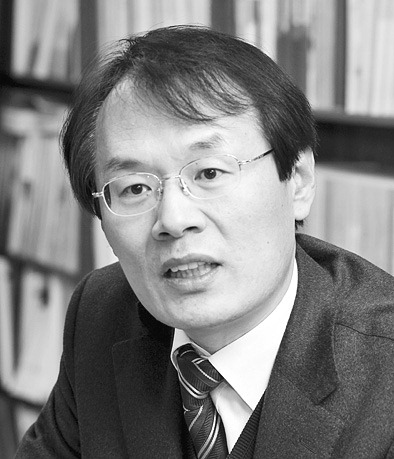
Lee Sang-yi, Professor, Jeju National University College of Medicine