(A Column Criticizing the Composition of the Public Deliberation Committee's Advisory Group) The Direction the National Assembly's Pension Public Deliberation Committee Should Take [Opening the Morning] (February 29, 2024)

(In a way that is hard to accept,
the advisory group within the Public Deliberation Committee's
agenda deliberation panel was put together —
and the full story of who drove it
must be brought to light!)
The Public Deliberation Committee under the National Assembly Special Committee on Pension Reform (hereafter the "Public Deliberation Committee") has been launched.
It will select 500 people from across the country to form a body of "citizen representatives," and will hold two public debates.
That has made the role of the "agenda deliberation panel," which teaches the citizen representatives about pensions, all the more important — and the role of its advisory group above all.
Yet the composition of the Public Deliberation Committee's advisory group (11 members in all) appears to be riddled with problems.
Of the 15 private advisory committee members attached to the National Assembly's special committee, 6 were appointed to the Public Deliberation Committee's advisory group.
Of those 6, 5 are social welfare scholars who have long argued that pensions should pay out more. The remaining one has likewise been calling for an expansion of the Basic Pension.
Taking the Public Deliberation Committee's advisory group as a whole (11 members, an attorney included), 7 are experts who want pensions to pay out more (2 of them members who voluntarily resigned from the Financial Estimation Committee).
The great majority of the experts who held a neutral position on the Financial Estimation Committee and on the special committee's advisory committee were excluded.
With a membership put together this way, the Committee will be hard to run properly. With no government reform plan even on the table, there is no shortage of criticism that what has been launched is a committee designed to make people "receive more in pensions."
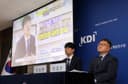
It is at least some consolation that Dr. Lee Kang-gu of the Korea Development Institute (KDI) has joined the advisory group. He is, after all, the lead author of the study finding that 609 trillion won of government funds must be injected before pension benefits can be paid, and that five years later that figure rises further, to 869 trillion won.
That is all the more true because even those figures are a minimum, and because he is an expert who properly grasps what the National Pension's unfunded pension liability of 1,825 trillion won announced by the Pension Future Forum actually means.
This column therefore proposes a direction for how the "Public Deliberation Committee" should be run. First, the learning must center on core agenda items such as "fiscal stabilization measures."
The role of the "agenda deliberation panel," which includes the advisory group, should be confined to setting out difficult material and the latest reform trends in accessible terms.
The stakeholders themselves have taken part in the reform debate for years and know the material well.
The "agenda deliberation panel" should be run so that representatives of the stakeholders instruct the citizen representatives directly, with the advisory group's role confined to correcting statements that depart from the facts.
Every meeting should be broadcast live, and detailed minutes released immediately, so that mistaken content can be corrected from outside the committee.
It is also worth listening to the remarks of Joo Myeong-ryong, President of the Korea Association of Retired Persons (KARP) and a member of the "agenda deliberation panel."
He says, "Extending employment is urgent if middle-aged and older people are to 'learn, earn, contribute' (learn and earn while contributing to society)."
That is why the "Economic, Social and Labor Council" should put "continued employment" on its agenda and put forward a plan to extend the "mandatory contribution age" by five years, to 64.
Why retirement pensions are not counted in the pension expenditure figures of the Organisation for Economic Co-operation and Development (OECD) should also be part of that learning.
The reason is that retirement pensions — whose contributions are as large as the National Pension's total contributions — are left out, and the adequacy of old-age income is judged on the public pensions alone.
Support to raise the low participation rate in retirement pensions, around 53% (measured by the number of participants), is urgently needed.
That is because the participation rate has to exceed 85% before a scheme can be counted in the OECD's pension expenditure figures.
If "Blue Seed" (the Korea Workers' Compensation and Welfare Service's Small and Medium Enterprise Retirement Pension Fund), which now covers workplaces with 30 or fewer employees, were extended to workplaces of up to 100, both the participation rate and the returns on retirement pensions among vulnerable groups could be expected to improve.
The government's role in the course of the 2007 National Pension reform also deserves another look.
That episode suggests that proper reform becomes possible only once the scale of the National Pension's cumulative deficit and unfunded liability is disclosed.
As it happens, the post of vice chair of the Presidential Committee on Ageing Society and Population Policy has just been made a full-time position. Now is the time to give that vice chair the backing to act as the control tower of pension reform.