
17% of Older Basic Pension Beneficiaries Have “Zero Recognized Income”… 14% Above 2 Million Won (2026.08.30.)
(At the seventh meeting of the Advisory Committee
to the 22nd National Assembly Special Committee on Pension Reform,
the Pension Future Forum
put forward a Basic Pension reform plan.
The OECD’s recommendations, which since 2010
have consistently urged reform of the Basic Pension,
were also included
as an appendix to the presentation material.
Adopting the Basic Pension reform plan
of the Pension Future Forum — to be posted in the Issue & Policy Report
category of the Forum’s website —
could become
a proper reform
of the Basic Pension:
of this
the Pension Future Forum
is convinced!)
Severe disparities within the beneficiary population… the need for an overhaul toward a minimum income guarantee linked to the standard median income comes to the fore
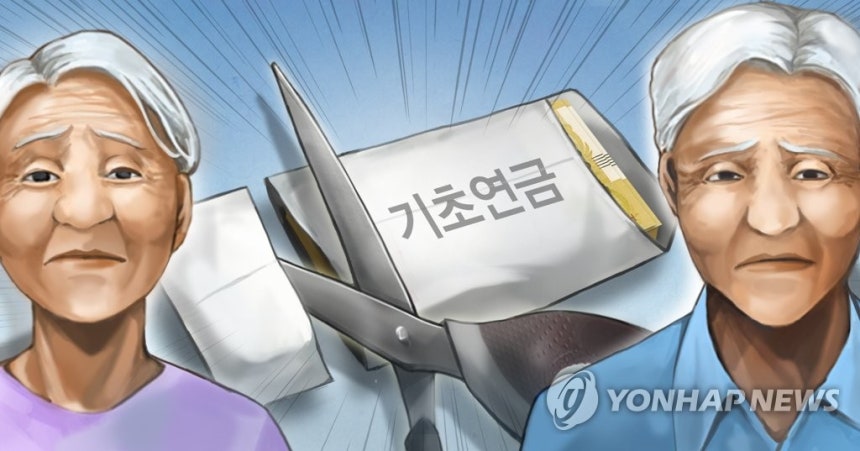
Among those aged 65 and over who receive the Basic Pension, more than 1.17 million have been found to have recognized income of zero once their income and property are combined and converted into income terms.
By contrast, more than 960,000 beneficiaries have recognized income above 2 million won a month, so that income disparities within the Basic Pension beneficiary population stand out sharply.
According to the “Distribution of Recognized Income Among All Basic Pension Beneficiaries in 2024,” submitted on the 30th by the Ministry of Health and Welfare to Rep. Kim Seon-min’s office (Rebuilding Korea Party, 조국혁신당),
of the 6,758,487 Basic Pension beneficiaries as of end-December 2024 on a retroactive-payment basis, 1,177,012 older people were recorded as having recognized income of zero, or 17.42% of the total.
(Excerpt omitted)
Adding the 281,936 people (4.17%) whose recognized income exceeds zero but is no more than 100,000 won brings the number of beneficiaries with 100,000 won a month or less to 1,458,948.
In effect, more than one in five of all older beneficiaries (21.59%) is relying on the Basic Pension in straitened circumstances, with recognized income of 100,000 won or less a month.
(Excerpt omitted)
The share of beneficiaries in the upper band, by contrast, was far from negligible. In 2024, 967,299 beneficiaries (14.31%) had recognized income above 2 million won, either approaching the single-household eligibility threshold of 2.13 million won then in force or falling under the combined couple-household threshold (3.408 million won or less).
Of these, as many as 850,815 (12.59%) had recognized income above 2.1 million won, so that the polarization of assets and income among beneficiaries emerged clearly.

![(Pension Future Forum Position Statement, JoongAng Ilbo, October 14, 2026) [Exclusive] As Chairman Kim Sung-joo Returns… National Pension Service Revives '7 Million Won a Month' Team Leader Post](/_next/image?url=%2Fuploads%2Feditor%2F2026%2F10%2F2204b9fa7b7945b39feda2bfbfea1fe9-0003557760_001_20261014052215751.jpg&w=128&q=75)