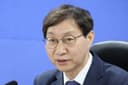
“Disclose Fund Management Information Transparently” — “Invest with a Long-Term View” (2021.03.20.)

(This is the content of an interview
with JoongAng Sunday in 2021, five years ago.
Even though the problems were pointed out in this way,
the situation now seems to have grown worse still —
it is enough to leave one dumbfounded!)
(Yun Suk-myung, President of the Korean Pension Association
Calls to abolish the stewardship code go too far
Information asymmetry leaves room for abuse by politicians
A “pension report” should be issued, as in Sweden
Ryu Young-jae, CEO of Sustinvest
Fund management dominated by welfare experts is a problem
Japan’s public pension looks to the nation’s future
We must not cling to short-term returns)
Q: The National Pension does not seem to have been active in exercising shareholder rights of late.
Yun Suk-myung, President of the Association (hereafter Yun Suk-myung) = In the past there was much discussion of reorganizing the Fund Management Committee into an elite body of about ten pension and investment experts rather than welfare experts (it currently has 20 members). I am opposed to that, however.
There are not many experts with the expertise to serve as a control tower. On the contrary, a small body might be swayed even more easily by political pressure. It might be better to increase the membership sharply, to 40 or 50. Would politicians not then have a harder time shaking it than they do now?
With that thought in mind I served for eight years as vice chair of the National Pension Deliberation Committee; but watching stakeholders pour in from the two umbrella labor federations and raise their voices, I came to feel that it would not be an easy problem even so.
(abridged)
Q: Would it not be enough simply to make the Fund Management Committee independent of the Ministry of Health and Welfare altogether?
Yun Suk-myung= Because the stewardship code is abused as an instrument of pension socialism, some quarters go so far as to call for its abolition. But abolition goes too far. In the domestic stock market the National Pension also performs the sound function of acting at times as a white knight and at times of speaking bluntly and mounting a healthy check. What matters is that the National Pension should disclose information transparently in every matter, so that the government and politicians cannot abuse the system itself. Only then does it accord with the purpose for which the system was introduced. From the standpoint of companies too, if the National Pension were run more transparently, then even when the blade is pointed at them they would worry less than they do now about political problems.
(abridged)
Q: How severe is the National Pension’s lack of transparency?
A: Yun Suk-myung = Although it manages enormous assets, apart from a rough and formal plan each year it discloses almost nothing concrete, on the ground that the material is confidential. Only the members of the Fund Management Committee know. Such information asymmetry leaves room for abuse by politicians.
Above all, this is the retirement money of the entire nation; should not every citizen be able to monitor easily and quickly how their own retirement money is being managed? Only then do reasoned criticism and social consensus become possible.
In Sweden, a welfare-advanced country, the SPS (Swedish Pension System), the body that oversees the pension, issues an annual report called the “Orange Report.” Each year it explains how the pension was managed and why such results emerged, and even the sustainability of the current system. The account is as objective as it can be. There is much painful self-assessment. It is a report incomparably more transparent and neutral than anything in Korea.
Korea, too, once issued a similar report through the National Pension Research Institute under the Ministry of Health and Welfare, but it does not appear to be issued properly now.
(abridged)
Q: What must be done to manage assets from a long-term perspective?
A : Yun Suk-myung= Since the greatest purpose is to prepare for the public’s old age, the long-term return matters, yet we have not been able to place the emphasis there. When short-term returns are poor, the press scolds and public opinion sours. The parliamentary audit has the sound function of check and oversight, but it has become an obstacle to raising long-term returns. Audits, too, must be thoroughly divided in two: for example, an audit aimed at detecting misconduct by some members of staff, and an audit that examines whether each organization is moving in the right direction, in keeping with its reason for existing. The two must be viewed separately, yet at present the boundary is unclear.
(abridged)
Q: What must be done to reform the National Pension to the level of advanced countries?
A: Yun Suk-myung= As stressed earlier, securing transparency is the first order of business. The more opaque an organization is, as now, the more easily it is swayed by politicians, and the more the public comes to accept uncritically the claims that particular political forces make to suit their own taste. At the same time, bottom-up reform matters too. A high level of citizenship will make it possible. Finland succeeded in stabilizing its finances through its 2018 pension reform, under which the government employees’ pension and the national pension are managed separately but the benefit structure was made the same.
I had thought that proposing this at the outset would provoke great social resistance, but organizations playing the roles that, in Korean terms, the Korean Confederation of Trade Unions and the Korea Chamber of Commerce and Industry would play joined forces and pushed the pension reform through without a hitch. In today’s Korea that is unimaginable.