
'Record-Breaking Returns' Grow the National Pension Fund by 300 Trillion Won—Yet It Cannot Be Sold Off Recklessly: Here Is Why (May 21, 2026)
- #연금특위
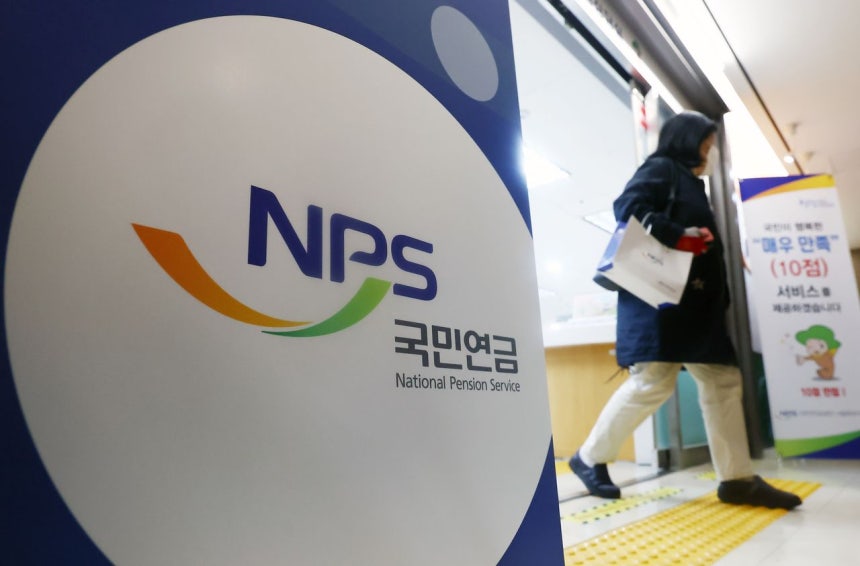
Amid a domestic stock market rally, the National Pension has recorded an all-time high investment return, yet controversy has arisen over the extent to which this defers the projected date of fund depletion. The financial status of the National Pension is legally required to be projected every five years, and there is no precedent for an interim review. The sixth financial projection is scheduled for 2028.
An exceptional rise in the KOSPI has given rise to optimistic projections that the depletion date could be extended by 20 to 30 years. Experts, however, argue that structural problems make it difficult to view the actual depletion date in purely optimistic terms, and that a cautious approach is warranted.
Hyeon Su-yeop, First Vice Minister of Health and Welfare, reported at the Cabinet meeting on the 20th—which also served as the "First Anniversary of the People's Sovereignty Government" policy performance briefing—the National Pension's record-high fund investment return of 18.82% last year, among other achievements.
He stated: "In the previous financial projection, the fund depletion date was set at 2071; it is estimated that the improved returns will provisionally push that date back by approximately seven years."
President Lee Jae-myung, who received the briefing, responded: "The fund appears to have grown by around 300 trillion won thanks to rising stock prices last year and this year — and yet the depletion date is extended by only seven years?"
He went on to remark, "Based on media reports, I had understood that the extension was somewhere in the range of 20 to 30 years — let us look into that later," and pressed the point several times.
Although the Vice Minister offered "a seven-year extension" as his reply, that figure cannot itself be regarded as accurate. It is a simple calculation based on projected annual expenditures and additional revenue.
A proper financial projection, however, must also account for demographic change, income growth rates, and other variables. The Ministry of Health and Welfare based its calculation on the assumption that the fund investment return rate of 5.5% would be maintained. That rate could rise or fall. The National Assembly Budget Office has also published an analysis suggesting that if a 6.5% return rate is sustained, the fund depletion date could be pushed back to 2090.
(excerpt omitted)
In principle, assets exceeding target allocation weights should be reduced through rebalancing — that is, asset reallocation. However, large-scale sales of domestic equities by the National Pension would have a significant impact on the market. Such sales would inevitably exert downward pressure on stock prices, making the adjustment a considerable burden.
The National Pension is set to convene a Fund Management Committee on the 28th to determine its medium-term strategic asset allocation plan. It is possible that the ceiling on domestic equity holdings may be raised through this process, but a sharp upward adjustment would not be straightforward.
The situation calls for a difficult choice between the principle of risk diversification and the practical imperative of avoiding market disruption.
It is clear that the KOSPI rally has deferred the fund depletion date. Professor Kim Yong-ha of Soonchunhyang University stated: "It appears that the fund depletion date has been pushed back owing to considerably strong fund investment returns."
Nevertheless, this assessment reflects only the present moment. The fact that these are unrealized gains — not yet converted into cash — must also be taken into account.
The currently high returns could shrink or turn into losses at any time should market conditions deteriorate. This is the basis for the observation that they represent no more than figures recorded on paper during the asset management process.
Recent returns have also benefited substantially from the exceptional market conditions associated with the semiconductor supercycle. Sustaining returns of the current magnitude over several decades is not realistically feasible.
The projected sharp increase in benefit expenditures must also be borne in mind. Given the extremely rapid pace at which Korea is aging into a super-aged society, the rate at which pension benefits must be paid out to the public will accelerate.
Because the scale of outlays during the fund depletion phase is so vast, even hundreds of trillions of won in additional returns can extend the solvency horizon only by a limited amount.
It has also been pointed out that fundamental pension reform is required if the fund depletion date is to be meaningfully deferred.
Yun Suk-myung, Emeritus Research Fellow at the Korea Institute for Health and Social Affairs (KIHASA), stated: "The current pension system is not sustainable, yet the present government is relying solely on investment returns bolstered by rising stock prices. The government should provide support so that the National Assembly Special Committee on Pension Reform can produce a structural reform proposal."
https://n.news.naver.com/article/025/0003524962?sid=102![(연금연구회 성명서 보도. 노컷뉴스) [칼럼] 연기금 카지노 책임론?…'쉬운길' 선택의 결과일 수 있다 (2026.10.20.)](/_next/image?url=%2Fuploads%2Feditor%2F2026%2F10%2Fc6f13b0799b440d0874a9f72413c6f58-0004200449_003_20261020063615439-1.jpg&w=128&q=75)
![(연금연구회 성명서 보도. 중앙일보) [취재일기] 국민 노후보다 코스피를 지킨 국민연금 (2026.10.19. )](/_next/image?url=%2Fuploads%2Feditor%2F2026%2F10%2F7e92f70b0ec843bbb869a4cf46b01f72-0003558751_001_20261019052229249.jpg&w=128&q=75)