
"Selling at This Rate Would Devastate the Market" — Will the National Pension Increase Its Domestic Equity Allocation? (May 17, 2026)
- #국민연금법
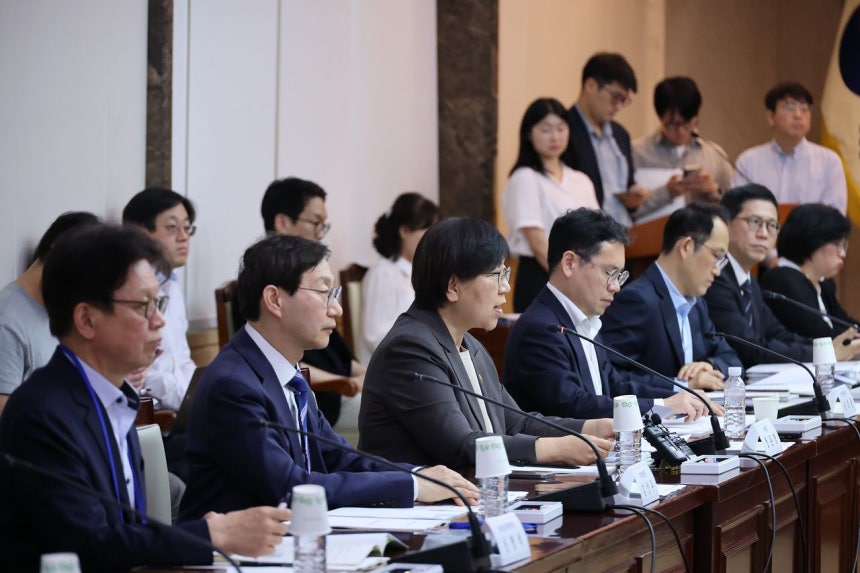
According to the Ministry of Health and Welfare and the financial investment industry on the 17th, the total size of the National Pension Fund has reached the 1,700 trillion won range. At the end of last year, the Fund stood at approximately 1,458 trillion won. It is reported that investment returns recorded so far this year alone have exceeded 250 trillion won, already surpassing the full-year operating return of 231 trillion won recorded last year, driven by a surge in the KOSPI.
Although the Fund is recording "remarkable performance," this paradoxically has become a source of concern for the National Pension.
This is because the rapid expansion of the Fund's size and the sharp appreciation of domestic equity values have generated pressure to raise the domestic equity allocation.
As of the official count at end-February, the domestic equity allocation stood at 24.5% (395 trillion won); following a subsequent rise of approximately 26% in the KOSPI, the effective allocation is currently assessed to have exceeded 25%.
In monetary terms, this amounts to approximately 470 trillion won.
The National Pension's target domestic equity allocation for this year is 14.9%.
The operating ceiling derived by applying the strategic asset allocation (SAA) permitted range (±3 percentage points) — which serves as the tolerance band for responding to market fluctuations — is 17.9%.
Even if the tactical asset allocation (TAA) permitted range (±2 percentage points), which allows additional discretionary latitude based on market conditions, is fully deployed to push the ceiling to the maximum of 19.9%, the current allocation substantially exceeds this upper bound.
If the National Pension were to undertake a mechanical "rebalancing" (portfolio readjustment) in accordance with asset allocation principles to force compliance,
the volume of shares it would need to offload onto the market could reach as much as 130–165 trillion won.
Earlier, at the Fund Management Committee meeting in January, the National Pension raised its target domestic equity allocation from 14.4% to 14.9% by 0.5 percentage points and temporarily deferred rebalancing to mitigate market shock. This reflected concerns that large-scale selling by the National Pension in the wake of the sharp KOSPI rise could amplify market disruption.
The problem is that this deferral measure expires next month.
Ultimately, the medium-term asset allocation plan to be finalized at the end of this month is expected to serve as the critical juncture determining whether the National Pension will proceed with domestic equity sales in the period ahead.
https://n.news.naver.com/article/025/0003523768?sid=102
![(연금연구회 성명서 보도. 노컷뉴스) [칼럼] 연기금 카지노 책임론?…'쉬운길' 선택의 결과일 수 있다 (2026.10.20.)](/_next/image?url=%2Fuploads%2Feditor%2F2026%2F10%2Fc6f13b0799b440d0874a9f72413c6f58-0004200449_003_20261020063615439-1.jpg&w=128&q=75)

![(연금연구회 성명서 보도. 중앙일보) [취재일기] 국민 노후보다 코스피를 지킨 국민연금 (2026.10.19. )](/_next/image?url=%2Fuploads%2Feditor%2F2026%2F10%2F7e92f70b0ec843bbb869a4cf46b01f72-0003558751_001_20261019052229249.jpg&w=128&q=75)