Europe's Decline and Public Services: The European Social Welfare System (March 10, 2026)
- #연금특위
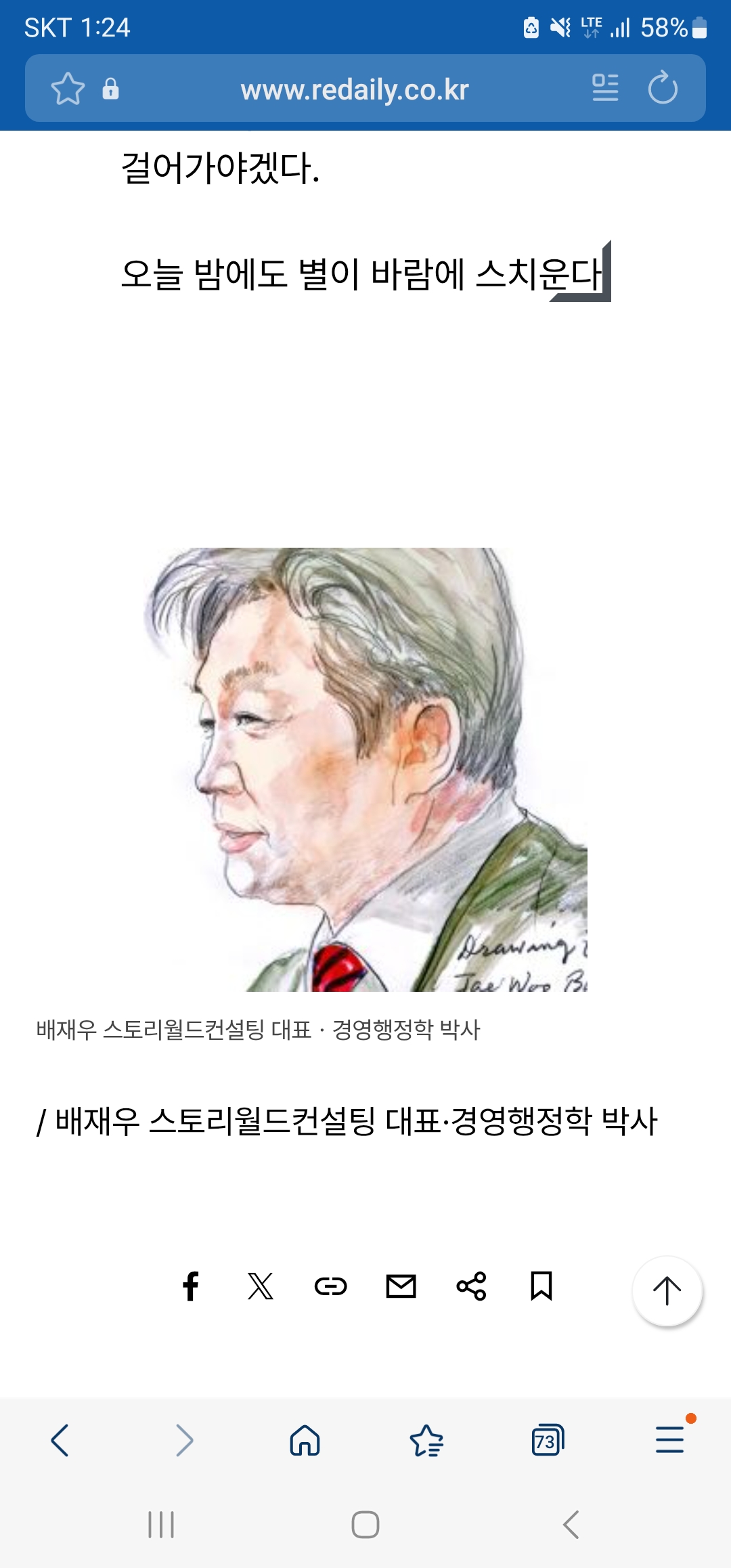
The current situation in Europe,
and in particular the circumstances confronting Germany, the United Kingdom, and France,
are described in this column with unflinching candor.
Since the decision to join the OECD under the Kim Young-sam administration,
the comparative benchmark for Korean society
has been the OECD average.
This has been especially true in the domains of social security and welfare, including pensions.
From the early 2000s to the present—
over a span of twenty-five years—
the impressions gathered through close observation of the OECD are as described below.
OECD standards have served as a thorough expression of European values.
At OECD meetings, the United States has in most cases appeared to adopt the stance of an external bystander(!).
It seems this was because the U.S. perceived a significant degree of misalignment with the values it upholds.
A great many of the countries that have relied on U.S.-led NATO for their own national defense,
channeling the bulk of those funds into welfare and the like,
are precisely the major European nations that lead the OECD.
Nonetheless, a substantial number of these countries, already struggling to maintain even existing welfare arrangements,
have more recently come under intense pressure to substantially increase defense spending.
Despite contributing far less in social insurance premiums than these European countries,
the prevailing view among most Korean social welfare scholars
and a significant portion of the media
has been that
Korea's welfare expenditure should reach the OECD average.
That average—
that is, any failure to meet the welfare expenditure level led by European nations—was treated as cause for alarm and uproar.
This was invariably accompanied by assessments that America's welfare system was in disarray.
(Please do not misunderstand.
The Pension Future Forum is not posting this content in order to extol the American system.)
Twenty years ago,
the EU stood on nearly equal footing with the United States;
today, even its presence on the world stage has grown faint.
In some quarters, the EU's standing has deteriorated to the point of being derided as 'the seven dwarfs of Europe.'
From the outset,
the Republic of Korea—virtually the only divided nation in the world—
has found itself
in a situation equated with that of European nations
and subjected to cross-national comparisons
using the same benchmarks—
a reality that
Yun Suk-myung, Honorary Research Fellow at the Korea Institute for Health and Social Affairs (KIHASA) and leader of the Pension Future Forum,
has strongly and consistently criticized.
He has advocated for a path suited to Korea's own circumstances—
a path attuned to the realities of Asia, and Northeast Asia in particular:
an Asian way.
To elaborate,
he has argued for an Asian way capable of leading the pension and welfare models of Asian nations,
and that Korea should pursue this Asian way.
Yet Korean reality appears to be moving in precisely the opposite direction.
The following column, which gives clear expression to this sense of concern,
is hereby posted under the Expert Columns section of the Pension Future Forum's Insights category.
https://www.redaily.co.kr/news/articleView.html?idxno=15863![(A Column Sharing the Pension Future Forum's Position, Kookje Shinmun) [Lee Sang-yi Column] The 'Principle of Need' in Welfare and Populism (Posted October 15, 2026)](/_next/image?url=%2Fuploads%2Feditor%2F2026%2F10%2F2e14f0e21c8c4e828b8477e370b55be9-1792132943202.jpg&w=128&q=75)
![(Content the Pension Future Forum Finds Hard to Agree With, Kyunghyang Shinmun, Professor Woo Seok-jin) [Economic Straight Talk] We Won't Pay Your Pensions (October 13, 2026)](/_next/image?url=%2Fuploads%2Feditor%2F2026%2F10%2F5d8f006695804398b4ae104d5181dc9e-1792129375063.jpg&w=128&q=75)